
General Contracting
  • neilghuman

Do You Need a General Contractor for Your Remodel?

The short answer: if you’re remodeling a commercial space, yes—and here’s why it matters.

Commercial remodels are a different animal than residential projects. There are more stakeholders, stricter code requirements, tighter timelines, and real financial consequences when things go sideways. The question isn’t really whether you need a general contractor—it’s what happens when you try to manage the process without one.


What a General Contractor Actually Does

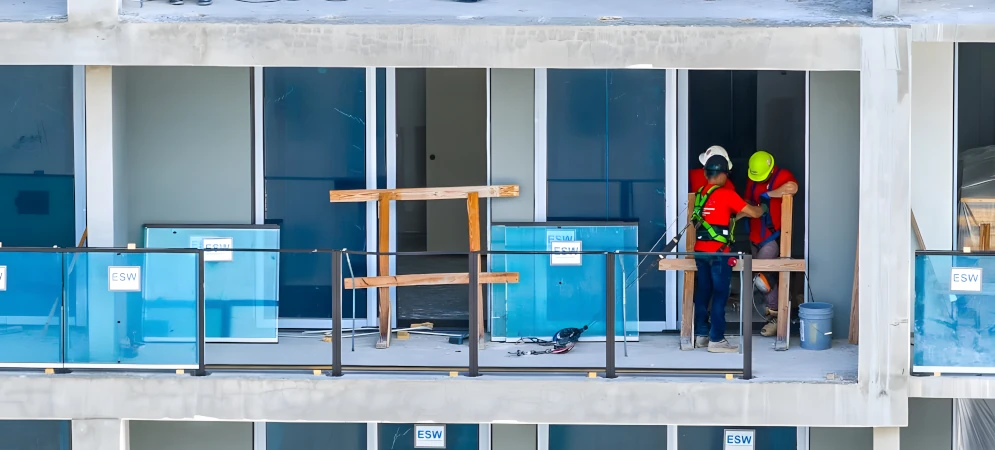
A GC isn’t just someone who swings a hammer. On a commercial remodel, a general contractor is the person responsible for holding the entire project together—coordinating every trade, managing the schedule, pulling permits, passing inspections, and making sure the work meets code and lease requirements. Without that single point of accountability, the burden falls on you.

Most business owners and property managers are already running full schedules. Adding daily coordination of electricians, plumbers, framers, tile setters, and inspectors on top of that isn’t just inconvenient—it’s a recipe for delays, miscommunication, and cost overruns that could have been avoided entirely.


The Real Cost of Going Without One

It’s tempting to think that managing trades directly will save money. In some cases it might—but in commercial construction, the risk rarely justifies the savings. A missed inspection means rescheduling and delays. A trade that shows up out of sequence means rework. A permit pulled incorrectly means stop-work orders. These aren’t hypothetical scenarios—they’re the most common reasons commercial remodels run over budget and over schedule.

A general contractor prices projects to include their management, coordination, and oversight—and that cost is almost always offset by the efficiency, accountability, and problem-solving they bring to the job. What you save in GC fees, you often spend twice over in delays and corrections.


When the Scope Demands It

Not every commercial project requires a full general contractor engagement. Minor cosmetic updates—fresh paint, carpet replacement, basic fixture swaps—can sometimes be handled with a single trade or a handyman. But the moment your remodel involves structural changes, mechanical or electrical work, permit requirements, or multiple trades working in sequence, a general contractor isn’t optional—it’s essential.

If your project includes any of the following, you need a GC:

  • Load-bearing wall removal or structural modifications
  • Plumbing or electrical upgrades requiring permits and inspections
  • HVAC modifications or new system installation
  • Work that must comply with ADA, fire code, or lease build-out requirements

What to Look for When Hiring One

Not all general contractors are built the same. For commercial work, you want someone with direct experience in the type of space you’re remodeling—whether that’s office, retail, medical, or industrial. Verify licensing, bonding, and insurance before any conversation about price. Ask how they handle permitting, who your point of contact will be, and how they communicate progress throughout the project.

The right GC will ask just as many questions as you do. They’ll want to understand your timeline, your lease obligations, whether the space will be occupied during construction, and what success looks like when the project is complete. If a contractor shows up, throws out a number, and asks when they can start—keep looking.


The Bottom Line

A commercial remodel is an investment in your business, your tenants, or your property. Protecting that investment means putting the right team in place from the start. A qualified general contractor brings structure, accountability, and expertise that keeps your project on track, on budget, and built to code—so when the work is done, you can focus on what you actually came there to do.
Kitchen Remodel
  • neilghuman

Top 5 Kitchen Remodeling Trends in Washington for 2026

Homeowners across the Pacific Northwest are rethinking their kitchens—and the results are smarter, more personal, and built to last.

Washington homeowners have always had a distinct design sensibility—drawn to natural materials, clean lines, and spaces that feel connected to the environment outside. In 2026, that sensibility is showing up in kitchens more than ever, blended with a growing demand for functionality, storage, and technology that keeps up with how people actually live. Here are the five trends we’re seeing most in the kitchens we’re building right now.


1. Warm, Natural Materials Are Replacing Cold and Stark

The all-white kitchen with stark white quartz and chrome fixtures has had a long run—but it’s giving way to something warmer. Homeowners are gravitating toward natural wood tones, leathered or honed stone finishes, unlacquered brass hardware, and earthy color palettes that feel grounded and inviting. Walnut cabinetry, warm white oak open shelving, and terracotta or sage accents are showing up consistently in remodels across the Seattle area.

This shift isn’t just aesthetic—it’s a reaction to years of cold, clinical kitchens that photographed well but didn’t feel like home. The 2026 kitchen is designed to be lived in, and the materials reflect that.


2. Functional Storage Over Decorative Open Shelving

Open shelving had its moment, and for the right homeowner it still works beautifully. But the trend in 2026 is leaning hard toward intentional, built-in storage solutions that keep countertops clear and everything within reach. Appliance garages, deep drawer systems, pull-out pantry cabinets, and custom inserts are replacing the decorative shelf walls that require constant styling to look presentable.

Washington homeowners—practical by nature—are prioritizing kitchens that work as hard as they look good. That means more cabinet volume, smarter interior organization, and storage solutions designed around how each household actually cooks and shops.


3. The Island Is Doing More Than Ever

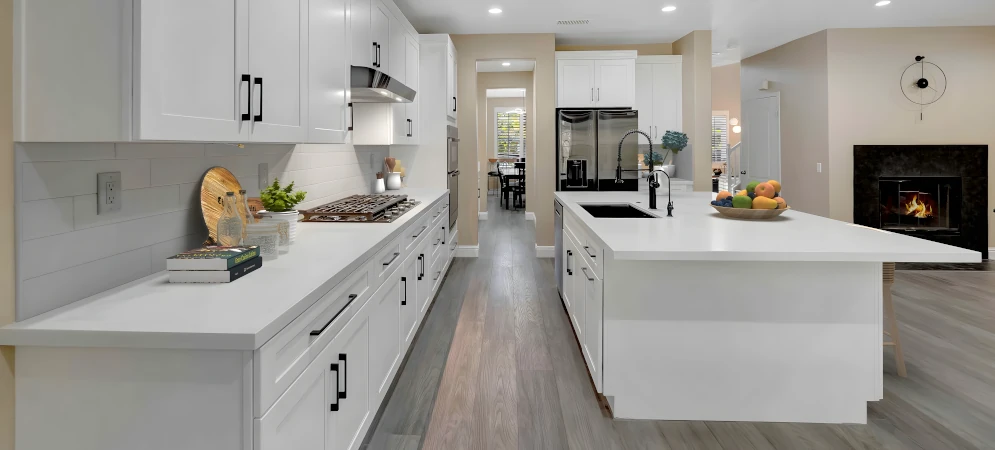
The kitchen island has evolved well beyond extra counter space. In 2026, islands are being designed as multi-functional anchors—combining prep space, seating, storage, secondary sink placement, and integrated appliances like wine fridges or microwave drawers into a single, intentional piece. Waterfall edges in contrasting materials, statement lighting overhead, and mixed base finishes are making islands as much a design focal point as a functional one.

For open concept layouts, the island is also doing structural and visual work—acting as the natural boundary between the kitchen and living areas without the need for a wall. When designed well, it defines the space without dividing it.


4. Smarter Kitchens Without the Gadget Overload

Technology is finding its way into kitchens in 2026—but the most popular integrations are subtle and practical rather than flashy. Touchless faucets, under-cabinet LED lighting on dimmer systems, built-in charging stations, and induction cooktops are among the most requested upgrades we’re seeing. Smart hood ventilation that adjusts automatically and refrigerators with interior cameras are becoming more common in higher-end remodels.

What homeowners in Washington are not doing is filling their kitchens with tech for the sake of it. The preference here is for technology that solves a real problem, integrates cleanly into the design, and doesn’t require a manual to operate on a Tuesday morning.


5. Sustainability and Local Materials Are a Real Priority

Pacific Northwest homeowners have always cared about sustainability—but in 2026 it’s moving from a nice-to-have to a genuine design driver. Reclaimed wood accents, locally sourced stone, low-VOC cabinetry finishes, and energy-efficient appliances are showing up on more project briefs than ever. Homeowners are asking where materials come from, how they’re made, and how long they’ll last—because a kitchen built to last 30 years is inherently more sustainable than one that needs replacing in 10.

This aligns naturally with the broader shift toward durability and quality over trend-chasing. The most thoughtful kitchen remodels we’re building today are designed to age gracefully—materials that develop character over time rather than looking dated in five years.


Building the Kitchen You Actually Want

Trends are a useful starting point, but the best kitchen remodel is the one that fits how you live—not just what’s popular right now. At Washington Construction, we work with homeowners across the Seattle area to design and build kitchens that are beautiful, functional, and built to last. Whether you’re drawn to warm and organic or clean and contemporary, we bring the same level of craftsmanship and project management to every build—keeping your project on schedule and your vision on track from the first conversation to the final walkthrough.