Strong Foundations. Superior Results.

South Prairie Tile Flooring Installation
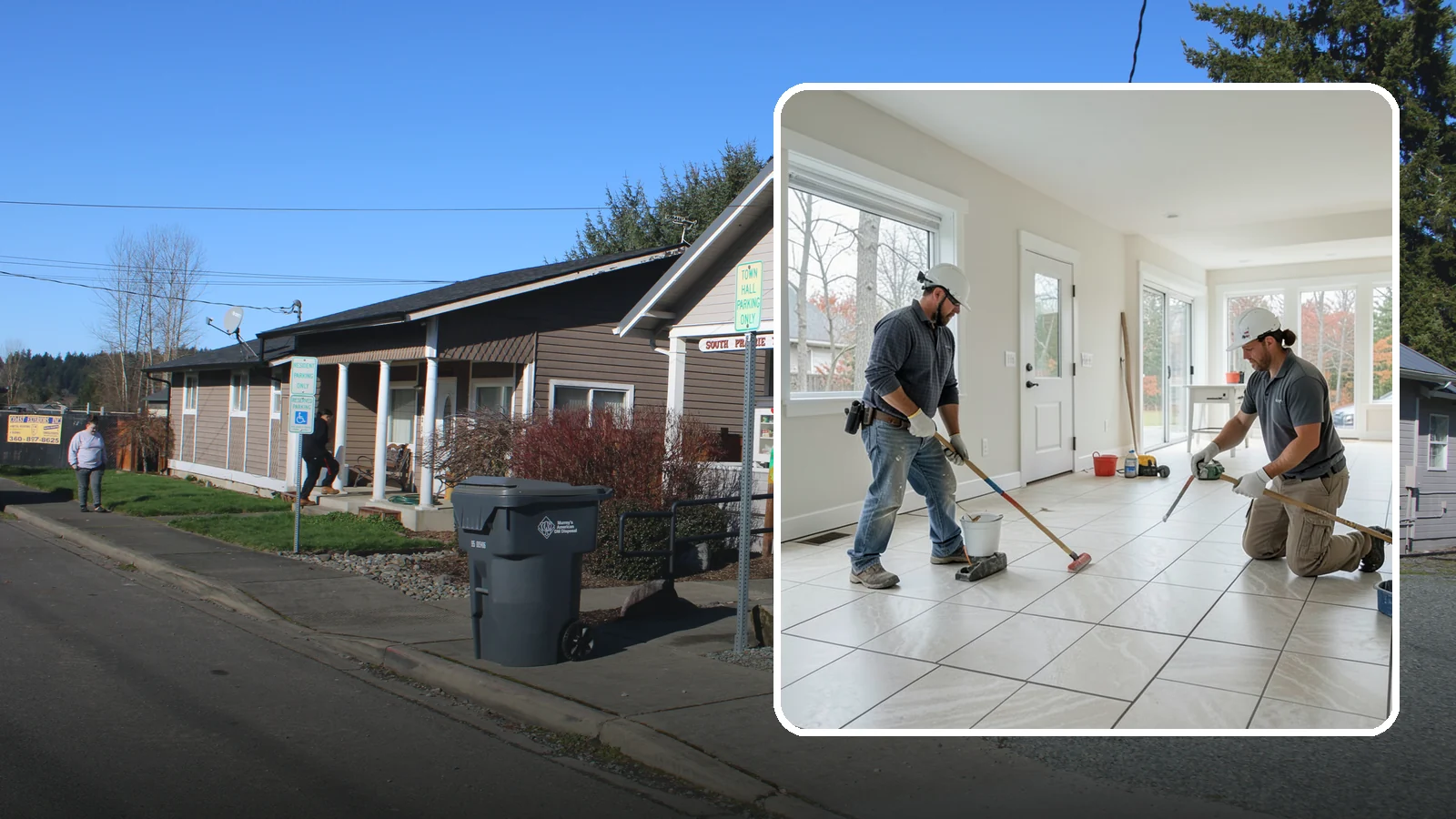
Expert tile flooring installation that pairs lasting durability with clean, custom design for any room.
Does South Prairie's wet weather matter for a tile floor? Yes, mostly because of what gets carried inside. About 79% of the town's yearly precipitation falls from October to April, per Daymet data for 2005-2025, so floors near entries take a lot of damp traffic.
Washington Construction, based in Bothell, WA, installs tile flooring. This page covers what the local rain pattern means for tile choice, layout and planning, so you can decide what to ask before work starts.
Planning Tile Flooring in South Prairie's Wet Climate
Daymet records for 2005-2025 show about 136 days a year in South Prairie with 0.1 in or more of rain. That is a lot of days when wet shoes, pets and coats move through a house. It shapes a few tile decisions.
Choose tile for wet feet
Smooth, glossy tile can get slick when water is tracked onto it. For entries, mudrooms and kitchens, ask about tile with a slip-resistance rating or a textured finish. Slightly darker grout also tends to hide dirt better than white grout. Porcelain is a common pick for these spots because it absorbs very little water.
Think about the entry first
With rain on so many days, the area just inside your door does the hardest work. Tile there can handle puddles and mud better than many other floor types. Consider a transition to carpet or wood further in, and plan where a mat or boot tray will sit. Those choices are easier to make before the layout is set.
Prep and timing matter
Tile needs a flat, solid, dry subfloor. Because most of the town's precipitation comes between October and April, the wetter months can affect how dry materials stay on the way into the house and how muddy the work area gets. If you plan a project in that stretch, ask how floor protection and material storage will be handled.
Some questions to bring to an estimate:
- Is the subfloor flat and dry enough for tile?
- Which tile finish suits wet entry traffic?
- Where should transitions to other flooring fall?
- How will the work area be protected during wet months?
Financing is available for tile projects, subject to credit approval, if you want to spread out the cost of a larger area.
South Prairie Tile Flooring Installation

Local Service Information
South Prairie
A very small town in the foothills of southeast Pierce County near the Carbon River.
Benefits
Withstands water, stains, and heavy traffic; crack-isolation guards against seismic and subfloor movement; nearly limitless color and pattern options; extremely long service life with minimal upkeep
Process