Strong Foundations. Superior Results.

South Prairie Chimney Repair
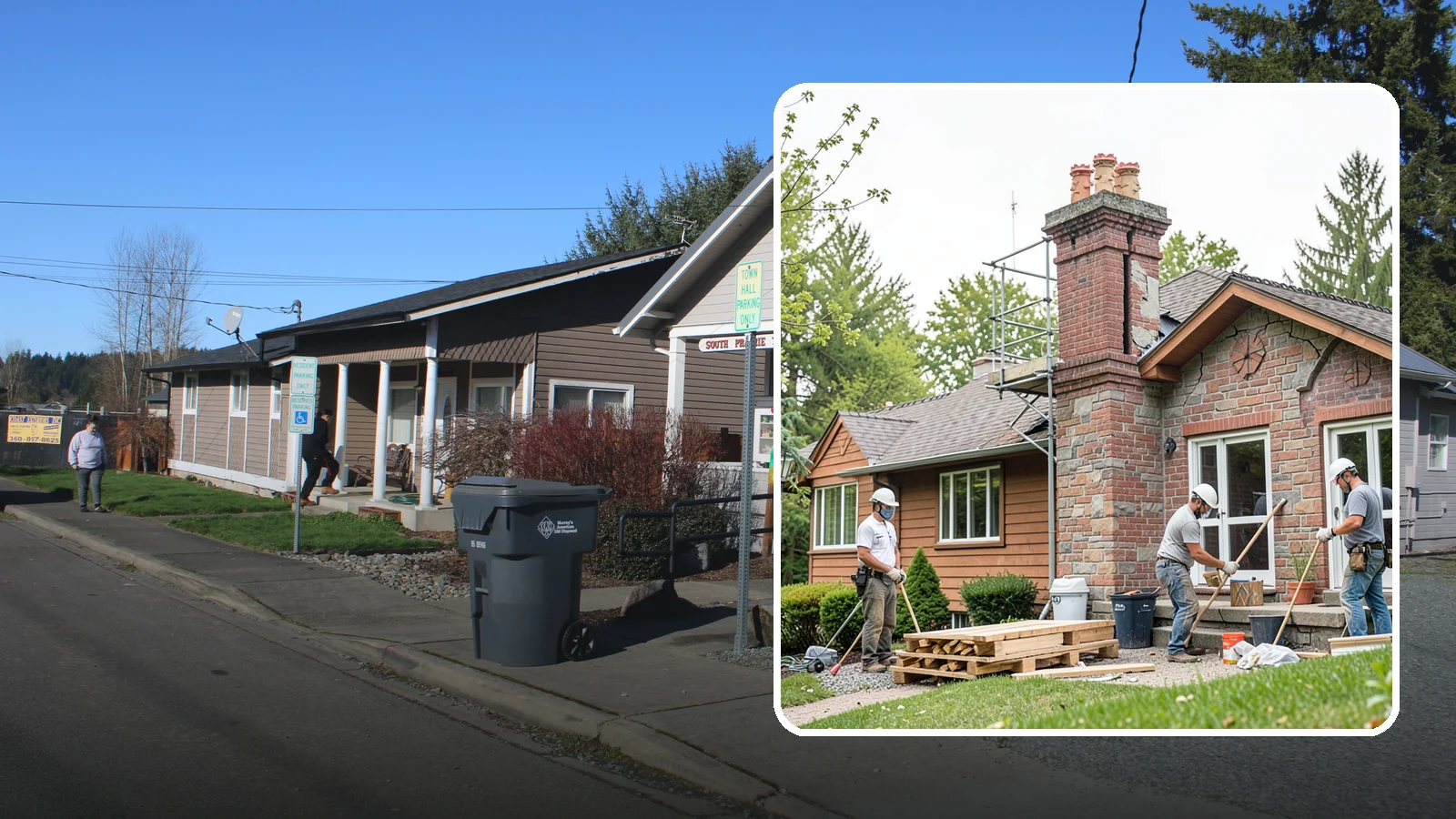
Targeted chimney repairs that stop leaks and crumbling mortar before water damage spreads indoors.
In South Prairie, chimney repair makes most sense in the drier part of the year. Rain of 0.1 inch or more falls on about 136 days a year here, per Daymet data from 2005 to 2025. That leaves limited dry windows for work on a roof and stack.
Washington Construction, based in Bothell, WA, repairs chimneys for homeowners who want a clear plan before work starts. This page covers how to plan the job, what shapes its scope, and what to expect once work begins.
Planning Chimney Repair in South Prairie, Washington
Start with what you can see. Look for cracked or missing mortar, loose or flaking bricks, a damaged crown, rusted or bent flashing, and water stains on the ceiling or walls near the chimney. Note when the stains appear. If they show up after rain, that points to the top of the chimney or the flashing.
What affects the scope
Scope depends on where the damage is and how far it goes. Repointing a few joints is a different job from rebuilding the upper courses of a stack. A cracked crown, failed flashing, and a deteriorated flue liner each call for different work. Some problems only show once the old material is opened up, so the first plan can change.
Moisture is the usual driver. South Prairie sees about 136 days a year with 0.1 inch or more of rain, so water gets into masonry often. Small gaps let it in, and it can then break down mortar and brick from the inside. Repairing the entry point early tends to keep the work smaller.
Earthquake risk is also worth a thought. FEMA's National Risk Index rates South Prairie as Relatively Moderate for earthquakes. That is a risk rating, not a prediction. A chimney that is already cracked or leaning is a weak point in any shaking, so it is sensible to have it looked at and, where needed, braced or rebuilt.
What to expect
Expect an inspection first, then a written scope that describes the work. Exterior chimney work depends on the weather, so dates can move when rain is forecast. Masonry needs dry conditions to cure well, and roof access is safer when surfaces are dry.
Washington Construction gives a 1-year warranty on labor. Ask what that covers and get it in writing with the scope.
One practical tip: take clear photos of the chimney from the ground and from inside the attic, if you can reach it safely, before the first visit. Add the date and any rain events you noticed. That record helps pinpoint where water is getting in.
South Prairie Chimney Repair
Local Service Information
South Prairie
A very small town in the foothills of southeast Pierce County near the Carbon River.
Benefits
Stops leaks at their true source; Repointing restores mortar integrity; Flashing and crown repairs seal out water; Protects interior ceilings and walls; Materials matched to the original

Process

Also serving South Prairie
- Stone Cleaning in South Prairieat Washington Pressure Washing
- Driveway Installation in South Prairieat Washington Landscaping
- Chimney Cricket Construction in South Prairieat Washington Roofing