Strong Foundations. Superior Results.

South Prairie Rough-In Plumbing
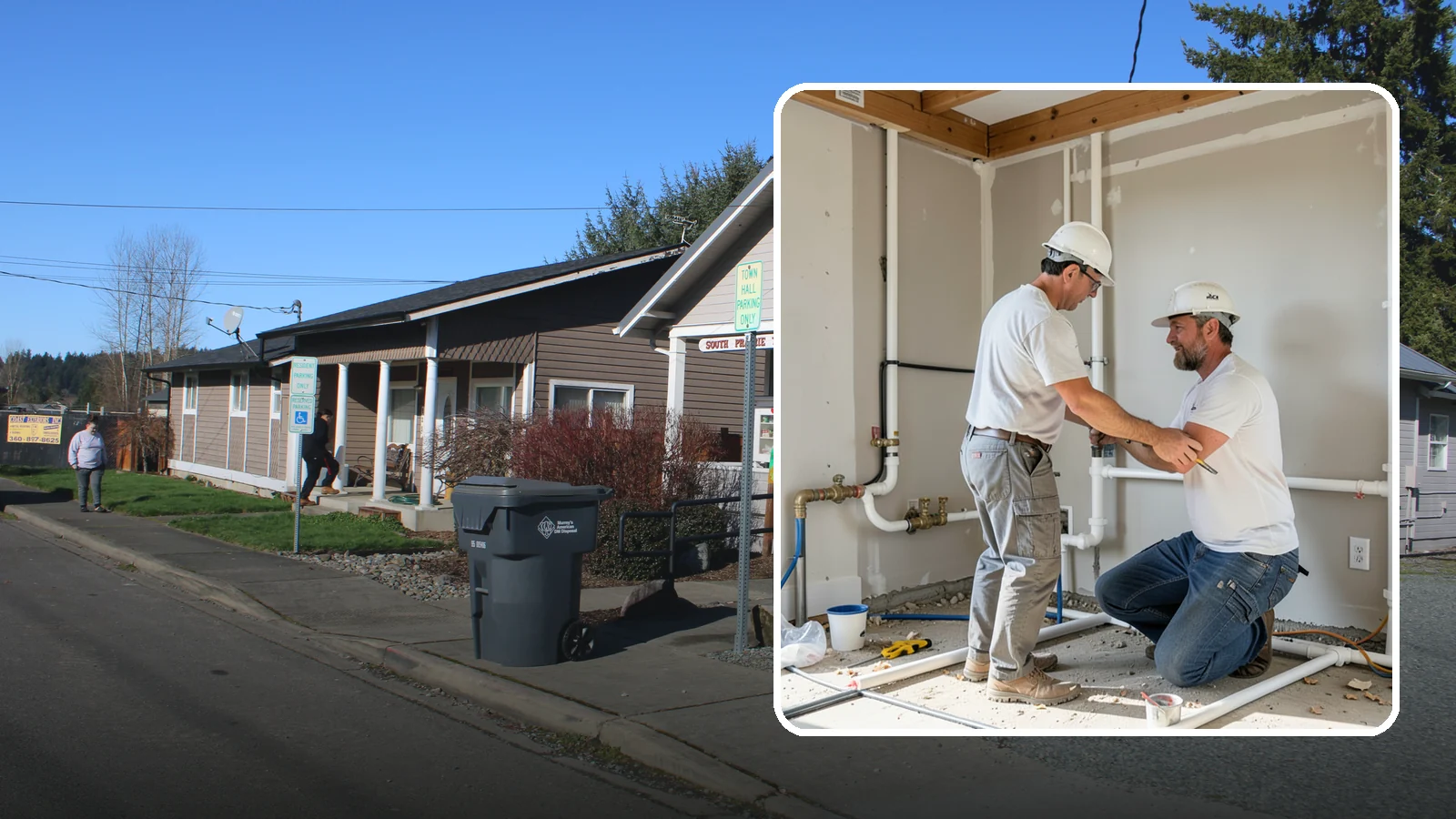
We install the supply, drain, waste, and vent lines behind your walls before insulation and drywall go up on a remodel or addition.
South Prairie sees about 37 days a year that freeze at night and thaw by day, per Daymet. For rough-in plumbing, that matters. Supply lines placed in exterior walls, crawl spaces or unheated areas face repeated freeze and thaw cycles, so where the pipes run is a real decision.
Rough-in is the stage where pipes are set inside open walls, floors and ceilings, before insulation and drywall close them up. Washington Construction does this work with its own crews, not subcontractors, and gives a 1-year warranty on labor.
Rough-In Plumbing Planning for South Prairie Homes
Rough-in is easiest when the framing is open. Once walls are closed, changing a pipe route means cutting into finished surfaces. Here is how the work usually goes.
The basic steps
- Review the plans and mark fixture locations: sinks, toilets, tubs, showers, laundry and water heater.
- Run drain, waste and vent lines, which depend on slope and need clear paths through framing.
- Run hot and cold supply lines to each fixture.
- Set boxes, stub-outs and shower valves at the heights the finish work will need.
- Pressure test the system before the walls are covered.
Why freeze and thaw changes the layout
Daymet data shows about 37 days a year in South Prairie when temperatures drop below freezing at night and rise above it by day. Pipes on exterior walls get the least protection from that swing. When possible, it helps to keep supply lines on interior walls and to plan insulation around any run that must sit near the outside. Decide this before framing is closed, not after.
Why rain matters for timing
Daymet records about 136 days a year with 0.1 in or more of rain in South Prairie, based on 2005 to 2025 data. On a remodel or addition, that means open framing may sit exposed during wet stretches. Standard practice is to schedule rough-in once the structure is covered, so lumber and pipe stay dry and the work is not rushed around the weather.
Who does the work
Plumbing here is done by our own crews, so the people who plan your pipe routes are the ones who install them. Labor carries a 1-year warranty.
South Prairie is a small town of about 121 homes, so there is little local data to lean on. Your own site, framing and plans should drive the layout.
South Prairie Rough-In Plumbing
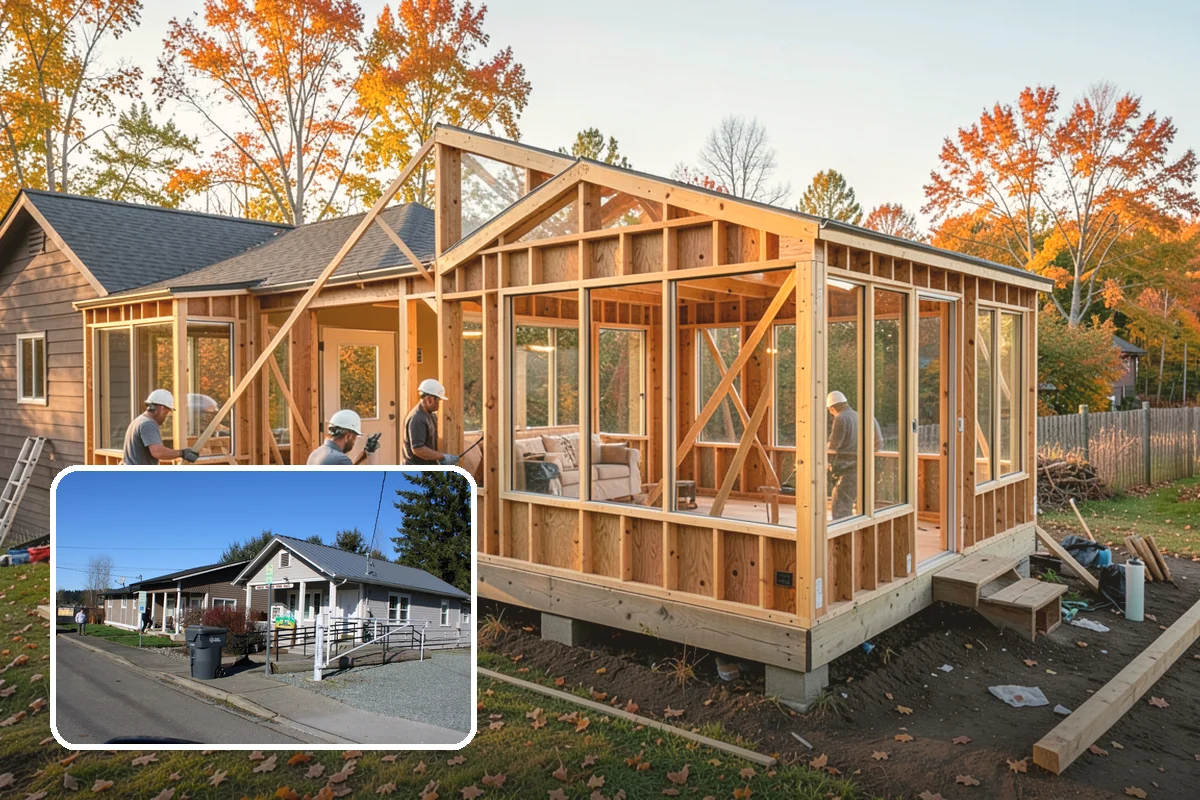
Local Service Information
South Prairie
A very small town in the foothills of southeast Pierce County near the Carbon River.
Benefits
Fixtures that drain and vent correctly the first time; work sequenced to pass Washington rough-in inspection without delays; pressure-tested lines that reveal hidden defects before they are concealed; layout coordinated with framing and electrical to avoid conflicts; a documented foundation for your future finish plumbing

Process
