Strong Foundations. Superior Results.

Skykomish Caulking & Sealing

Precision caulking and sealing that keeps water and drafts out of your home’s joints.
The best time for caulking and sealing in Skykomish is a dry stretch, and those are limited. The town sees about 140 days a year with 0.1 in or more of rain (Daymet, 2005-2025). Caulk needs dry surfaces to bond, so the work usually fits between wet spells rather than into one.
Washington Construction, based in Bothell, WA, gives free estimates. Below is how to plan caulking and sealing here, what changes the scope, and what to expect once work starts.
Planning Caulking and Sealing in Skykomish
Start with a walk around the house. Look at window and door trim, siding joints, corners, penetrations for pipes and vents, and the joints where decking or porches meet the wall. Note any caulk that is cracked, pulling away, or missing. Bring those notes to the estimate.
Why freeze and thaw matters here
Skykomish has about 73 days a year that freeze at night and thaw by day (Daymet). Water that gets into a small gap can freeze, expand, and widen it. Then the next thaw lets more water in. Joints that already show gaps are worth sealing before the cold months, not after.
What affects scope
Scope depends on a few things you can check yourself:
First, the condition of the old material. Old caulk usually has to be cut out and the joint cleaned before new caulk goes in. Laying new over old tends to fail early. Second, the surface. Wood, vinyl, fiber cement, masonry, and metal each call for a suitable sealant. Third, access. Upper-story windows and tall gable ends take more setup than ground-level trim. Fourth, hidden damage. If a gap has let water in for a while, the wood behind it may be soft. That is a repair question, not just a sealing one, and it can widen the job.
With a town of about 117 homes, there is no useful local statistic to tell you what your house needs. Your own inspection and the estimate will tell you more.
What to expect
Expect prep to take more time than the caulking itself. Old material comes out, surfaces get cleaned and dried, and then new sealant is applied and tooled smooth. Some products need dry weather for a set period after application, so a rainy forecast can move the schedule. That is normal for exterior work in wet-weather months.
One practical tip: take dated photos of problem spots before the estimate, and again after the work. It makes it easy to confirm that every spot you flagged was covered.
Skykomish Caulking & Sealing
Local Service Information
Skykomish
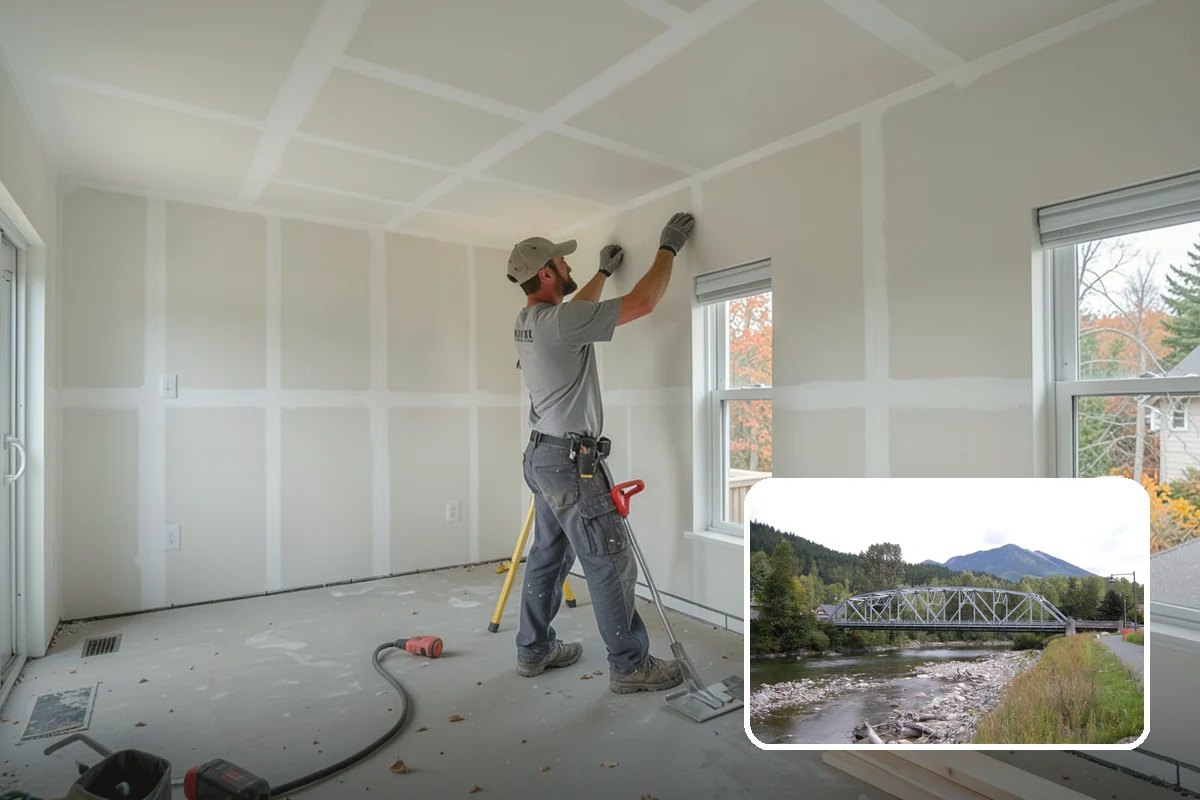
A very small mountain town along the Skykomish River and US-2 in the Cascade foothills.
Benefits
Seals joints against water intrusion; Reduces drafts and energy loss; Uses sealants matched to each surface; Protects against moisture damage; Freshens the finished appearance

Process

Also serving Skykomish
- Roof Puncture Repair in Skykomishat Washington Roofing
- Exterior Wall Cleaning in Skykomishat Washington Pressure Washing