Strong Foundations. Superior Results.

Ruston Smart Thermostat Installation
We install smart thermostats that trim heating costs through Washington’s long, damp heating season.
Smart thermostat installation is an indoor job, so it does not depend on the weather the way roofing or siding does. Still, the months just before heating season are a sensible time to do it. Ruston sees about 107 days a year with 0.1 in or more of rain (Daymet, 2005-2025), and many of those days are cool, so your heating gets steady use.
Installing in early fall means the new thermostat is set up and tested before you rely on it daily. Washington Construction is licensed, bonded and insured ($2M), and this page explains how to plan the job and what to expect.
Planning a Smart Thermostat Installation in Ruston, WA
A smart thermostat looks like a simple swap. The scope depends on what is behind the wall, so planning starts with your heating and cooling equipment.
What affects the scope
The first question is wiring. Many smart thermostats need a common wire, often called a C-wire, to run their screens and Wi-Fi. If your existing cable has no spare conductor, the work may involve adding a wire or using a power adapter made for that purpose. That changes the job from a quick swap to a short wiring task.
The second question is compatibility. Heat pumps, multi-stage furnaces, electric baseboard heat and line-voltage systems each need different thermostat models and wiring. A thermostat that suits one system can fail to run another. Knowing your equipment type and age before you buy a unit saves a return trip to the store.
Ruston has about 28 days a year that freeze at night and thaw by day (Daymet). On those days a schedule that lowers the heat overnight and warms the house before you wake can matter. It is worth deciding on those schedules before installation so they can be entered while the work is under way.
What to expect
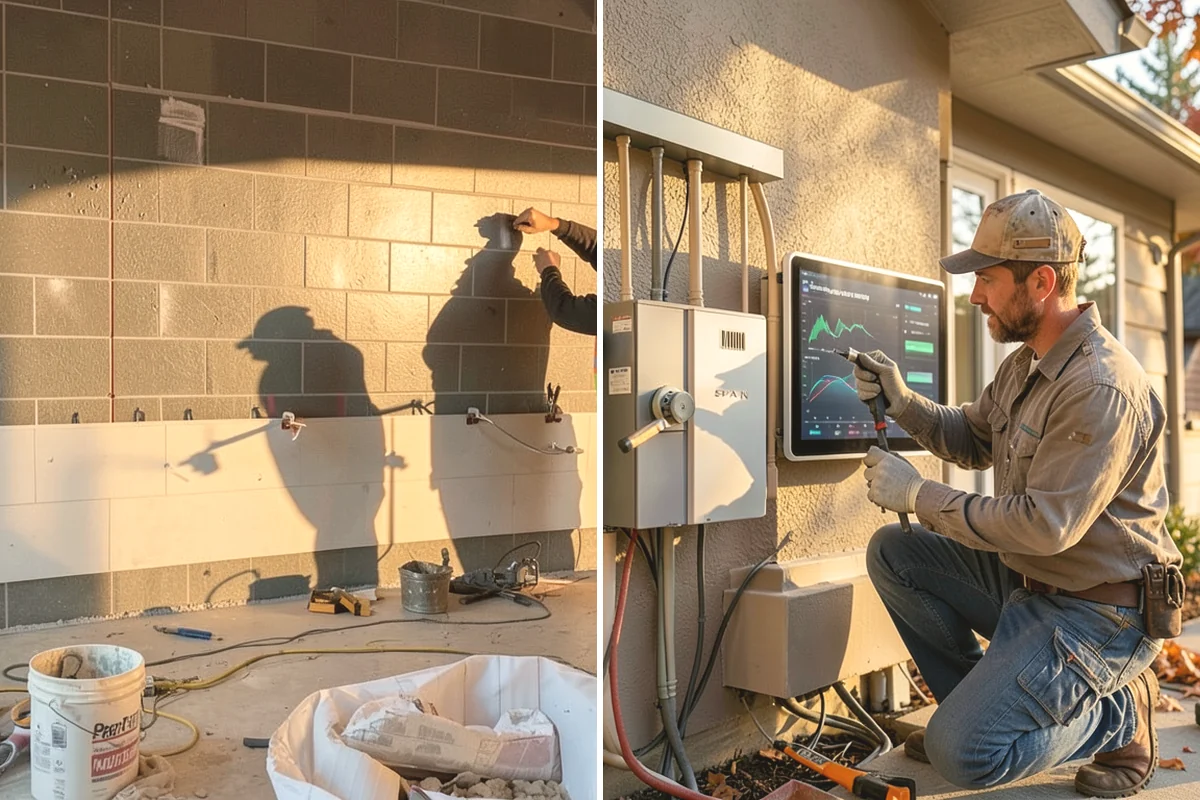
Our own crews handle electrical, plumbing and HVAC work. They are not subcontracted, so the same company that looks at your wiring also handles your equipment. The visit generally covers these steps: power to the system is turned off, the old thermostat is removed, the wires are labeled and connected to the new base, and the unit is set up on your Wi-Fi. Then the heating and cooling are run to confirm that each responds correctly.
Expect a walkthrough of the app and the schedule settings, since most of the savings and comfort come from how the thermostat is programmed, not from the device itself.
One practical tip
Before we arrive, take a photo of your current thermostat wiring with the cover off, and note your router password. Both save time on the day of the install.
Ruston Smart Thermostat Installation
Local Service Information
Ruston
A very small city on Commencement Bay surrounded by Tacoma and Point Defiance.
Benefits
Lower energy bills through learning schedules and remote control; consistent comfort tuned to your daily routine; safe, code-compliant wiring and mounting; app-based control from anywhere; compatibility verified with your existing HVAC
Process
Smart Thermostat Installation in nearby areas
Also serving Ruston
- Accent Lighting in Rustonat Washington Landscaping