Strong Foundations. Superior Results.

Renton Sidewalk Installation
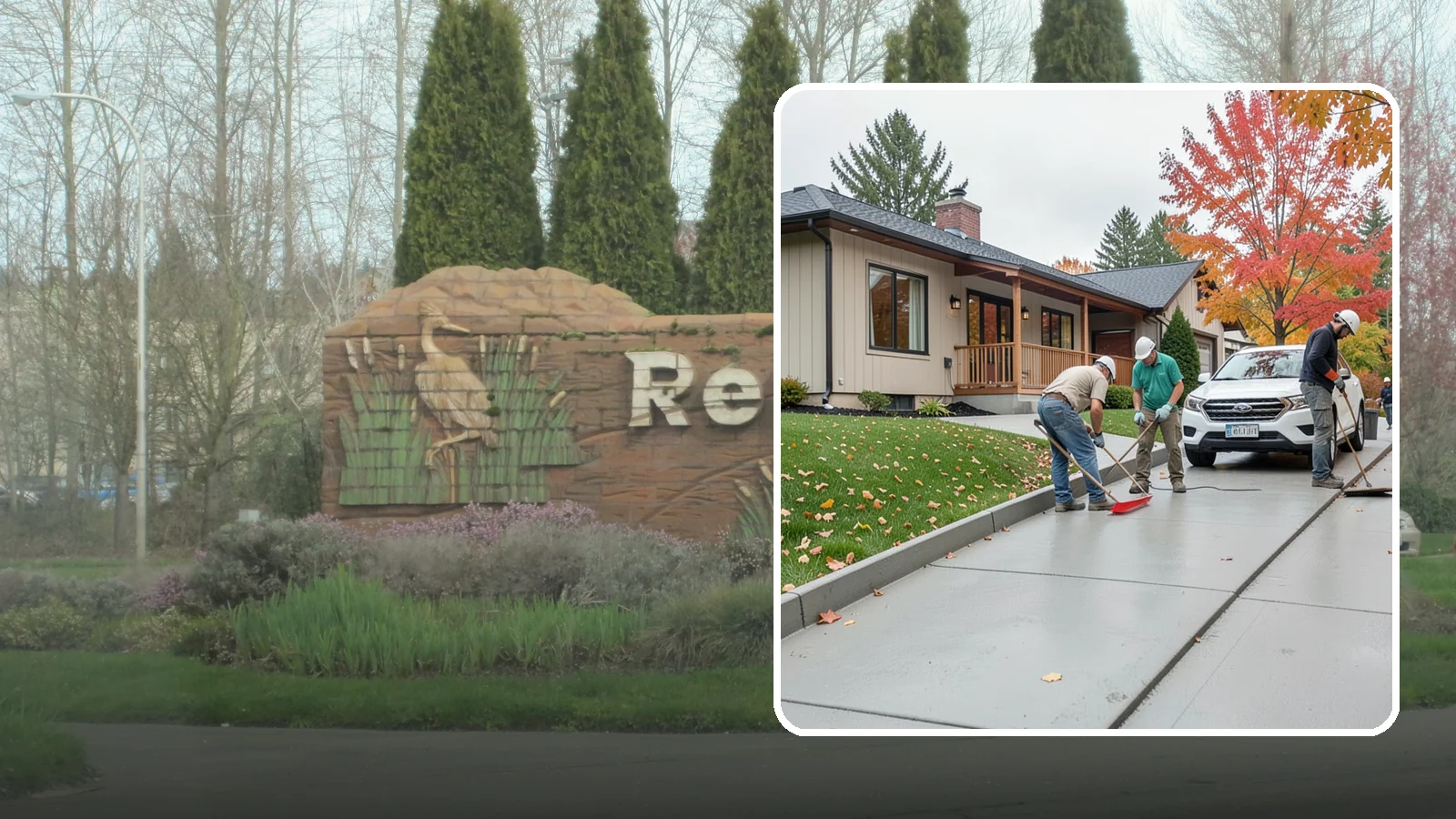
Code-compliant sidewalks poured with the slope and jointing needed to stay flat and safe in wet climates.
In Renton, the best window for pouring a sidewalk is usually the drier part of the year. Concrete placed in wet weather is harder to finish, and rain can mark a fresh surface. Renton gets about 42.4 in of rain a year, per Daymet data for 2005-2025.
Washington Construction, based in Bothell, WA, installs sidewalks for homeowners. This page covers how to plan the job, what shapes the scope, and what to expect once work begins.
Planning a Sidewalk Installation in Renton, WA
Start with the route. Decide where the sidewalk should run, how wide it needs to be, and where it meets your driveway, porch or street. Mark the path on the ground before anyone talks about materials. A clear layout makes the scope easier to define.
What affects scope
Length and width set how much material and labor the job takes. Existing slabs may need to be broken out and hauled away before new work starts. Slope and drainage matter too. A sidewalk should shed water away from the house and not toward it. Soil and the base beneath the concrete also affect how the finished walk holds up.
Weather is part of the picture in Renton. Daymet data shows about 29 days a year that freeze at night and thaw by day. Repeated freezing and thawing can stress concrete, especially where water sits on the surface or in the base. That is a good reason to care about grading and drainage. Snow is modest here, at an average of 5.8 in per season, so winter is not usually a heavy factor. Rain is mostly spread across the year, with about 4.8 days a year bringing 1 in or more. A heavy-rain day can still delay a pour, so allow some flexibility in your schedule.
What to expect
Expect the work to move in stages: layout, removal of any old surface, grading and base preparation, forms, the pour, finishing, and curing. Fresh concrete needs time before it takes foot traffic. Keep pets, kids and bikes off it until you are told it is ready.
If you want to spread out the cost, financing is available, subject to credit approval.
One practical tip: walk the planned route after a hard rain and note where water collects. Share what you see before the job is scoped, so the grading can address it.
Renton Sidewalk Installation

Local Service Information
Renton
A city at the south end of Lake Washington where the Cedar River meets the lake.
Benefits
Proper cross-slope prevents standing water and ice; Compacted base limits settling and heaving; Smooth, trip-resistant edges for safety; Right-of-way permits coordinated on your behalf; Finish that matches neighboring walks
Process
Also serving Renton
- Warehouse Floor Cleaning in Rentonat Washington Pressure Washing
- Stone Wall Installation in Rentonat Washington Landscaping
- Concrete Flatwork in Rentonat Washington City Services