Strong Foundations. Superior Results.

Pacific Water Damage Repair

Complete water damage repair that restores your home after leaks, floods, or storm intrusion.
You may have found a stained ceiling, a soft spot in the floor, or a musty smell that will not go away. Water damage rarely stays put. Once you see the signs, the next step is to find where the water came from and how far it has spread.
Washington Construction repairs water damaged homes in Pacific. This page explains what tends to cause the damage here, what local rain and flood data say, and how the repair work is usually done.
Water Damage Repair in Pacific: Causes, Local Risk and Repair
Water damage starts with a source. Common ones are a roof leak, a failed window seal, a plumbing line, poor drainage around the foundation, or water entering during heavy rain. Repair only lasts if the source is found and fixed first. Replacing drywall under an active leak just repeats the problem.
How Pacific's weather and flood rating factor in
Pacific gets about 41.9 inches of rain a year, according to Daymet data for 2005-2025. Only about 4.7 days a year bring 1 inch or more. That tells us most of the rain falls steadily rather than in a few big storms. Steady rain tests roofs, flashing, gutters and siding over many months. Slow leaks can go unnoticed behind finishes during that time.
The wettest single day in that period was November 6, 2006, with 3.2 inches. A day like that can overwhelm drainage and push water toward foundations and crawl spaces. FEMA's National Risk Index rates inland (river and rain) flooding risk for Pacific as Relatively High. That is a risk rating, not a prediction for any one house. It is still a good reason to check how water leaves your property, and to ask about it if you have had damp crawl spaces or basement walls.
What the repair work involves
The work usually follows a clear order:
- Find and fix the source of the water.
- Open up affected walls, floors or ceilings to see how far the moisture went.
- Remove materials that are soaked or have mold growth, such as drywall, insulation and flooring.
- Dry the framing fully before anything is closed up.
- Rebuild and refinish the area.
Drying matters because wood that is closed in while damp can lead to rot and mold later. Washington Construction gives a 1-year warranty on labor for this work. Ask for a walk-through of the damage so you know what is being removed and rebuilt, and why.
Pacific Water Damage Repair
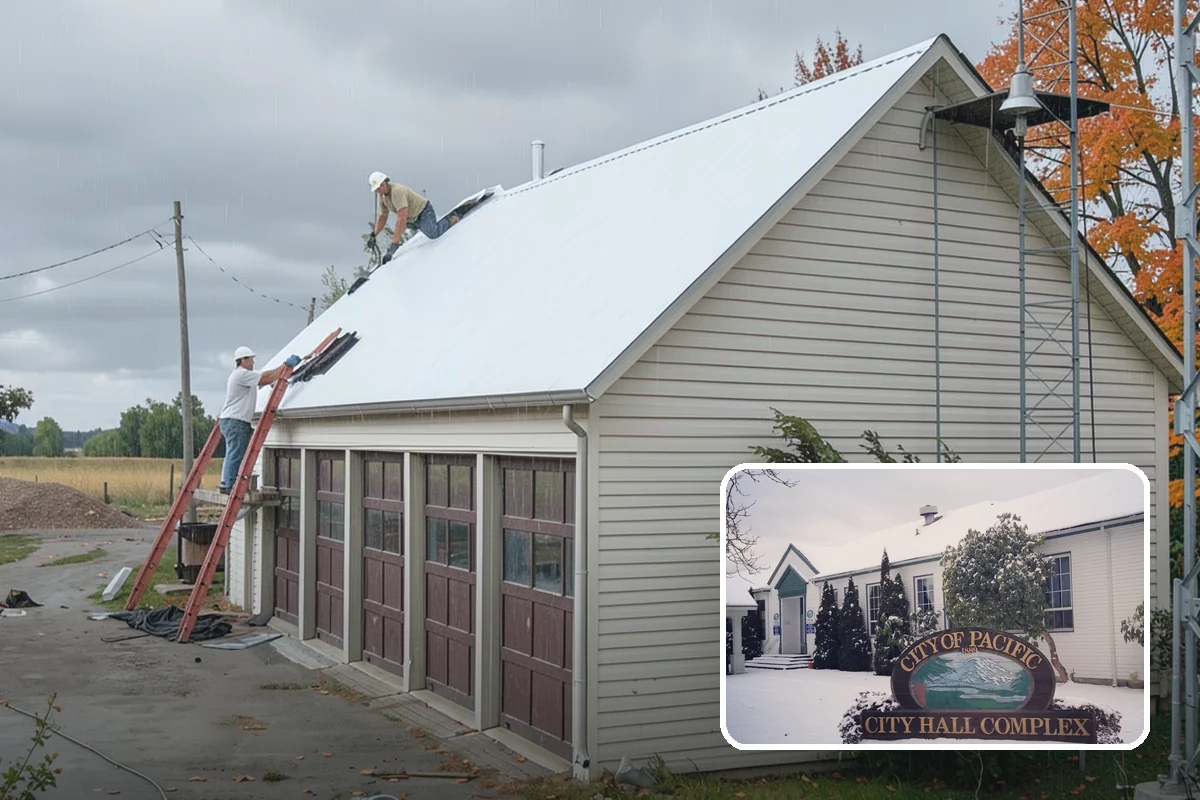
Local Service Information
Pacific
A small city on the King and Pierce county line along the White River near Auburn and Sumner.
Benefits
Restores damaged surfaces and structure; Stops the leak at its source; Dries and tests to prevent mold; Replaces compromised insulation; Returns rooms to full use

Process
Also serving Pacific
- Cracked Shingle Repair in Pacificat Washington Roofing
- Soft House Washing in Pacificat Washington Pressure Washing