Strong Foundations. Superior Results.

Mount Vernon Electrical Panel Upgrade
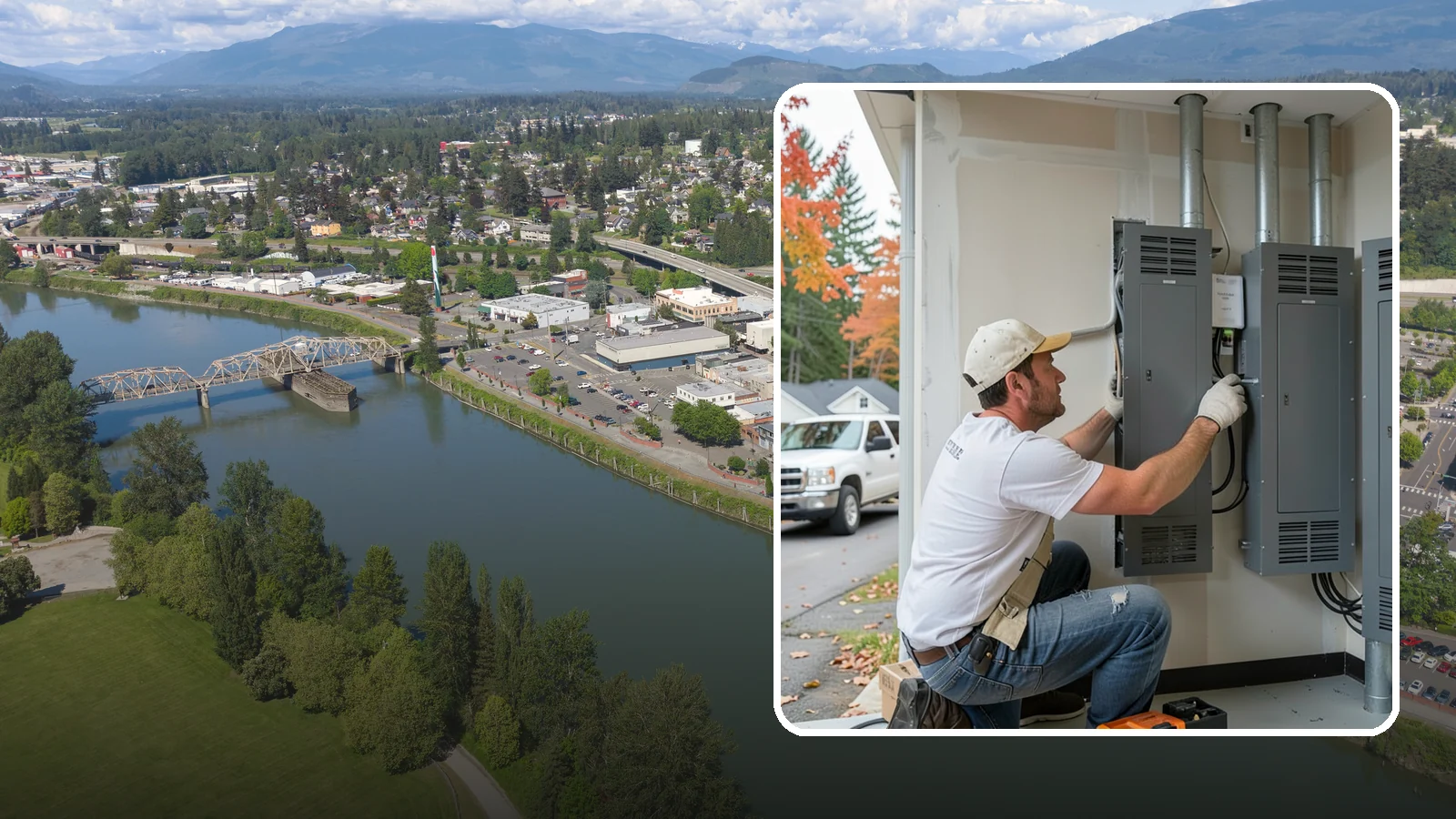
We replace outdated or overloaded electrical panels with modern, higher-capacity service to power your home safely.
Does an older Mount Vernon house need a bigger electrical panel? Often the answer depends on what you plan to run from it. A panel sized decades ago may have little room for an EV charger, a heat pump or an electric range.
Census figures show that about 39% of housing units in Mount Vernon were built before 1980. That number includes apartments, so it says nothing about any one house. It is a reason to have your own panel looked at before you add new loads.
Panel Upgrade Planning for Mount Vernon Homes
Start with your heating and added loads
Census data shows home heating in Mount Vernon is split: 46% electric and 51% utility gas. If your home runs on electric heat, the panel already carries a large share of the load. If you heat with gas and are thinking of switching to a heat pump, that change adds new demand. Either way, list what you plan to add before the panel is sized. Common additions include an EV charger, an electric range, a hot tub or a workshop.
Older homes need a closer look
About 39% of housing units here predate 1980, per the Census ACS for 2020 to 2024. Homes from that era may have older panels, fewer circuits or wiring that has been added to over the years. A panel upgrade is a good point to check how the rest of the system looks. We describe what we find plainly so you can decide what to do next.
Plan around the rain
Mount Vernon sees about 109 days a year with 0.1 inch or more of rain, based on Daymet data from 2005 to 2025. Many panels are mounted outside or on a garage wall, and the service mast and meter base sit outdoors. Wet weather can affect how that work is scheduled and how the exterior connections are protected. Ask about this before you pick a start date.
Who does the work
Our own crews handle electrical work, not subcontractors. Washington Construction, based in Bothell, is licensed, bonded and insured for $2M. For a panel upgrade, that means the people who plan the job are the ones who carry it out.
Mount Vernon Electrical Panel Upgrade

Local Service Information
Mount Vernon
The Skagit County seat, set in the Skagit River valley amid farmland.
Benefits
Ends nuisance breaker trips and overload risk; adds capacity for EV chargers, heat pumps, and modern loads; brings grounding and bonding up to current code; clearly labeled breakers simplify future work; safer connections backed by inspection

Process
