Strong Foundations. Superior Results.

Issaquah Whole-House Fan Installation
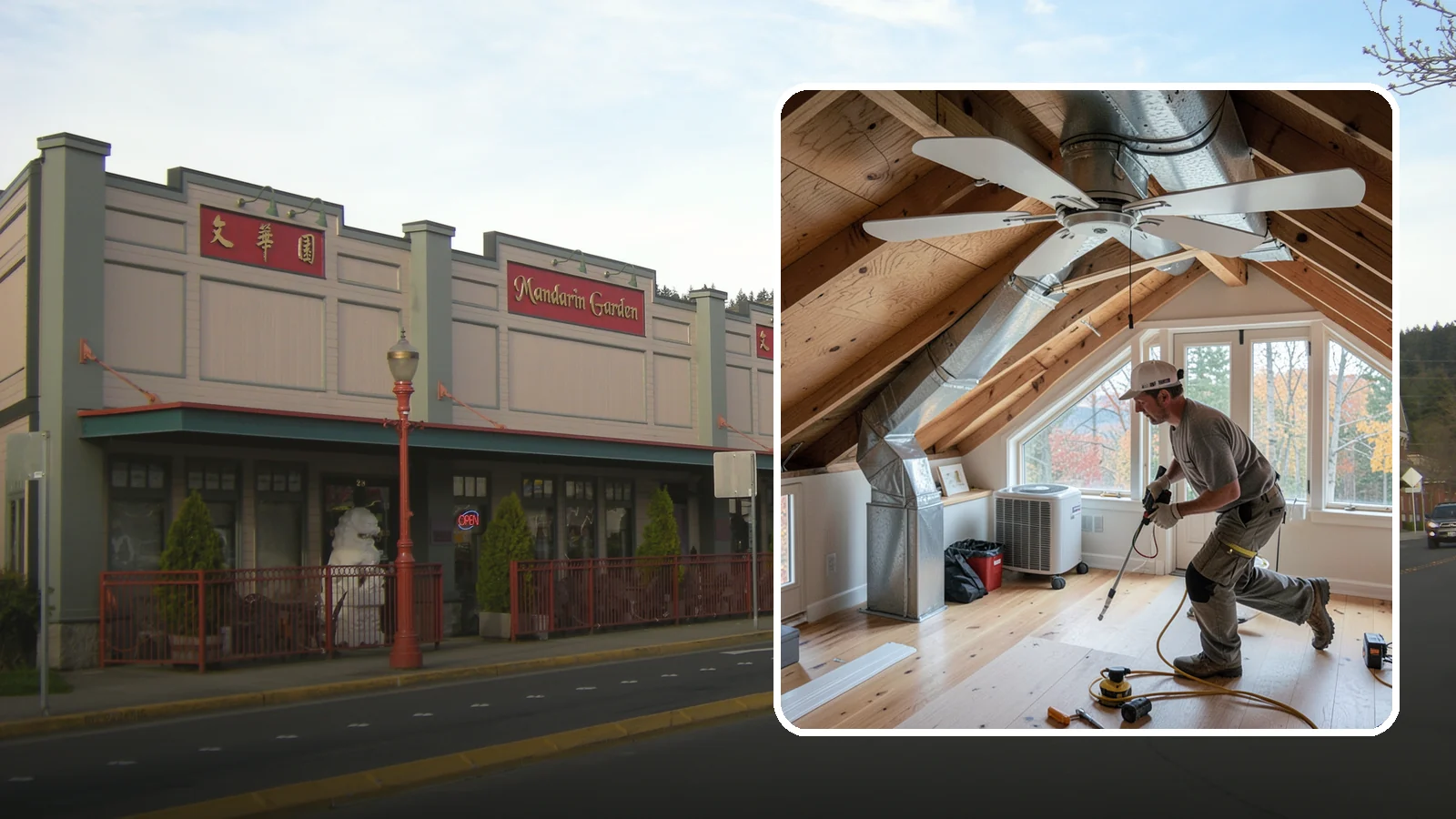
Whole-house fan installation that flushes out heat on warm Puget Sound evenings without AC.
In Issaquah, July is the driest month on average. That matters for a whole-house fan, because the fan works best when the outdoor air is cooler and drier than the air inside. Dry summer evenings are when it can pull heat out of the house.
Washington Construction, based in Bothell, WA, has been in business for 22 years. We install whole-house fans in homes that need a way to cool down without running the air conditioner all night. Here is how the work goes and what to think about first.
Whole-House Fan Installation Steps for Issaquah Homes
A whole-house fan sits in the ceiling, usually of a hallway or top-floor landing. It pulls indoor air up into the attic and pushes it out through attic vents. Open windows let cooler outside air in. Here is the usual sequence of work.
- Choose a location near the center of the house, where air can reach the most rooms.
- Check the attic for framing, wiring, and insulation that sit in the way.
- Cut the ceiling opening and frame it to carry the fan.
- Mount the fan and run power and a wall switch.
- Fit an insulated, sealed cover so the opening does not leak heat in winter.
Attic venting comes first
The fan moves a lot of air. That air needs somewhere to go. If the attic does not have enough vent area, the fan will struggle and can push air back into living spaces. We look at your existing vents before settling on a fan size.
Why the dry July pattern matters
Because July is the driest month on average in Issaquah, the fan suits the season when evenings cool off. You run it at night or early morning, with windows open, then close up during the hot part of the day. It is not a replacement for air conditioning on every day, and it does little when the outdoor air is warm.
Heating type and older homes
Census figures show that 52% of Issaquah homes heat with electricity and 46% with utility gas. If you have a gas furnace or water heater, tell us. Open flame appliances need enough makeup air so the fan does not pull exhaust back into the house. Run the fan only with windows open.
About 17% of housing units in Issaquah were built before 1980, per the Census ACS 2020-2024, and that count includes apartments. If your house is older, the attic may have older wiring or thin insulation. We check both before cutting into the ceiling.
Issaquah Whole-House Fan Installation

Local Service Information
Issaquah
A city at the base of the Issaquah Alps on the Eastside, surrounded by forested hills.
Benefits
Cools the home quickly on warm evenings; Uses far less energy than air conditioning; Improves attic ventilation in summer; Seals tight to prevent winter heat loss; Freshens indoor air with a full exchange

Process
Whole-House Fan Installation in nearby areas
Also serving Issaquah
- Attic Ventilation Assessment in Issaquahat Washington Roofing