Strong Foundations. Superior Results.

Issaquah Crawlspace Encapsulation
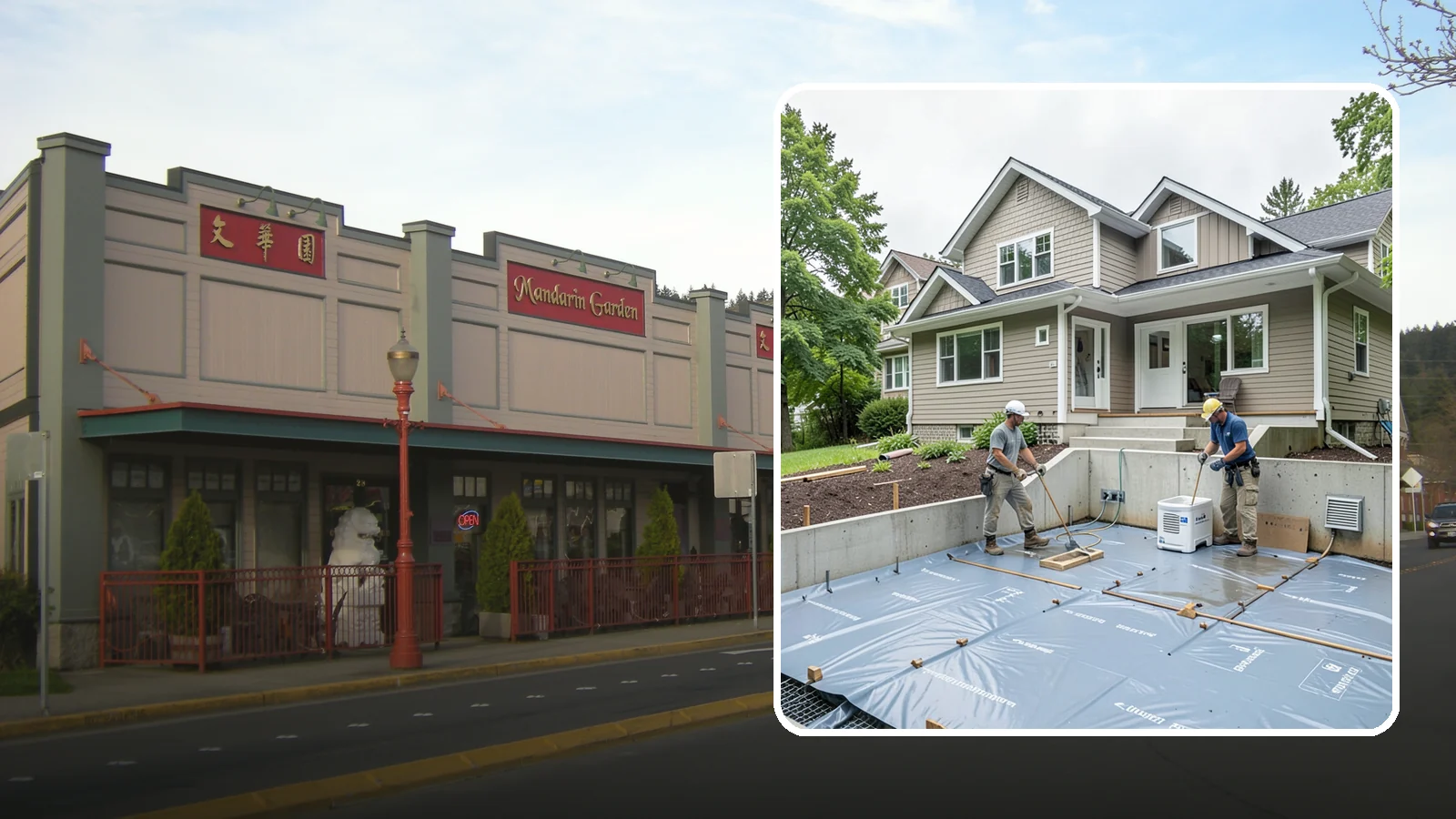
Sealing your crawlspace with a heavy-duty liner and moisture controls to keep Puget Sound damp out of the structure beneath your home.
About 81% of Issaquah's yearly precipitation falls from October to April, per Daymet data for 2005 to 2025. That is a long wet season for a crawlspace, and moisture under a house tends to build up when the ground stays damp for months.
Crawlspace encapsulation seals the space with a vapor barrier so ground moisture has less chance to reach the framing and the air in your home. Washington Construction handles this work, and the steps below show what to expect and what to decide before work starts.
Crawlspace Encapsulation in Issaquah: Steps and Decisions
Encapsulation is a sequence of steps. Each one affects how well the next one works.
The basic steps
- Inspect the crawlspace for standing water, damp soil, wood damage and pests.
- Clear debris and fix any drainage or leak problems first.
- Lay a heavy vapor barrier over the ground and up the foundation walls.
- Seal seams and edges, and around piers and pipes.
- Review ventilation and moisture control for the sealed space.
Why the wet season matters here
With 81% of Issaquah's precipitation arriving between October and April, the ground under a house can stay wet for much of the year. A vapor barrier does not fix water that enters from outside. If you see pooling or seepage, drainage should be dealt with before the liner goes in. Otherwise water can collect under the plastic.
It also helps to have the crawlspace looked at during or just after the wet months. Conditions are easier to read when the soil is damp.
Flood risk is a reason to check, not a forecast
FEMA's National Risk Index rates inland flooding risk (river and rain) for Issaquah as Relatively Moderate. That is a risk rating, not a prediction for your property. It is a fair reason to ask whether your crawlspace has ever held water and to mention that history before work is planned.
Older homes
Per the Census ACS for 2020 to 2024, about 17% of Issaquah housing units were built before 1980. That figure includes apartments, so it says little about any single house. If yours is older, expect a closer look at the framing, insulation and any old materials in the space before anything is covered.
Warranty
Washington Construction gives a 1-year warranty on labor. Ask what that covers in writing before you sign.
Issaquah Crawlspace Encapsulation
Local Service Information
Issaquah
A city at the base of the Issaquah Alps on the Eastside, surrounded by forested hills.
Benefits
Stops ground moisture and condensation from reaching floor framing; Reduces mold, mildew, and wood-rot risk common in coastal homes; Improves energy efficiency and comfort on the floors above; Discourages rodents and insects from nesting underneath; Protects stored items and HVAC ducts routed through the space

Process
Crawlspace Encapsulation in nearby areas
Also serving Issaquah
- Standing Water Solutions in Issaquahat Washington Landscaping
- Ice and Water Shield Installation in Issaquahat Washington Roofing
- Culvert Repair in Issaquahat Washington City Services