Strong Foundations. Superior Results.

Hunts Point Fire Pit Construction
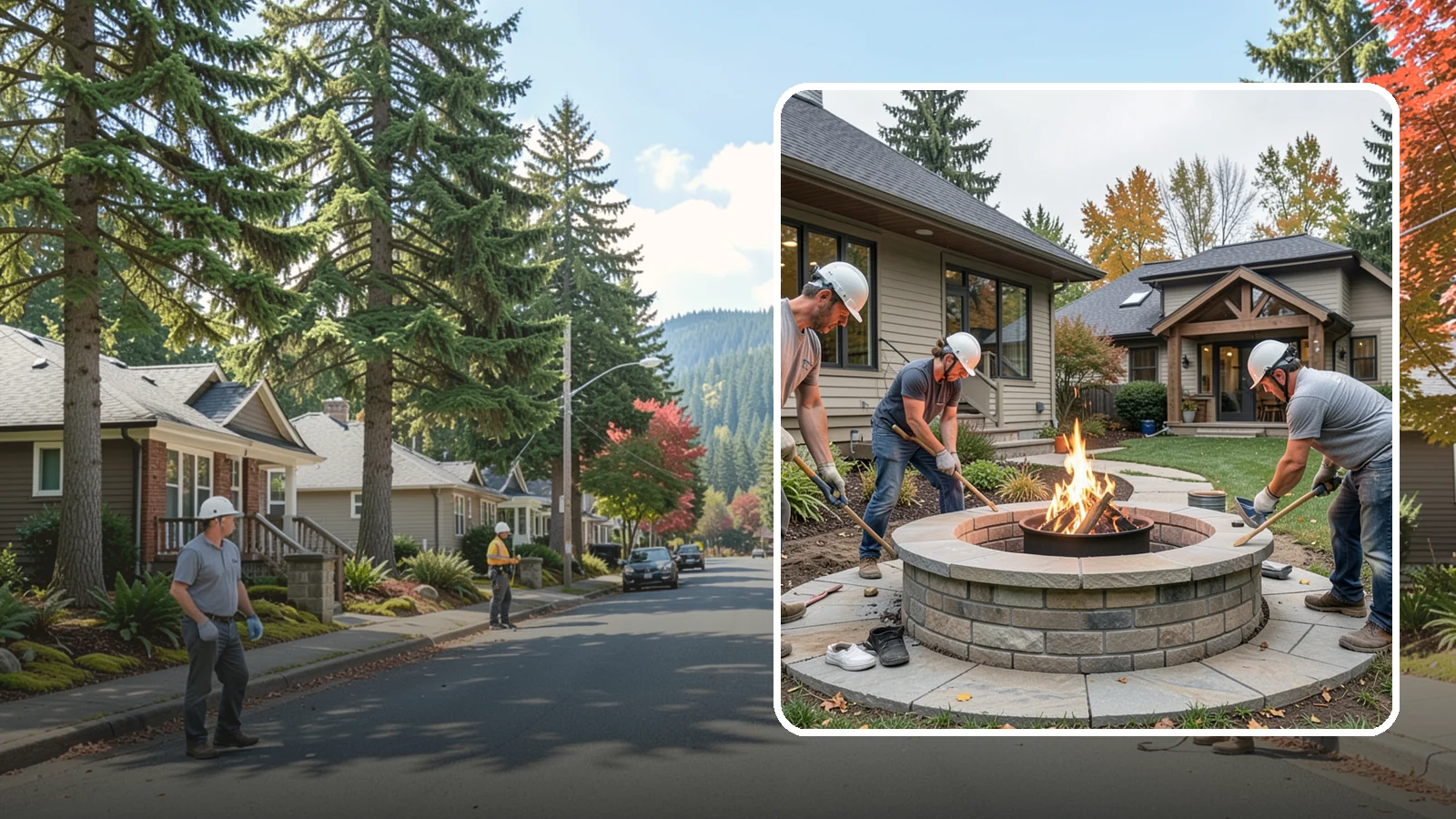
A permanent stone or gas fire pit that turns your yard into a year-round gathering spot.
You want a place in the yard where the family can sit out after dinner, and a fire pit is the obvious answer. The harder questions are where it goes, what it sits on, and how it holds up through a wet Pacific Northwest year.
Washington Construction builds fire pits for Hunts Point homeowners. We give free estimates, so you can talk through placement and materials before you commit to a design.
Fire Pit Construction in Hunts Point: Rain, Trees and Frost
A fire pit is exposed to weather in a way most patio features are not. Heat, water and ground movement all act on it. The local numbers show which of these deserve the most attention here.
Rain shapes the base and the drainage
Hunts Point sees about 106 days a year with 0.1 inch of rain or more, according to Daymet data from 2005 to 2025. That is a lot of wet days. Water that sits under or inside a fire pit can soften the base, stain masonry and keep the ring damp. A fire pit here needs a compacted, free-draining base and a bowl or insert that sheds water. Where the pit sits relative to the slope of the yard matters for the same reason.
July is the driest month on average. That makes summer the easier time for exterior work, since the ground is firmer and materials cure and set under better conditions. It is also when most people want to use the pit, so planning ahead helps.
Frost cycles affect the masonry
About 28 days a year freeze at night and thaw by day, per Daymet. Each cycle can push moisture into small cracks in block, stone or mortar and widen them. Because of this, the footing depth, the choice of material and the way joints are built all deserve thought. Dense, outdoor-rated materials and a stable base are standard practice for that reason.
Trees change where you place it
Tree canopy covers about 18.4% of Hunts Point, according to USFS and NLCD data for 2025. If your lot has mature trees, overhead branches are a real consideration. Embers and heat rise, so a pit needs clear space above it as well as around it. Roots near the site can also limit digging and shift a base over time.
What the work includes
The job usually starts with choosing a spot and marking it out. Then comes excavation, a compacted base, the wall or ring, and a finish that suits the rest of your landscape. We can go over each step, and the materials, when we prepare your free estimate.
Hunts Point Fire Pit Construction
Local Service Information
Hunts Point
A very small, exclusively residential town on a peninsula in Lake Washington.
Benefits
Adds cozy warmth and gathering appeal; Fire-rated materials handle repeated heat cycles; Gas or wood-burning configurations available; Built-in drainage prevents standing water; Integrates cleanly with patios and seating walls
Process
Fire Pit Construction in nearby areas
Also serving Hunts Point
- Pavilion Installation in Hunts Pointat Washington Landscaping
- Paver Patio Cleaning in Hunts Pointat Washington Pressure Washing