Strong Foundations. Superior Results.

Gig Harbor Whole-House Rewiring
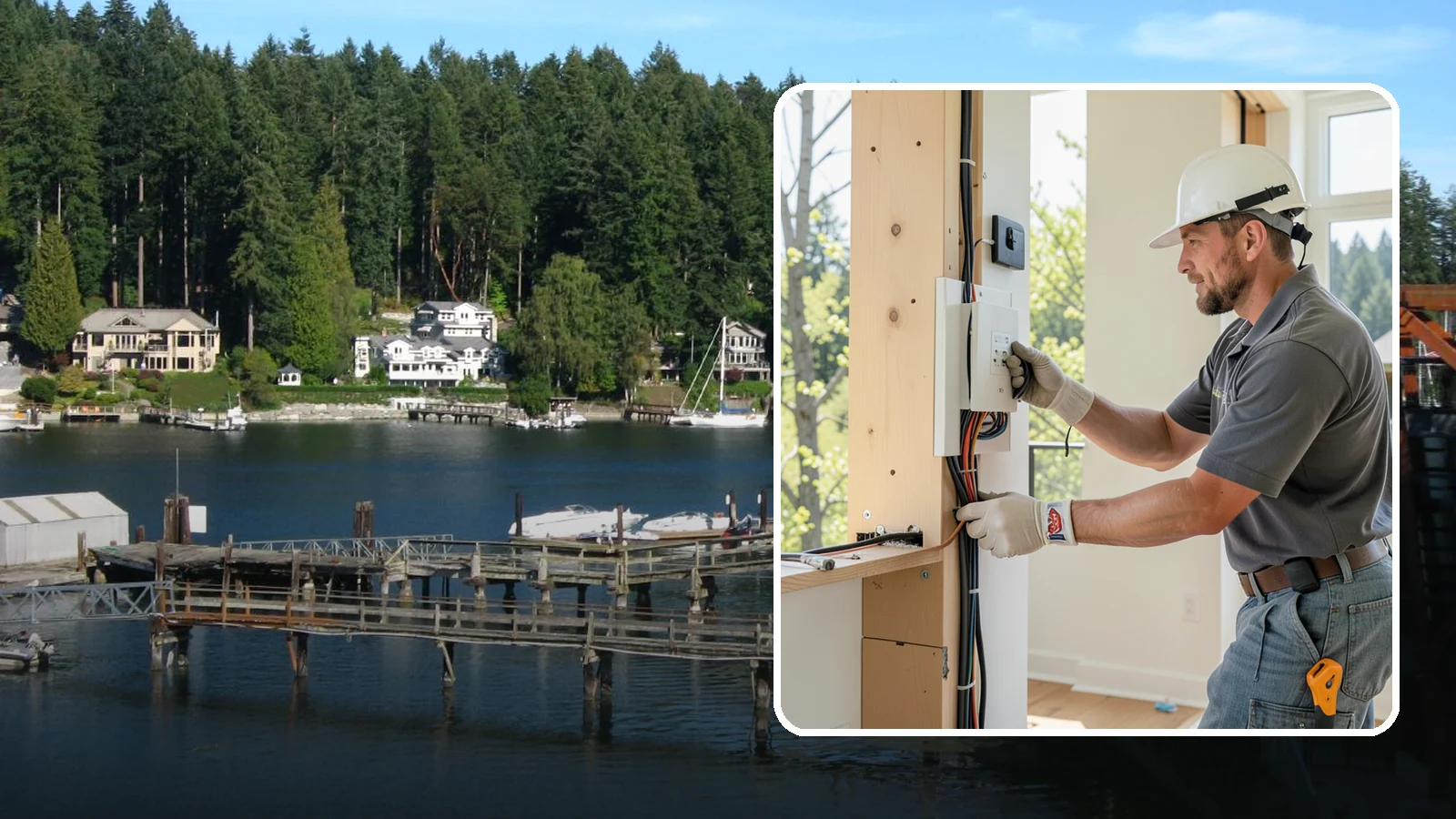
We replace old, unsafe wiring throughout your home with modern, grounded circuits that meet current code.
In Gig Harbor, about 24% of housing units were built before 1980, per the Census ACS 2020-2024 estimates. That figure includes apartments, so it says nothing about any one house. It does mean older wiring is part of the local housing mix, and it is worth checking in your own home.
Whole-house rewiring replaces the electrical wiring throughout a home, not just one circuit. Washington Construction, based in Bothell, WA, handles electrical work with its own crews rather than subcontractors. This page explains the steps and what to plan for.
How Whole-House Rewiring Works for Gig Harbor Homes
A rewire is easier to plan when you know the order of the work. Here is the general path.
Start with the age of the house
About 2% of Gig Harbor housing units were built before 1940, and about 24% before 1980, per the Census ACS 2020-2024. Those are area-wide numbers. Your home's build year is what counts. Older houses can have outdated wiring types, limited circuits, or past repairs by different hands. A walk-through of the panel, outlets and accessible framing tells us what you actually have.
The usual steps
- Inspect the existing panel, wiring and accessible spaces such as the attic, crawl space and basement.
- Plan new circuits and outlet locations with you, room by room.
- Run new wiring through walls, ceilings and floors, opening finished surfaces where needed.
- Connect the new wiring to the panel, then install devices and fixtures.
- Patch and close up the openings.
Opening walls is the part homeowners often underestimate. Drywall repair and paint touch-up are part of planning, not an afterthought.
Rain and scheduling
Gig Harbor sees about 111 days a year with 0.1 inch or more of rain, per Daymet data from 2005 to 2025. Rewiring is mostly indoor work, so rain rarely stops it. It can still matter if a new service connection or exterior wall work is part of the job, since wet weather affects exterior work. Ask about that sequencing up front.
One team, fewer handoffs
Because our own crews do the electrical work, the people who open the walls are the ones who close out the wiring. We also give a 1-year warranty on labor. If your project touches plumbing or HVAC in the same walls, that same in-house approach keeps the trades coordinated.
Gig Harbor Whole-House Rewiring
Local Service Information
Gig Harbor
A waterfront city on a sheltered harbor across the Narrows from Tacoma.
Benefits
Removes fire risk from knob-and-tube and old aluminum wiring; adds grounded outlets and code-required GFCI and AFCI protection; often satisfies insurer requirements for older homes; dedicated circuits support modern appliance loads; tested and inspected for lasting safety

Process
