Strong Foundations. Superior Results.

Gig Harbor Drywall Texturing
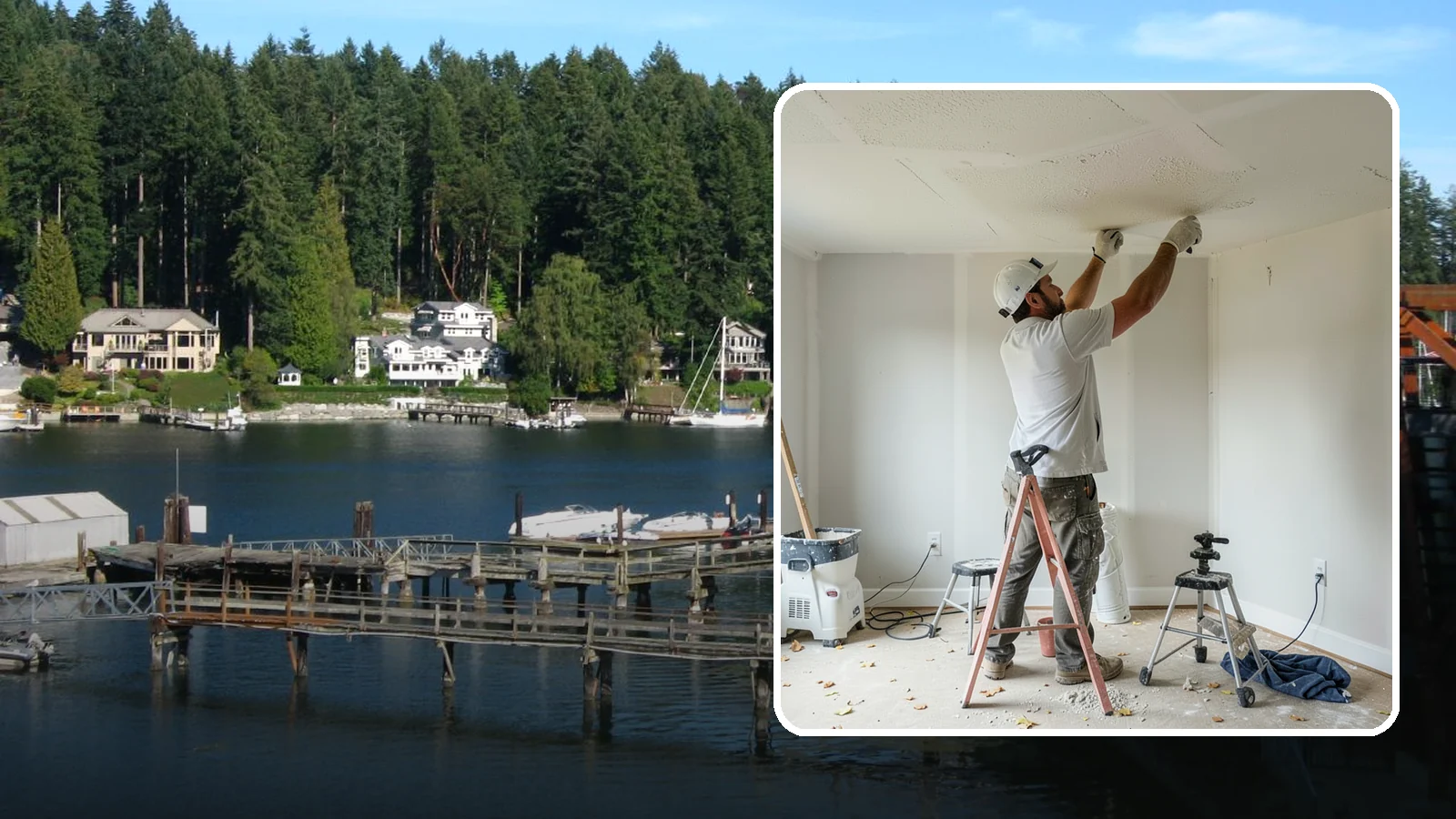
Drywall texturing applies knockdown, orange peel, or custom textures to walls and ceilings.
Drywall texturing is interior work, so it does not have to wait for dry weather. Still, the wet months can be a sensible time to schedule it in Gig Harbor. Rain falls on about 111 days a year here (Daymet, 2005-2025), and many homeowners spend more time indoors then and notice walls and ceilings more.
Texture work also goes best when you can keep the house at a steady, moderate temperature while joint compound and texture dry. This page explains how to plan the job, what changes its scope, and what to expect from start to finish.
Planning Drywall Texturing in Gig Harbor Homes
Start by deciding what you want the finished walls or ceilings to look like. Texture can match an existing finish, cover patched areas, or give a room a new look. Matching is usually the harder task, because the new texture has to blend with what is already on the wall. Bring photos or point out the rooms you want to match.
What affects the scope
Home age is one factor. About 24% of Gig Harbor housing units were built before 1980, per the Census ACS 2020-2024, and that count includes apartments. If your home is older than 1978, paint or older texture layers may contain lead, and some older ceiling textures may need testing before anyone sands or scrapes them. This does not describe any particular house. It is a reason to ask about testing before work begins.
Newer homes matter too. About 27% of units here were built from 1990 to 2009, so they are now 15 to 35 years old. Walls in homes of that age may have settled, with small cracks, nail pops, or old patches that show through paint. Repairing those first is part of the job, and the number of repairs changes how much prep time the work takes.
Other things that shape scope include the number of rooms, ceiling height, how much furniture must be moved, the texture style you choose, and whether walls need new drywall or only skim coating and repair.
What to expect
Expect prep first: covering floors, masking trim and fixtures, and repairing damage. Texture is then applied and left to dry before priming and painting. Dust and compound odor are normal, so plan which rooms you will stay out of. Financing is available through Washington Construction, subject to credit approval, if you want to spread the cost of a larger project.
Practical tip: before the work starts, mark any cracks or patched spots with painter's tape, and take photos in side light from a window. Raking light shows flaws that normal light hides, and it helps you and the crew agree on what to fix.
Gig Harbor Drywall Texturing
Local Service Information
Gig Harbor
A waterfront city on a sheltered harbor across the Narrows from Tacoma.
Benefits
A range of textures from orange peel to knockdown; imperfections hidden under a consistent pattern; new work blended to existing surfaces; even application across walls and ceilings; a primed, paint-ready textured finish
Process