Strong Foundations. Superior Results.

Fife Heated Driveway Installation
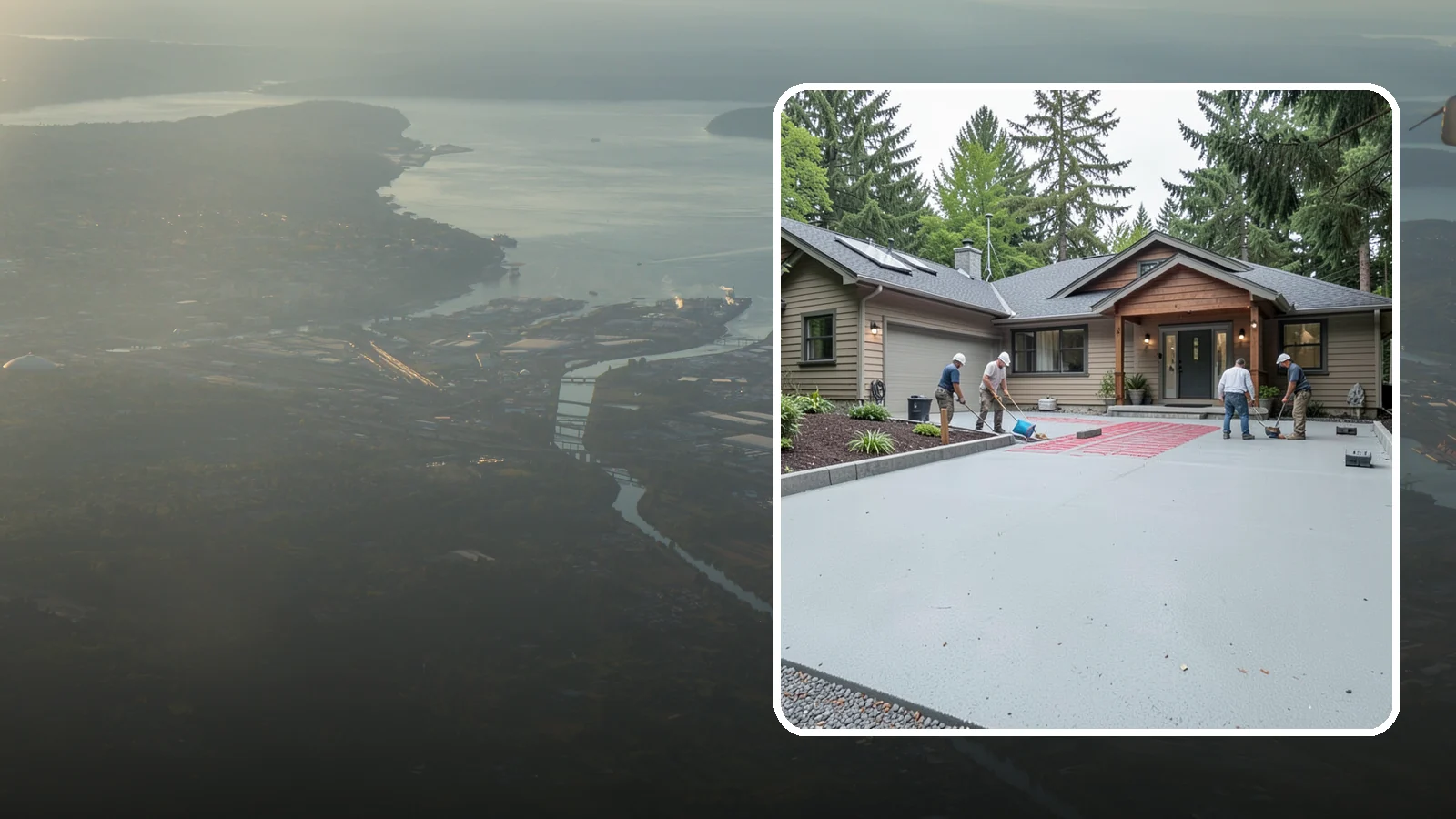
Embedding a radiant heating system beneath the driveway to melt snow and ice automatically each winter.
You step outside on a cold morning and the driveway is slick. Maybe it is a thin glaze of ice, maybe a few inches of slush at the bottom of a slope. A heated driveway is meant to take that chore off your list.
Washington Construction installs heated driveways for Fife homeowners. Below, we cover what drives the need here, what local weather and home energy data suggest, and what the work involves. We give free estimates.
Heated Driveways in Fife: Weather, Energy and Installation
A driveway gets icy when water on the surface freezes. That water may come from melting snow, rain, or meltwater that refreezes overnight. The freeze-thaw cycle is the main driver. In Fife, Daymet data shows about 27 days a year that freeze at night and thaw by day. On those days, daytime melt can turn to ice after dark.
Snow itself is a smaller part of the picture here. Average snowfall is 5.8 inches per season. That is not much, so a heated driveway in Fife is less about clearing deep snow and more about keeping a surface from glazing over on cold nights and mornings. If your driveway is steep, shaded, or the only way to reach the street, that may matter more to you than the seasonal snow total.
Heating type is the second thing to weigh. Census data shows about 71% of homes in Fife are heated with electricity and about 23% with utility gas. That mix tells you little about your own house, but it is a reason to check your electrical service early. An electric heated driveway uses a lot of power while running, so the panel and service capacity need review before anything is poured or laid. A hydronic system, which circulates warm fluid through tubing, needs a heat source instead, and what is available at your home shapes that choice.
The work itself usually follows a set order. We look at the site, the slope, and where water drains. The old surface is typically removed or prepared. Heating cables or tubing are laid over a prepared base, then covered with new concrete, asphalt, or pavers. Controls are added, often a sensor or a switch, so the system runs only when needed. Because the heating elements sit under the surface, they are hard to reach later, so the layout is worth getting right the first time.
Wet-weather months also affect timing, since paving and concrete work go best in drier conditions. A free estimate lets you compare options for your driveway before you decide.
Fife Heated Driveway Installation

Local Service Information
Fife
A city in the Puyallup River delta of Pierce County with major commercial and industrial areas.
Benefits
Automatically melts snow and ice with no shoveling; Improves safety on sloped or shaded driveways; Eliminates de-icing salt and its surface damage; Activates on its own via temperature sensors; Extends the life of the driveway surface

Process

Also serving Fife
- Concrete Driveway Cleaning in Fifeat Washington Pressure Washing
- Brick Masonry in Fifeat Washington Landscaping
- Asphalt Berm Construction in Fifeat Washington City Services
- Asphalt Driveway Snow Removal in Fifeat Washington Snow Removal