Strong Foundations. Superior Results.

Federal Way HVAC Ventilation Installation
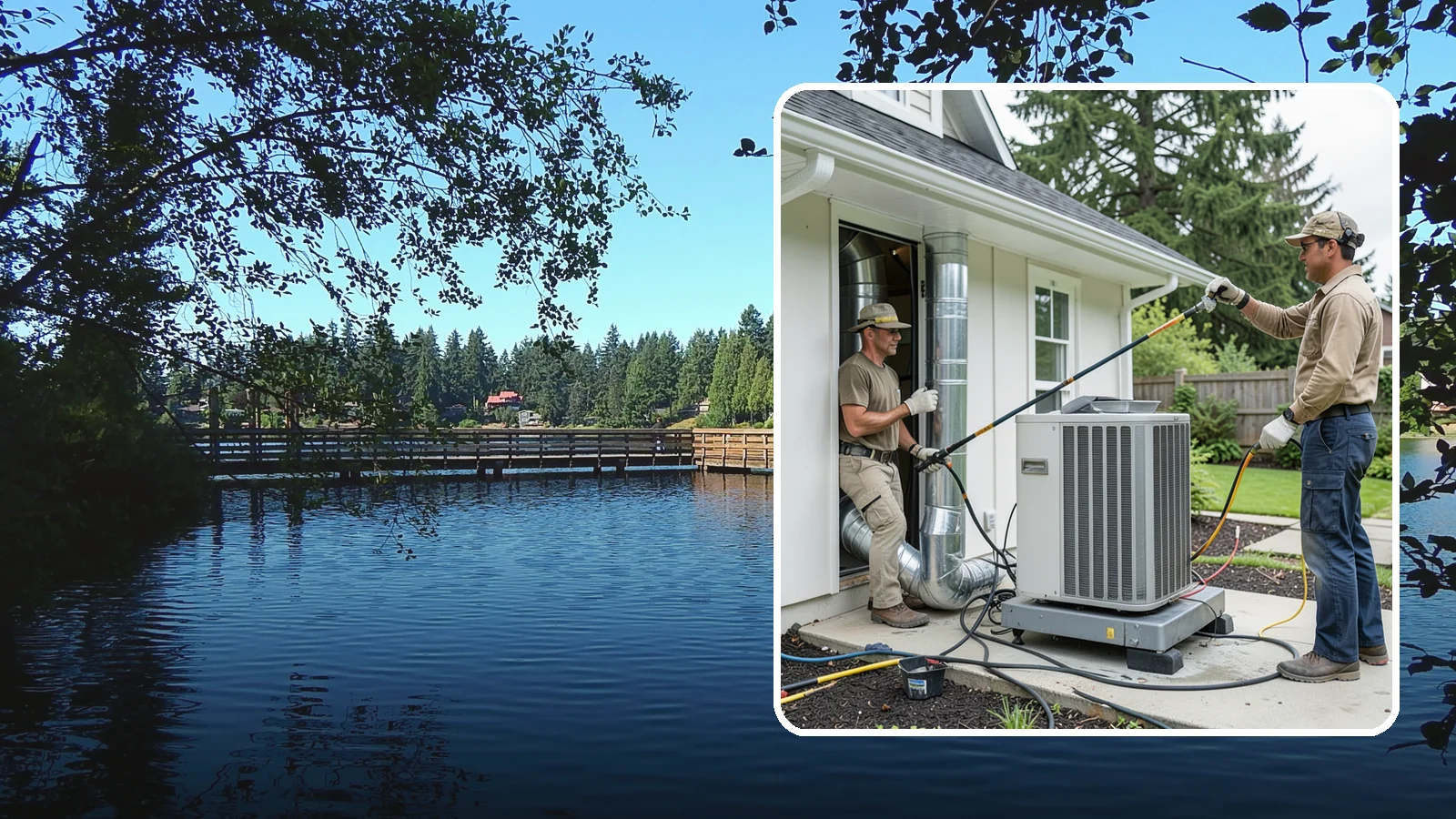
We install whole-house ventilation systems that supply fresh air and control moisture in tightly sealed homes.
The best time to plan ventilation work in Federal Way is the dry season, and July is the driest month on average. Dry weather makes it easier to open up roofs, walls and exterior vents without rain getting in. Planning in late spring lets you be ready when that window opens.
Washington Construction installs HVAC ventilation for homeowners who want better airflow, moisture control and fresher indoor air. Here is how to think through the job before work starts.
Planning Ventilation Work in Federal Way Homes
Start with what your home already has. Census data shows about 58% of Federal Way homes heat with electricity and about 39% with utility gas. That matters because your heating type shapes the ventilation plan. Gas appliances need combustion air and proper exhaust routing. Electric systems, such as heat pumps, often pair with different ductwork and fresh-air strategies.
What affects scope
Scope depends on what you want the system to do. A bathroom or kitchen exhaust fan is a smaller job than a whole-house system with fresh-air intake and new duct runs. Where the ducts can travel matters too. Attics, crawl spaces and wall cavities each change how much opening and patching is needed. Exhaust has to vent to the outside, so the location of the exit point on the roof or wall is part of the plan.
Weather plays a smaller role here, but it is real. Federal Way sees about 28 days a year that freeze at night and thaw by day, per Daymet. Repeated freeze and thaw can stress exterior vent caps and seals. Ducts that run through unheated spaces can also form condensation if they are not insulated well. Both points are worth raising when you talk through the design.
What to expect
Ventilation work often touches more than one trade. It can involve electrical wiring for fans and controls, and sometimes HVAC changes tied to your furnace or heat pump. Washington Construction is licensed, bonded and insured, and our own crews handle the electrical, plumbing and HVAC work rather than subcontracting it. That keeps the steps coordinated under one team.
Expect an assessment of your current ducts and fans first, then a layout, then the cutting, running and sealing of duct and vent work. Some patching of drywall or roofing may follow.
One practical tip: before the visit, note every room that has moisture or stale air, such as window condensation, musty smells or lingering cooking odors. Those notes help set where ventilation should go.
Federal Way HVAC Ventilation Installation
Local Service Information
Federal Way
A large city in south King County between Tacoma and Seattle, near Puget Sound.
Benefits
Fresh air keeps indoor air quality healthy; controls humidity and reduces condensation and mold risk; heat recovery minimizes energy loss; quiet, continuous operation you barely notice; sized and balanced for your specific home

Process

HVAC Ventilation Installation in nearby areas
Also serving Federal Way
- Static Vent Installation in Federal Wayat Washington Roofing