Strong Foundations. Superior Results.

DuPont Garage Door Opener Installation
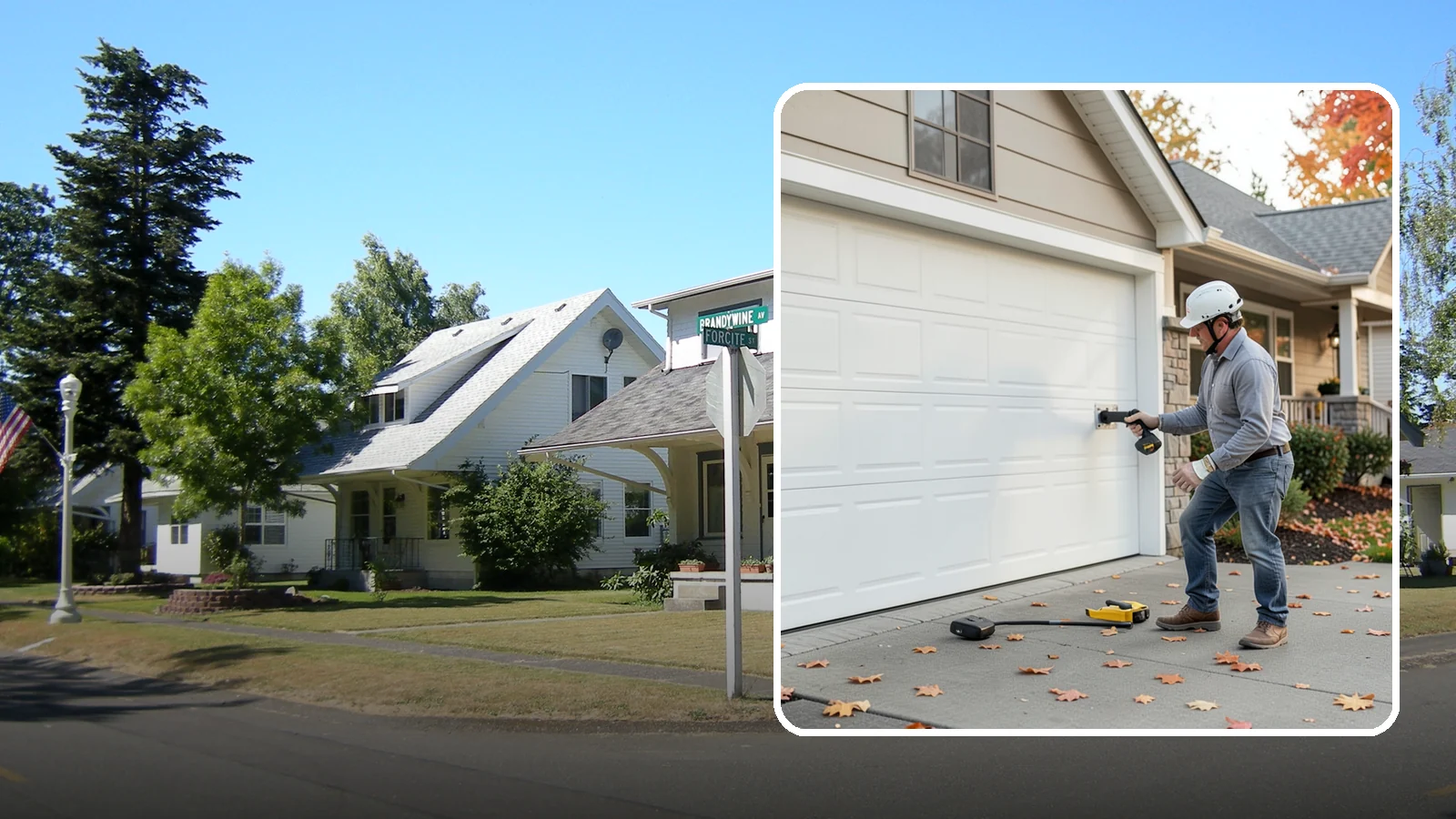
Installing a reliable, quiet garage door opener with modern safety sensors and smart-home connectivity.
In DuPont, garage door opener work makes sense whenever the opener starts acting up, but the wetter months are when you notice it most. Daymet data for 2005-2025 shows about 110 days a year with 0.1 in or more of rain. On those days you want the door to open and close on the first try, without standing in the wet.
Washington Construction has been in business for 22 years. This page explains how to plan an opener installation, what changes the scope of the job, and what to expect on the day.
Planning a Garage Door Opener Installation in DuPont
Start with the age of your home. Per the Census ACS 2020-2024, about 75% of DuPont housing units were built between 1990 and 2009. That makes them roughly 15 to 35 years old. A garage door and opener from the original build may be near the end of their service life. Wiring, wall buttons and ceiling framing may also show their age.
About 14% of DuPont housing units were built before 1980, per the same Census data, and that figure includes apartments. If your home is in that group, expect the garage framing and wiring to be a bit more varied. Homes built before 1978 may also have lead paint, which matters if mounting hardware touches painted surfaces.
What affects the scope
The opener is only one part of the job. The door itself sets much of the scope. A door that is out of balance, has worn springs or rubs in its tracks will strain a new opener. Fixing those problems may need to happen first.
Other points that shape the work:
Ceiling structure decides how the rail and motor are mounted. Outlet location matters, since the opener needs power near the mounting point. Door weight and height affect which opener fits. Safety sensors and wall controls need to be placed correctly near the floor and by the entry.
What to expect
Expect a walk-through of the door first. The installer checks balance, hardware and mounting points before anything goes up. Then the rail and motor are mounted, wired and set. Travel limits and force settings are adjusted so the door stops where it should and reverses when it meets an obstruction. The safety sensors are then tested.
Plan to clear the space around the door and the area above the parked cars beforehand.
Practical tip: before you schedule, open and close the door by hand with the old opener disconnected. If it feels heavy or uneven, mention it up front so the door can be addressed in the same visit.
DuPont Garage Door Opener Installation

Local Service Information
DuPont
A small planned city in southwest Pierce County near Puget Sound and Joint Base Lewis-McChord.
Benefits
Quiet, reliable daily operation; Modern safety sensors reverse on obstruction; Smart connectivity for phone control and monitoring; Battery backup options for power outages; Improved security with rolling-code technology

Process