Strong Foundations. Superior Results.

Darrington Membrane Roof Installation
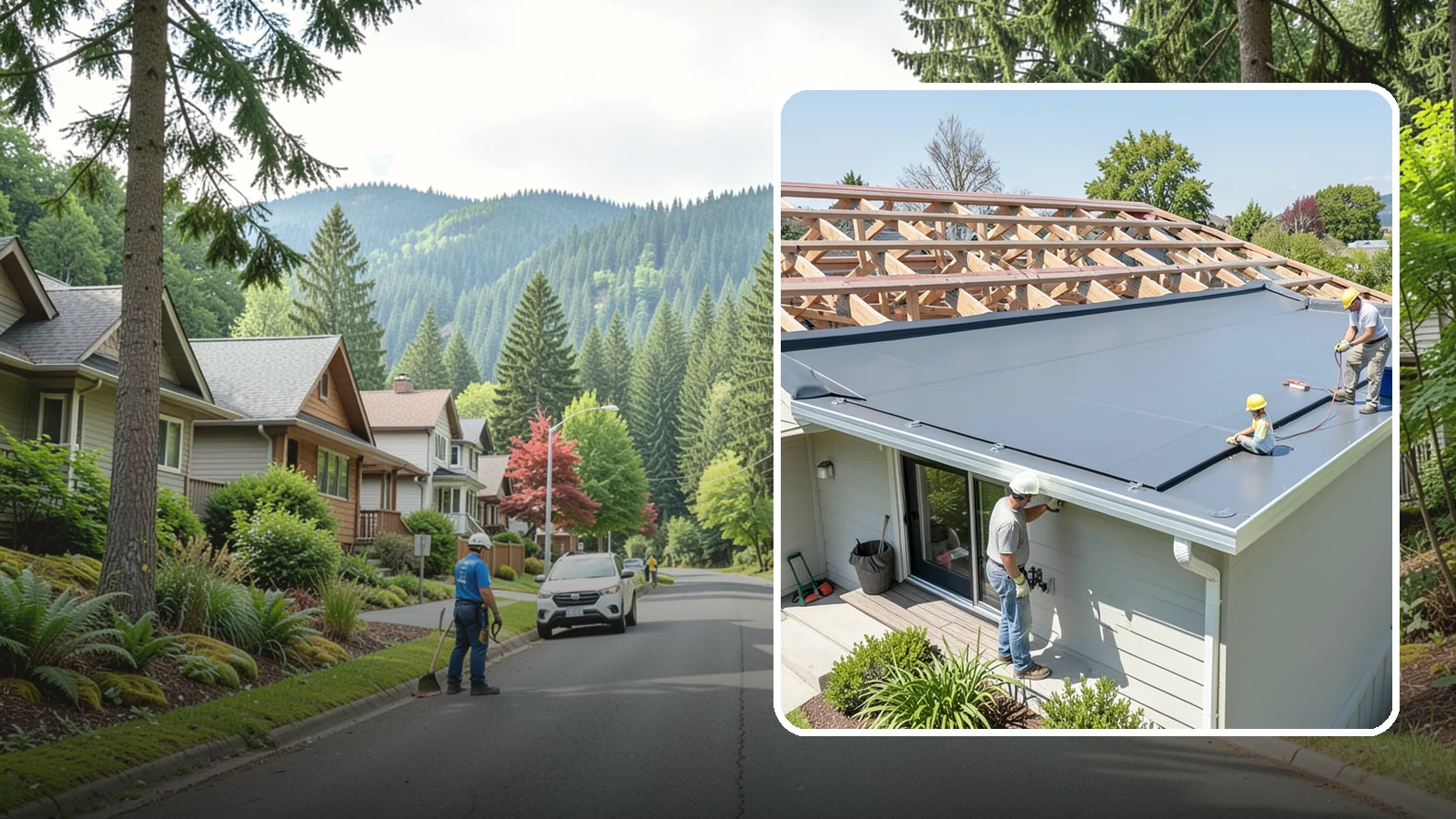
A seamless single-ply membrane roof engineered for watertight performance on flat and low-slope surfaces.
You may be looking at a flat or low-slope roof that holds water, stains the ceiling below, or has seams that keep opening up. A membrane roof is one common answer for that kind of roof, because it is laid as a continuous sheet rather than as overlapping shingles.
This page explains how a membrane roof is installed and why Darrington's weather matters for the job. Washington Construction, based in Bothell, WA, gives free estimates if you want someone to look at your roof.
Membrane Roofing in Darrington: Rain, Snow and Timing
Low-slope roofs shed water slowly. Water that sits on a seam, a flashing edge or a worn patch will find its way in over time. A membrane system is meant to cover the whole roof surface with sheets that are joined at the seams and sealed up around penetrations such as vents and chimneys.
Darrington's weather makes that detail matter. Daymet data for 2005 to 2025 shows about 152 days a year with 0.1 inch or more of rain. That is a lot of days when a roof is wet, so a weak seam or poorly sealed edge has many chances to leak. Snow adds to it. Average snowfall is about 17.6 inches per season, though snow records near Darrington are limited, so treat that number as approximate. Melting snow can sit against curbs and flashings, which puts extra stress on those points.
The same rain affects scheduling. Membrane work needs a dry deck, and many adhesives and seam methods depend on dry surfaces. With rain on roughly 152 days a year, expect the work to be planned around the weather and be flexible if a day gets pushed.
What the work usually includes
The process normally starts with inspecting the existing roof and deck. Wet or damaged decking is a common finding on older low-slope roofs, and it needs to be dealt with before anything new goes on. Next comes the removal of old roofing where needed, or a decision to cover it, depending on what the inspection shows. The membrane is then installed, seams are joined, and flashings are detailed at walls, edges and roof openings. Drainage is checked so water has a path off the roof.
Darrington is a small town of about 620 homes, so there is too little data here for reliable Census percentages on home age. That means your own roof tells the story better than any local statistic. A free estimate starts with looking at its slope, layers, deck and drainage, and from there you can decide what makes sense for your home.
Darrington Membrane Roof Installation

Local Service Information
Darrington
A small mountain town on the Sauk River in the North Cascades, historically a timber community.
Benefits
Seamless, heat-welded watertight surface; Ideal for flat and low-slope roofs; Handles ponding and heavy rainfall; Reflective surface resists UV; Durable, low-maintenance protection
Process
Membrane Roof Installation in nearby areas
Also serving Darrington
- Ice Damage Repair in Darringtonat Washington Roofing
- Roof Maintenance Cleaning in Darringtonat Washington Pressure Washing
- Roof Valley Clearing in Darringtonat Washington Snow Removal