Strong Foundations. Superior Results.

Darrington Fireplace Insert Installation
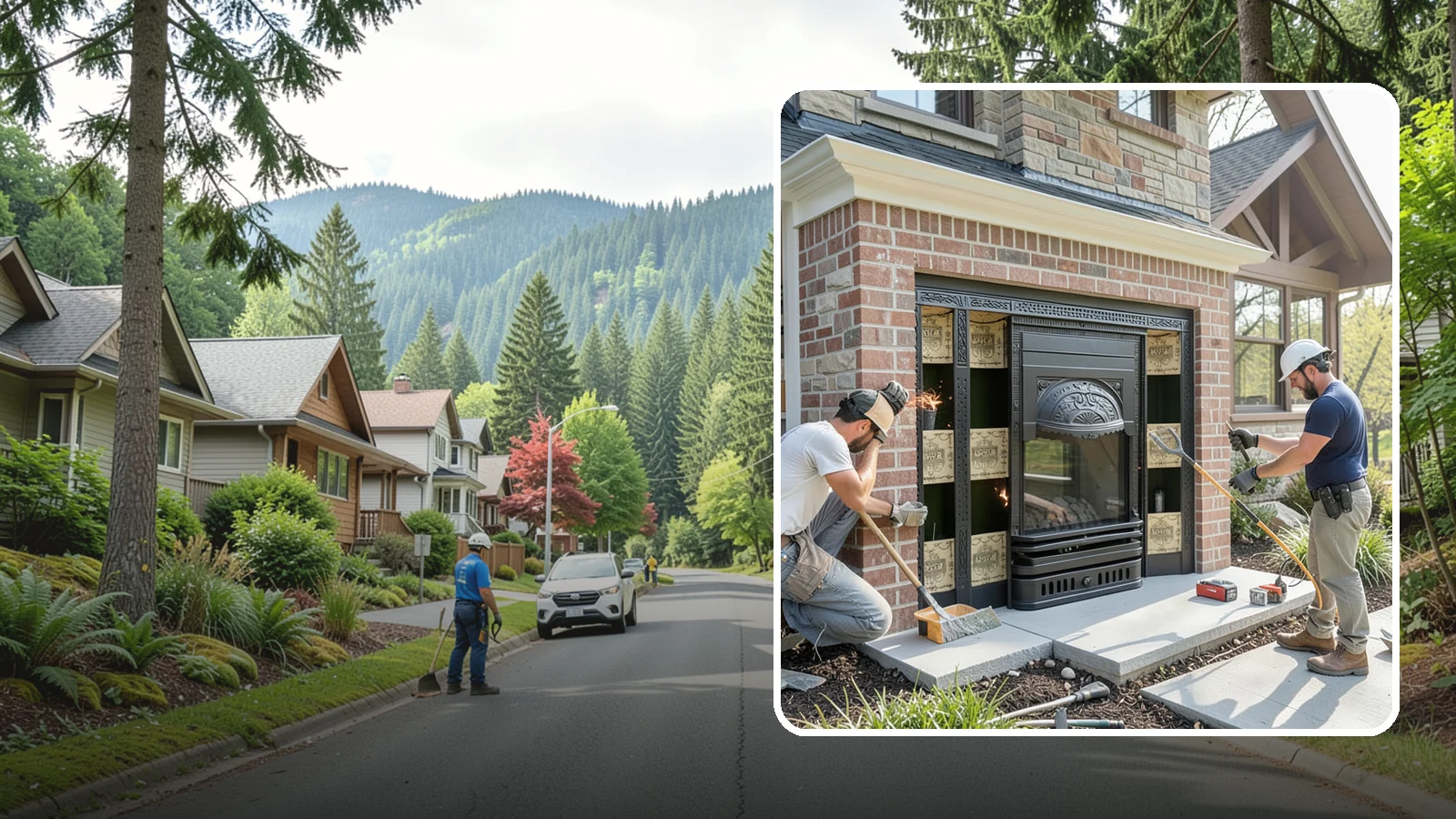
High-efficiency inserts that transform a drafty open fireplace into a real heat source.
Darrington sees about 152 days a year with 0.1 in or more of rain, based on Daymet data from 2005 to 2025. That is a lot of damp, chilly days when a fireplace insert earns its place, and it also means the chimney and roofline are working hard all year.
A fireplace insert fits inside an existing masonry or factory-built fireplace and turns an open hearth into a more controlled heat source. Washington Construction has been in business for 22 years. Here is how the work goes and what to expect in Darrington.
How a Fireplace Insert Goes In at a Darrington Home
An insert installation is more than sliding a stove into a firebox. The steps below show where your decisions come in.
Inspect the fireplace and chimney first
The work starts with a look at the existing firebox, damper, flue and chimney. The insert has to match the fireplace it goes into, and the flue has to be in sound shape. A cracked liner or heavy creosote buildup is better found before the insert is ordered than after.
Plan the flue liner
Inserts are normally vented through a liner that runs up the existing chimney. The liner keeps exhaust moving in a sealed path and keeps it away from the old flue walls. Sizing and routing depend on the chimney and the unit you choose.
Watch the rain at the roof
Darrington has about 152 days a year with 0.1 in or more of rain. Installing a liner means working at the chimney top, and that includes the cap and flashing. Wet days can slow roof-level work, so it helps to stay flexible on scheduling. It is also a good moment to check that the cap and flashing keep water out of the chimney.
Think about freeze and thaw
About 58 days a year in Darrington freeze at night and thaw by day, per Daymet. Water that gets into masonry can freeze, expand and wear on mortar and flue tiles over time. If the inspection shows cracks or loose joints, repairing them before the insert goes in is worth discussing.
Set, connect and finish
Once the chimney is ready, the insert is set in the opening, connected to the liner and sealed. A surround or trim panel closes the gap between the unit and the old fireplace face. Clearances to nearby materials need to follow the manufacturer's instructions for the model you pick.
- Choose the fuel type that suits how you plan to heat.
- Have the chimney checked before ordering.
- Ask about the cap and flashing while the roof is accessed.
- Plan for a clear hearth area in front of the unit.
Once you know what shape the chimney is in, the rest of the plan is much easier to settle.
Darrington Fireplace Insert Installation

Local Service Information
Darrington
A small mountain town on the Sauk River in the North Cascades, historically a timber community.
Benefits
Turns an inefficient firebox into a genuine heater; Stops cold drafts from an open chimney; Sealed combustion for cleaner, safer operation; Fits within your existing masonry opening
Process

Fireplace Insert Installation in nearby areas
Also serving Darrington
- Bulk Firewood in Darringtonat Washington Firewood
- Chimney Cricket Construction in Darringtonat Washington Roofing