Strong Foundations. Superior Results.

Clyde Hill Bowing Wall Repair
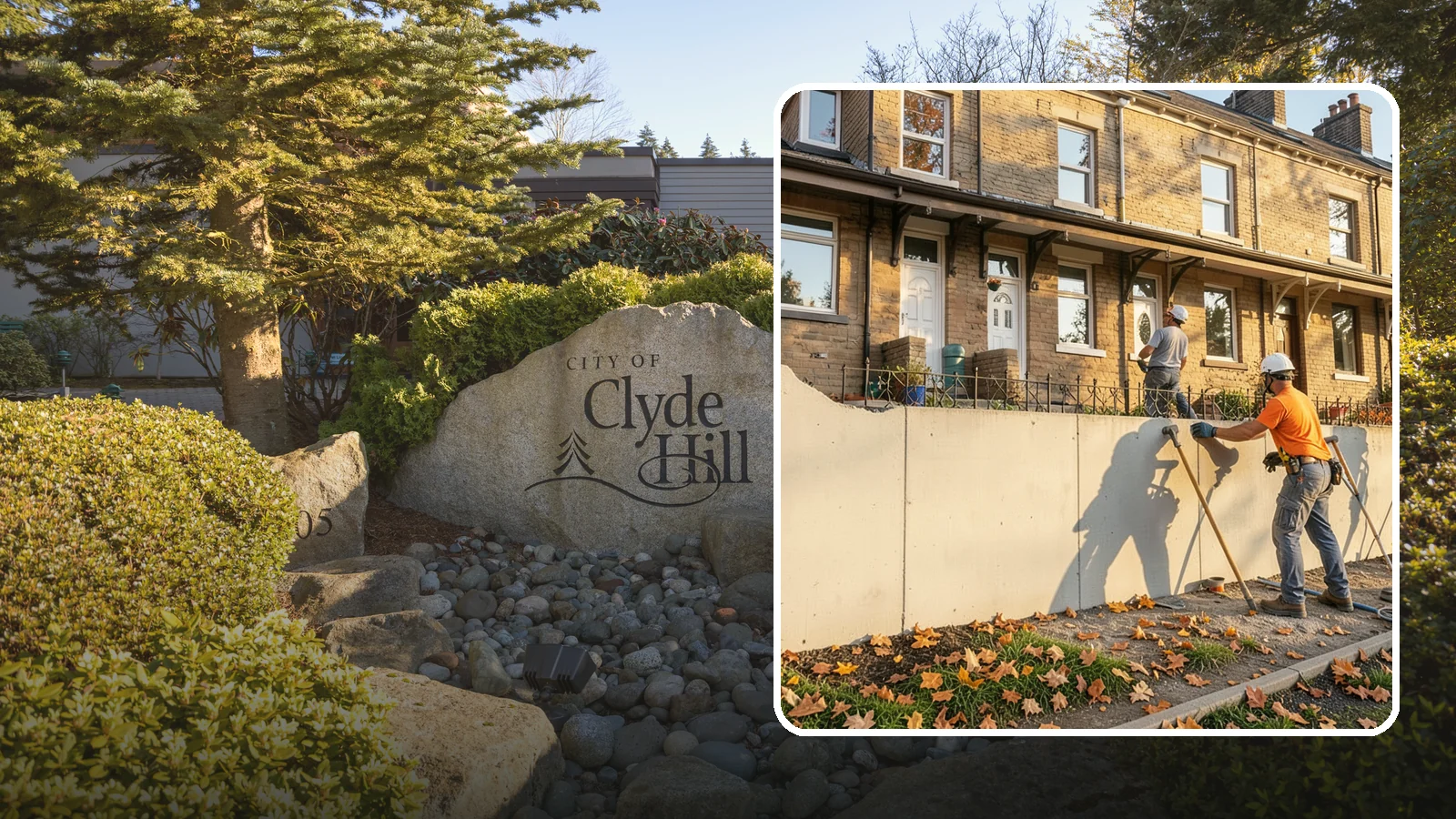
We straighten and stabilize bowing basement and foundation walls to stop movement and protect your home’s structure.
Is a bowing basement wall in Clyde Hill an emergency? Not always, but it should not be ignored. A wall that bows inward is being pushed by soil and water outside it, and the push does not stop on its own. The first step is to have the wall looked at and measured.
Washington Construction is a licensed, bonded and insured ($2M) contractor based in Bothell, WA. This page explains why local rainfall matters for bowing walls and what to expect as you plan a repair.
Bowing Wall Repair in Clyde Hill: Rain, Soil and Timing
Why the wet season matters
Clyde Hill gets about 41.8 inches of precipitation a year, according to Daymet data for 2005 to 2025. About 81% of it falls from October to April. Soil behind a foundation wall takes on water during those months. Wet soil is heavier and pushes harder on the wall. If you see new cracks, a widening gap, or a wall that leans more than it did last summer, the wet season is the likely time for it to show.
Rain days are few, but the soil stays wet
The same data shows only about 4.7 days a year with an inch or more of rain. So the problem is rarely one big storm. Long stretches of steady rain are what soak the ground. Drainage matters here. Gutters that dump near the foundation, clogged downspouts, and grading that slopes toward the house can all add water to the soil against the wall. Part of a sound repair plan is finding where that water comes from, not only reinforcing the wall.
Flood risk is a separate question
FEMA's National Risk Index rates inland flooding risk (river and rain) in Clyde Hill as Relatively Moderate. That is a risk rating, not a prediction. It also describes flooding in general, not your wall. A bowing wall usually comes from soil pressure and drainage at your own lot. Still, it is a reason to look at water management as part of the repair.
What to do now
- Photograph the wall and mark the crack ends with the date.
- Check that gutters and downspouts carry water well away from the house.
- Keep stored items and furniture back from the wall.
- Have the wall assessed before the next wet season starts in October.
Scheduling the assessment in the drier months gives you time to plan the work before the soil is saturated again.
Clyde Hill Bowing Wall Repair

Local Service Information
Clyde Hill
A small, primarily residential city on the Eastside between Bellevue and Lake Washington.
Benefits
Wall movement stopped before it threatens the structure; The right repair matched to the cause and severity; Outside soil and water pressure relieved with drainage; Potential to recover some of the wall’s position over time; Protection for the framing and finishes above
Process

Bowing Wall Repair in nearby areas
Also serving Clyde Hill
- Tree Damage Roof Repair in Clyde Hillat Washington Roofing
- Sump Pump Drainage in Clyde Hillat Washington Landscaping