Strong Foundations. Superior Results.

Buckley Water Heater Installation
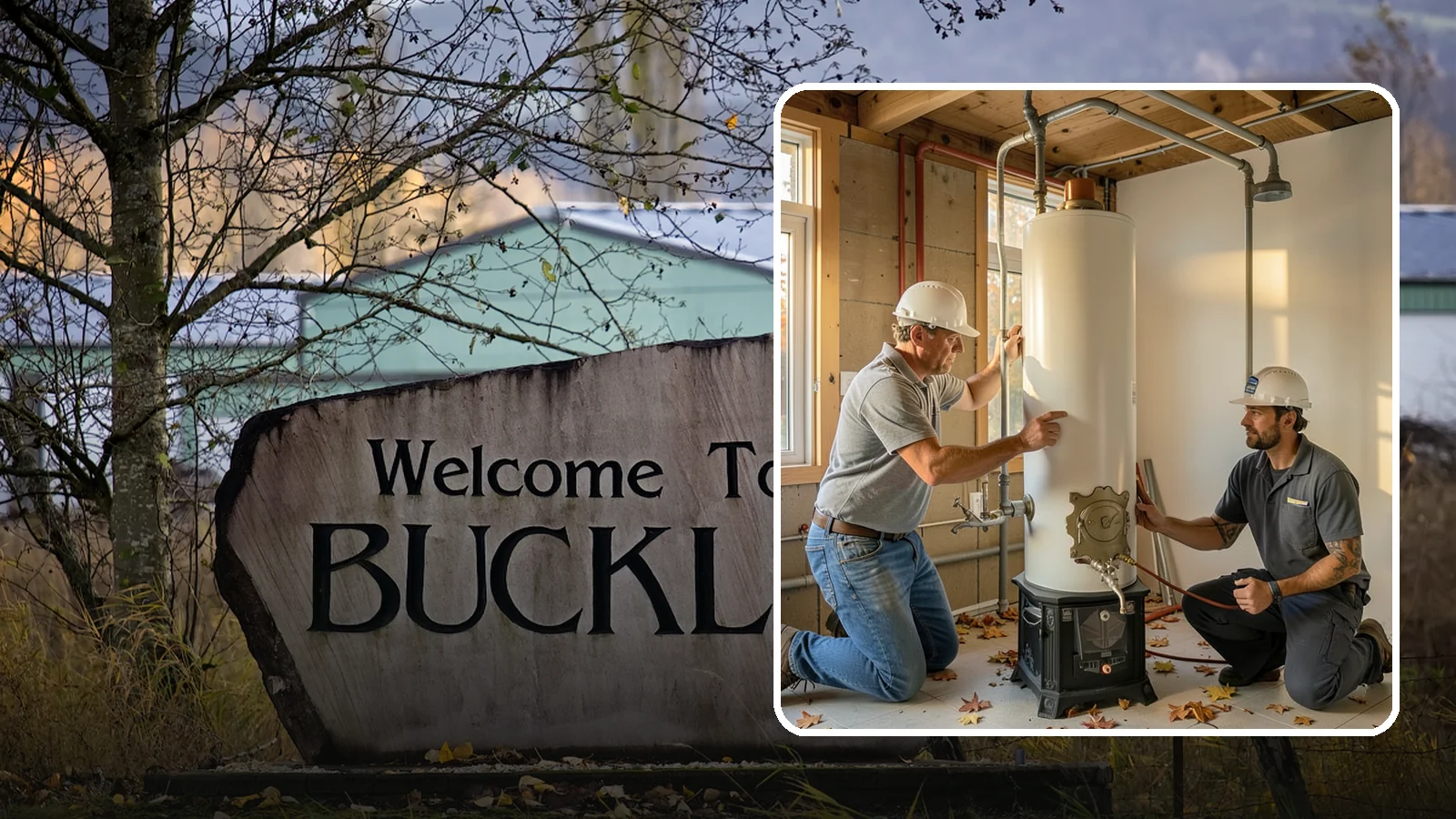
We install and replace tank and tankless water heaters, including code-required upgrades for safe operation.
Should you replace your water heater with the same fuel type or switch? In Buckley, the answer starts with what your home already has. Census data shows about 64% of homes here are heated mainly with utility gas and 36% with electricity, so both setups are common.
Washington Construction handles water heater installation with its own electrical and plumbing crews, not subcontractors. This page explains what to check before you schedule the work.
Water Heater Installation in Buckley: What to Check First
Start with your fuel type
Census figures show that about 64% of Buckley homes are heated mainly with utility gas, and 36% with electricity. That is a heating figure, not a water heating figure, so it does not tell you what your own home uses. Check your current tank. A gas unit has a burner, a gas line and a vent. An electric unit has a dedicated electrical circuit. Knowing which you have is the first step in deciding whether to replace like for like.
Think about the age of your home
The Census ACS for 2020-2024 shows about 40% of Buckley housing units were built between 1990 and 2009. Those homes are now roughly 15 to 35 years old. If yours is one of them, the original water heater may be at or near the end of its working life, and the plumbing connections, shutoff valves and venting around it are worth a look when the tank comes out. Even a home that has had a replacement already may have older fittings nearby.
Why one crew matters
A water heater job often crosses trades. Gas or electric supply, water lines, venting and sometimes the space around the unit all come into play. Our electrical, plumbing and HVAC work is done by our own crews, so these pieces can be planned together instead of passed between separate companies. Washington Construction is licensed, bonded and insured ($2M).
Questions to settle before the job
- Is the current heater gas or electric?
- Where is it located, and is there room to access it?
- Do the supply lines, vent and shutoff valves look original?
- Do you want to keep the same fuel type or look at a change?
Answering these ahead of time makes the scope clearer and helps you compare options in a straightforward way.
Buckley Water Heater Installation

Local Service Information
Buckley
A small city on the plateau of east Pierce County near the foothills of Mount Rainier.
Benefits
Correctly sized system matched to your household demand; seismic strapping and expansion tanks meet Washington code; expert handling of gas, electrical, and venting connections; old unit removed and disposed of for you; efficient operation that lowers energy bills

Process
