Strong Foundations. Superior Results.

Bellevue Wood Stove Installation
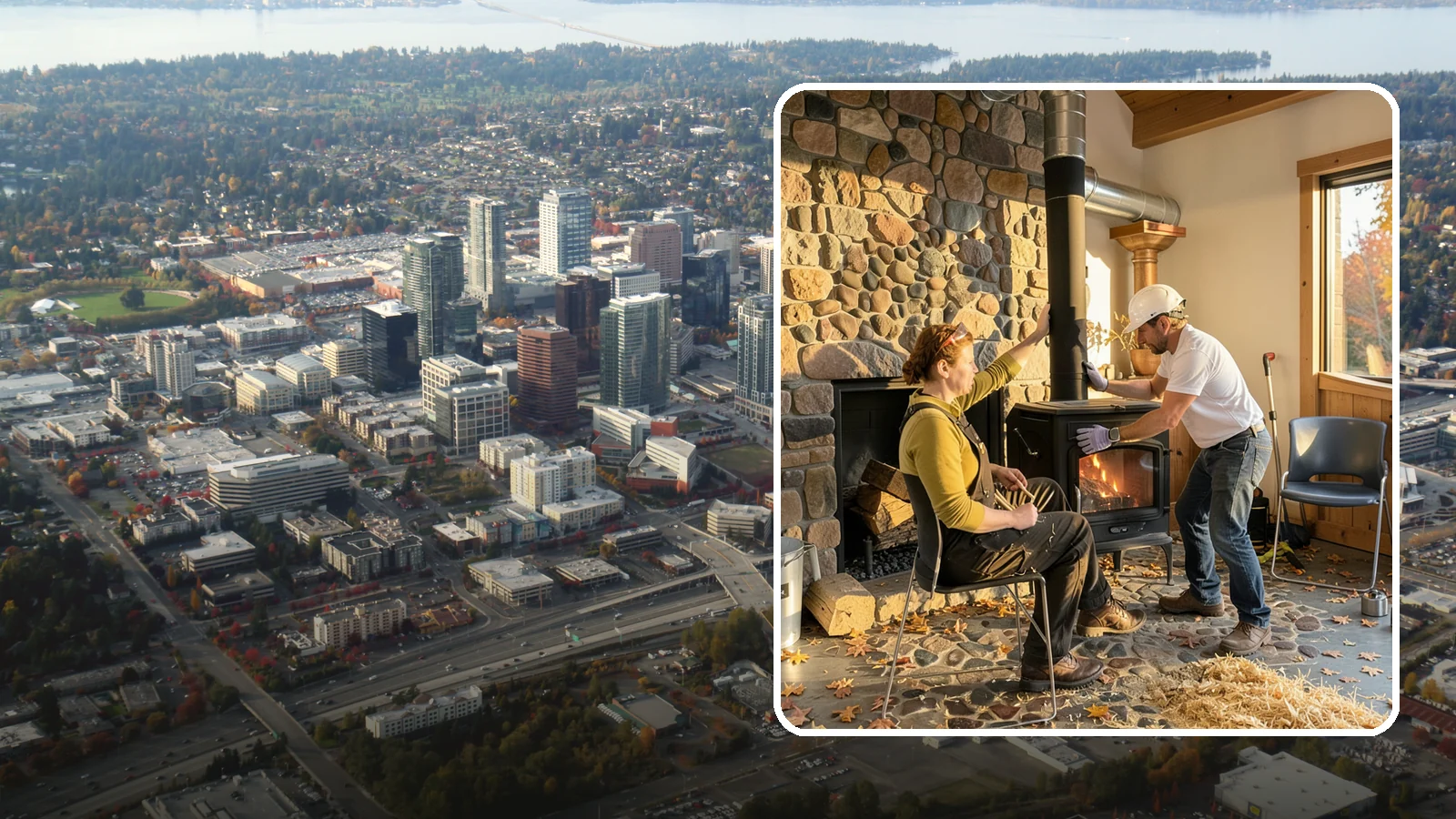
EPA-certified wood stoves installed with safe clearances and code-approved chimney systems.
In Bellevue, only about 0.1% of homes are heated mainly with wood, per the Census. A wood stove is an uncommon main heat source here, so most homeowners add one as a supplement or a backup rather than replacing an existing system.
That shapes how you plan the job. Washington Construction has been in business for 22 years, and we start by asking what you want the stove to do. Then we look at where it can go safely, how the flue will run, and what the room and the framing around it need.
Planning a Wood Stove Installation in Bellevue
A wood stove is more than an appliance set on the floor. It is a small system made of the stove, a hearth, a chimney or flue, and the clearances around them. Here is how the work usually goes.
The basic steps
- Choose a location based on the floor plan, ceiling height, and where the flue can exit.
- Build or prepare a noncombustible hearth under and around the stove.
- Frame and finish the chimney path through the ceiling and roof, or use an existing chimney if it is suitable.
- Set the stove and connect the flue pipe at the required distances from walls and ceilings.
- Check the finished installation and go over how to operate it.
Why your Bellevue details matter
Because so few Bellevue homes rely mainly on wood, you are likely deciding whether a stove is worth adding next to the heat you already have. Think about how often you would use it. Occasional use for ambiance and outage backup calls for a different plan than regular use.
Bellevue averages about 7.2 inches of snow per season. That is not much, but a storm that knocks out power can still leave you cold for a while. A stove can be a useful backup in that case. It also means you should plan for dry, safe wood storage and a clear path to it.
The Census ACS for 2020 to 2024 shows about 47% of Bellevue housing units were built before 1980, and that count includes apartments. If your house is from that era, the walls, ceiling, and any old chimney may not match what a new stove needs. We would look at the framing and any existing flue before settling on a location. Homes built before 1978 may also have lead paint, which matters if the work disturbs painted surfaces.
Bring your questions about placement and how you plan to use the stove. Those answers drive almost every decision in the installation.
Bellevue Wood Stove Installation

Local Service Information
Bellevue
A major Eastside city on the east shore of Lake Washington with a dense urban core and established neighborhoods.
Benefits
Reliable heat that works during power outages; Code-compliant hearth pads and wall clearances; Properly flashed chimney that stays weathertight; EPA-certified units that burn cleaner and hotter
Process

Wood Stove Installation in nearby areas
Also serving Bellevue
- Mixed Softwood Firewood in Bellevueat Washington Firewood
- Cricket Repair in Bellevueat Washington Roofing