Strong Foundations. Superior Results.

Bellevue Heated Flooring Installation
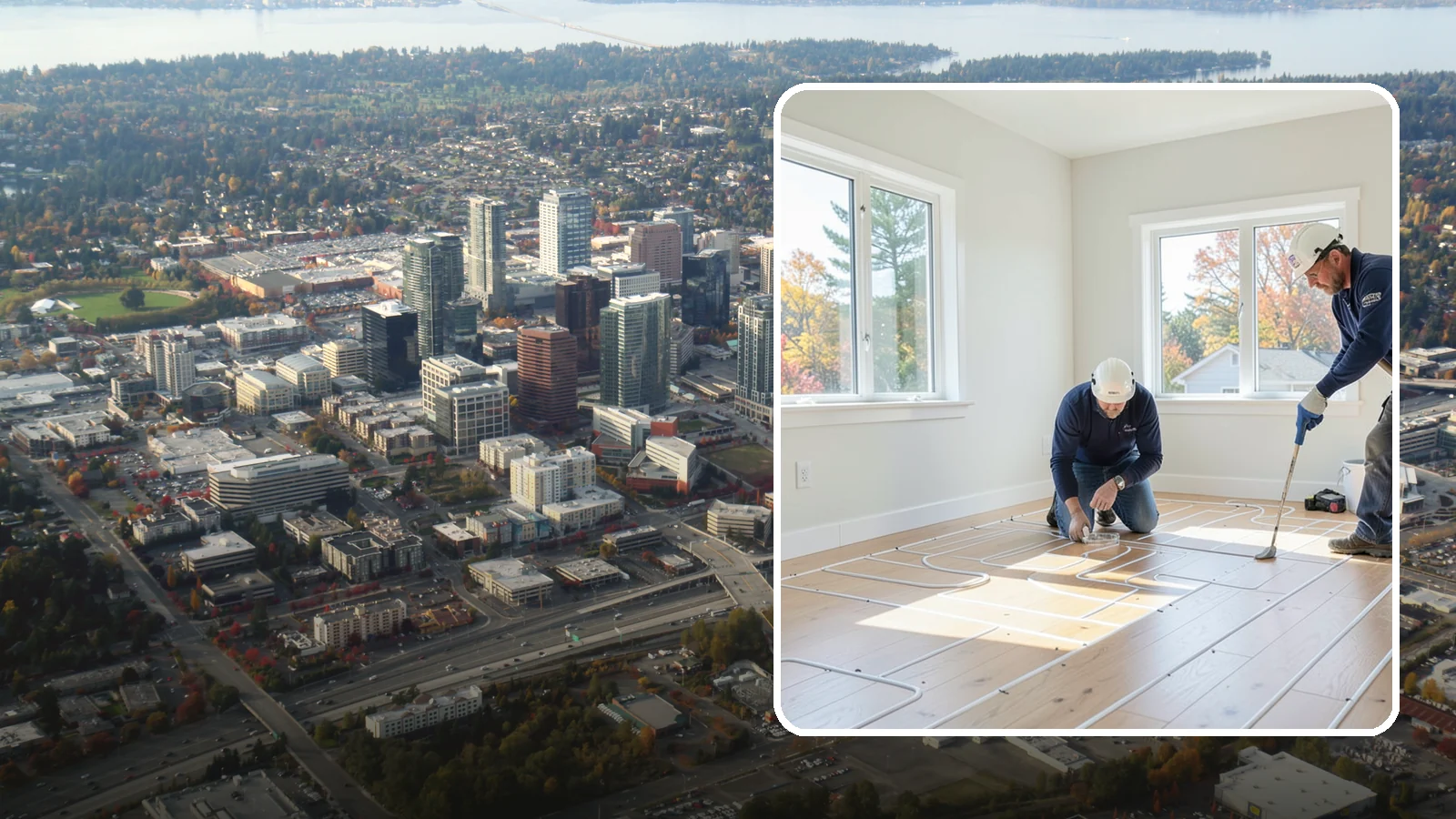
Radiant heated flooring installation that delivers cozy, even warmth underfoot through chilly Northwest seasons.
Heated flooring is an interior job, so it can go in any month. Many Bellevue homeowners think about it as the cold season approaches. Census data shows about 52% of Bellevue homes heat with electricity, and a warm floor is something you notice most on dark winter mornings.
Planning ahead helps. Floor work is easiest when it is tied to a remodel, a new floor covering, or a bathroom or kitchen update. Washington Construction installs heated flooring, and this page covers what to plan for and what to expect.
Planning Heated Flooring in Bellevue Homes
Start with the room and the floor you want on top. Heated flooring sits under the finished surface, so the heating layer and the new flooring are usually planned together. Tile is a common pairing in bathrooms and kitchens. Other floor coverings may work too, but each one has its own limits on heat and thickness.
What affects scope
The size of the area matters most. Heating a small bathroom is a smaller job than heating a kitchen and entry. Existing flooring matters next. If the old floor has to come up, that adds demolition and subfloor work before anything is installed. Floor height also matters. A heating layer adds some thickness, so doors, transitions and neighboring floors may need adjusting.
Your home's heating setup is also worth a look. Per the Census, about 52% of Bellevue homes heat with electricity and 46% with utility gas. Electric heated floors are a common choice because they run on household power, so the electrical panel and the circuit for the room need to be checked. That is true whether your main heat is gas or electric. Gas-heated homes can still use an electric floor in a single room.
Bellevue gets about 31 days a year that freeze at night and thaw by day (Daymet), and an average of 7.2 inches of snow per season. Those are modest numbers. Still, cold mornings on tile are a real reason many people want radiant warmth in bathrooms and entries.
What to expect
Expect the work to run in stages: prep of the subfloor, laying the heating layer, testing it, then the finished floor. Testing before the floor covering goes down is standard practice, because fixing a problem later means pulling the floor up. Washington Construction gives a 1-year warranty on labor.
One practical tip: decide on your floor covering and a thermostat location before work begins. Those two choices drive the layout, and changing them midway is what costs the most time.
Bellevue Heated Flooring Installation
Local Service Information
Bellevue
A major Eastside city on the east shore of Lake Washington with a dense urban core and established neighborhoods.
Benefits
Even, comfortable warmth from the floor up; silent and draft-free operation; energy-efficient zoned heating; eliminates cold tile and stone underfoot
Process