Strong Foundations. Superior Results.

Yarrow Point Retaining Wall Construction
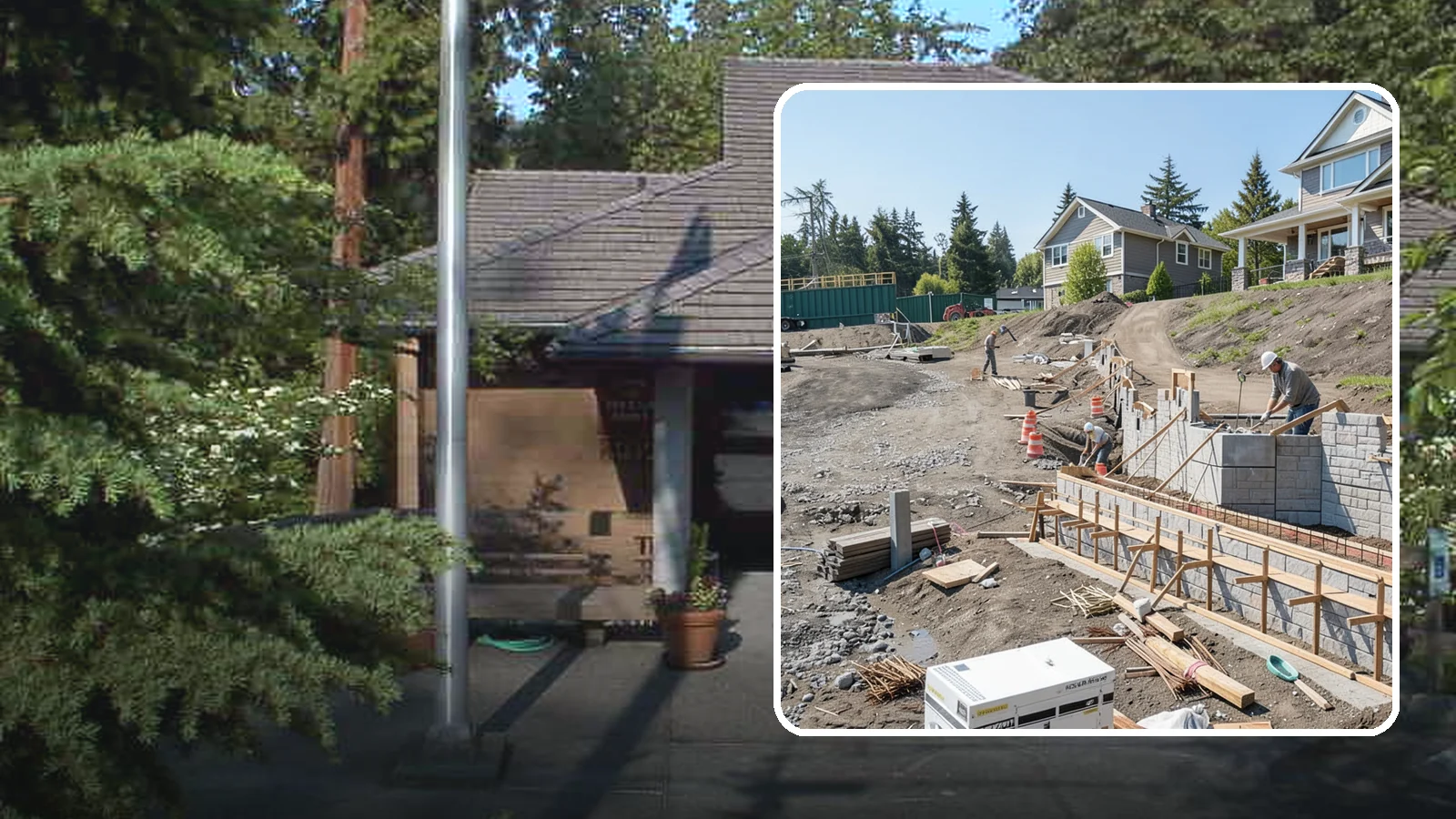
Building an engineered wall that holds back soil on sloped Puget Sound lots and creates usable, stable ground.
Does a retaining wall in Yarrow Point need to plan for heavy rain? Yes. Water is the main force a wall has to hold back, and the local record shows how much can fall in a single day. Daymet data for 2005-2025 lists 3.1 in on December 3, 2007.
Washington Construction has been in business for 22 years. This page explains how rain and slope risk shape a wall here, so you know what to ask about before any work starts.
Planning a Retaining Wall in Yarrow Point, WA
Rain is the load to plan for
Daymet data for 2005-2025 shows about 40.9 in of rain a year in Yarrow Point. Only about 4.2 days a year reach 1 in or more. That means most of the year is steady, moderate rain, with a few days of heavy rain. A wall has to handle both. Soil behind a wall gets heavier when it is saturated, and that adds pressure to the wall face.
The wettest day on record in that period was 3.1 in on December 3, 2007. This is one data point, not a forecast. It is still a useful reminder that drainage should be sized for a storm, not an average day.
What drainage means for your wall
Good drainage is standard practice for retaining walls. It usually includes free-draining backfill such as gravel, and a way to carry water out from behind the wall and away from it. Where that water goes matters. It should not end up at a neighbor's lot or against your foundation. Ask where the outlet will be and how it will be reached.
Wet-weather months also affect the schedule. Open excavations and bare soil are harder to manage in heavy rain, so it helps to talk about timing early.
Slope risk is rated low, but the site still matters
The FEMA National Risk Index rates landslide risk for Yarrow Point as Relatively Low. That is a risk rating, not a prediction for your property. A rating for the whole city does not describe your specific slope, your soil, or the grade behind your house.
A site visit is still the right way to judge what a wall needs. Things worth checking include:
- How steep the grade is and what sits above it
- Where surface water flows during a storm
- What the soil is like behind the proposed wall
- How close the wall will be to structures, driveways or property lines
These answers decide the wall height, the materials and the drainage layout. Bring them up when you plan the project.
Yarrow Point Retaining Wall Construction

Local Service Information
Yarrow Point
A small residential town on a peninsula in Lake Washington near Bellevue.
Benefits
Creates level, usable space on a sloped lot; Controls erosion and manages hillside runoff; Built with drainage to survive saturated soils; Engineered for seismic and load requirements; Adds structure and lasting value to the landscape
Process
Retaining Wall Construction in nearby areas
Also serving Yarrow Point
- Stacked Stone Retaining Wall in Yarrow Pointat Washington Landscaping