Strong Foundations. Superior Results.

University Place Wood Stove Installation
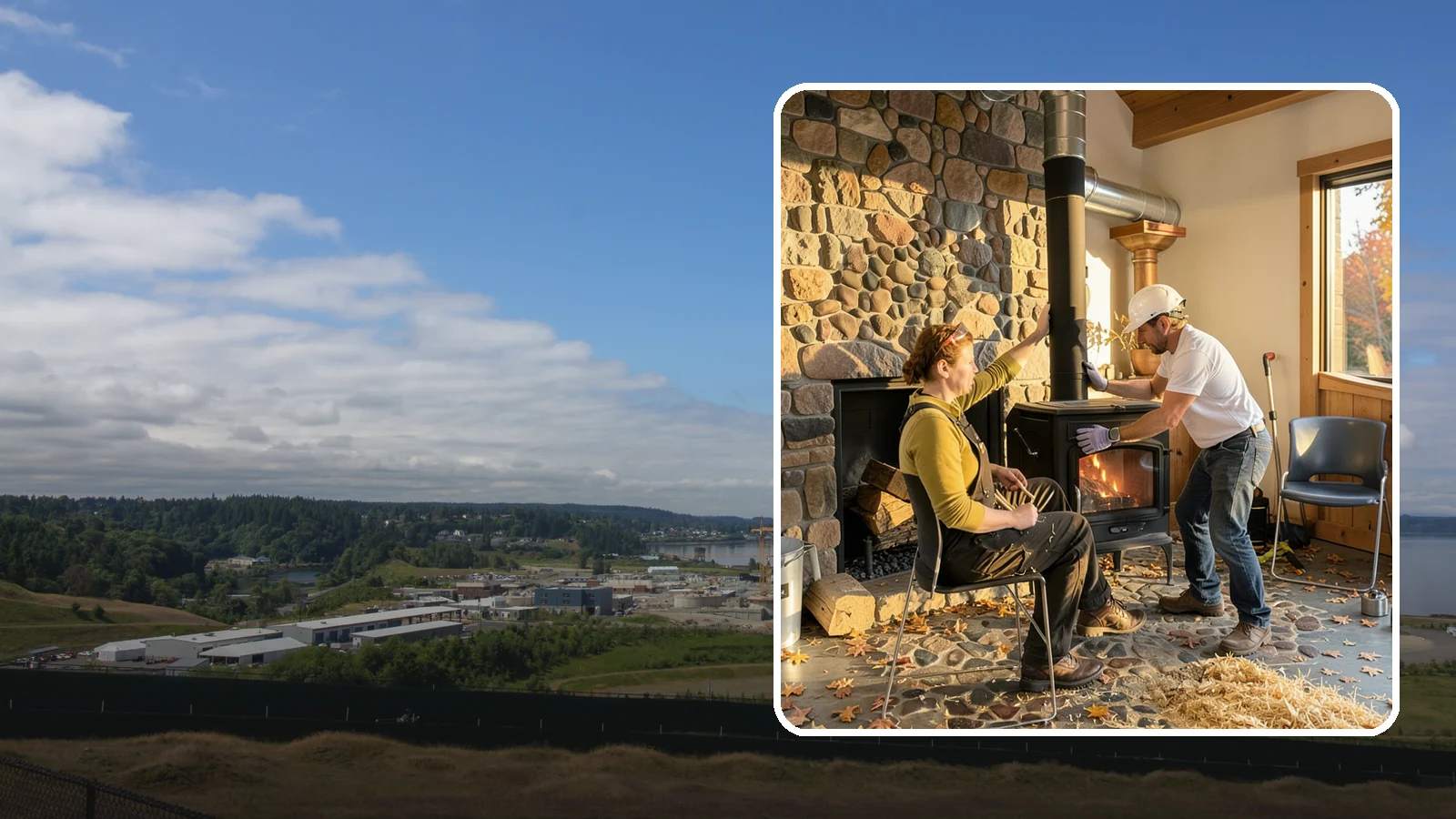
EPA-certified wood stoves installed with safe clearances and code-approved chimney systems.
This page is for University Place homeowners who want a wood stove in a house that has none, or who want to replace an old stove or fireplace insert. It also fits people who want a backup heat source for cold snaps and outages.
Wood is not the usual main heat here. The Census puts homes heated mainly with wood in University Place at 0.5%. That makes the choice of stove, and how it fits your house, worth planning before you buy anything.
Choosing a Wood Stove Setup in University Place
Most homeowners choose between a few basic approaches. Which one fits depends on your house and how you plan to use the stove.
- A freestanding stove with a new flue through the ceiling or wall.
- An insert placed in an existing masonry fireplace.
- A stove connected to an existing chimney or flue, if it is sound and the right size.
Supplemental heat versus main heat
Because only 0.5% of local homes use wood as the main heat, most stoves here are likely a second source. Average snowfall is 5.4 inches per season. That points to a stove used on the coldest evenings and during power outages, not one that runs all winter. A smaller stove often suits that kind of use, and it avoids overheating a single room.
Older homes
Census ACS 2020-2024 data shows about 48% of housing units in University Place were built before 1980. That figure includes apartments, so it says little about any one house. Still, if yours is older, expect to look closely at the existing chimney, the floor under the stove, and the framing where a new flue would pass. Homes built before 1978 may also have lead paint, which matters if the work disturbs old painted surfaces.
Fireplace insert or freestanding stove
An insert is the simpler route when you already have a usable masonry fireplace. It uses the opening you have and leaves the floor space alone. A freestanding stove gives off more heat into the room, but it needs clearances to walls and a proper hearth. It may also need a new flue run, which means more work in the walls and roof.
What to decide before work starts
Pick the room, the stove size, and the flue route first. Those three choices drive the rest of the job. Washington Construction gives a 1-year warranty on labor for the installation work.
University Place Wood Stove Installation

Local Service Information
University Place
A residential city on the western edge of Tacoma along the Puget Sound shoreline.
Benefits
Reliable heat that works during power outages; Code-compliant hearth pads and wall clearances; Properly flashed chimney that stays weathertight; EPA-certified units that burn cleaner and hotter
Process
Wood Stove Installation in nearby areas
Also serving University Place
- Scheduled Firewood Delivery in University Placeat Washington Firewood
- Chimney Cricket Construction in University Placeat Washington Roofing