Strong Foundations. Superior Results.

South Prairie Wood Railing Installation
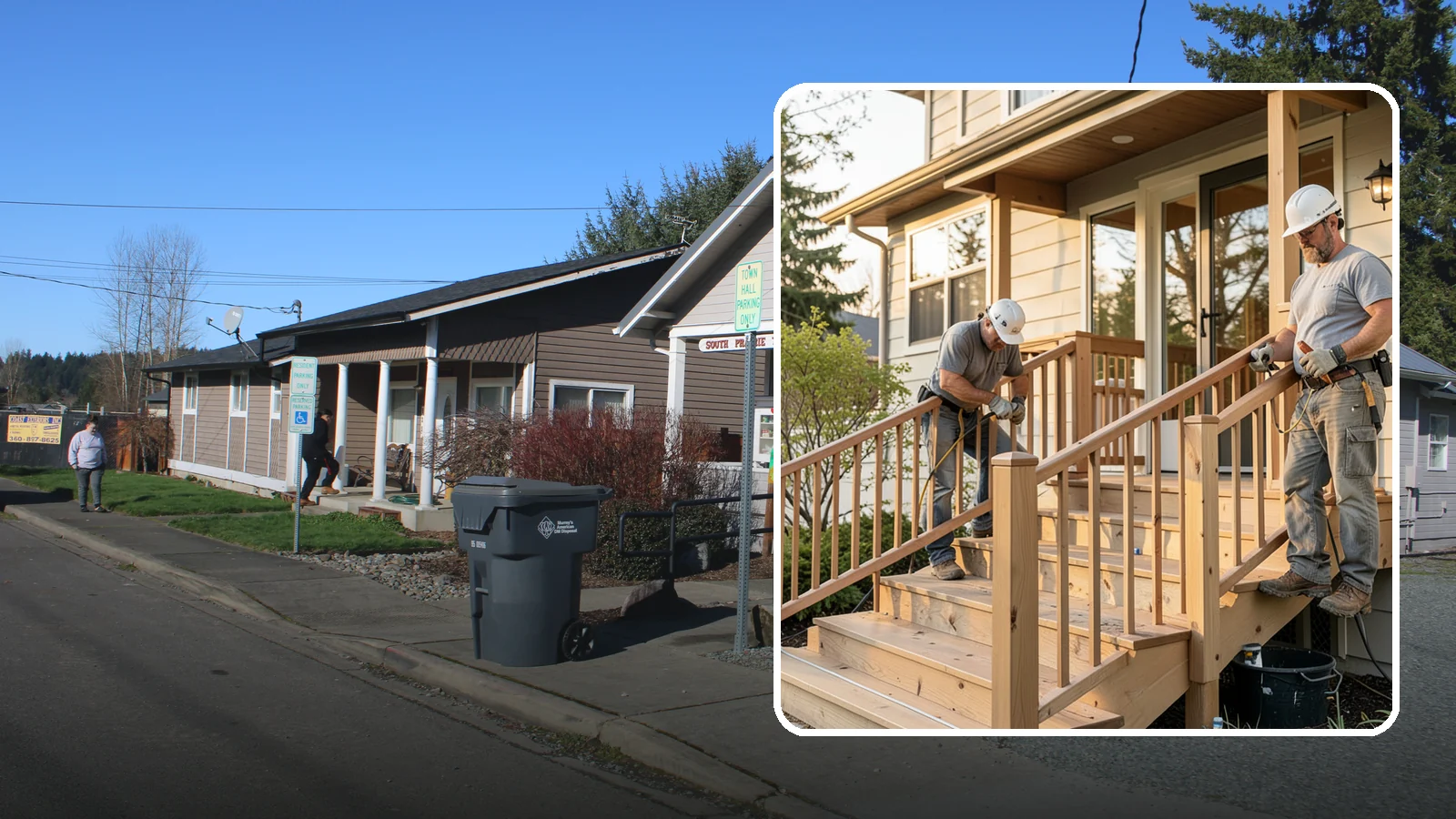
Warm, traditional wood railings and balusters built and finished to match your home.
South Prairie sees about 136 days a year with 0.1 inch or more of rain, based on Daymet data from 2005 to 2025. For a wood railing, that is the detail that matters most. Wood that stays wet or cannot dry out between storms wears faster.
Washington Construction has been in business for 22 years. On a railing job, we plan around moisture from the start. That means choosing wood and fasteners suited to damp exposure, sealing cut ends, and building joints so water drains out instead of sitting in them.
Wood Railing Installation in South Prairie: Built for Rain and Frost
A railing is a small part of a deck, porch or stair, but it takes constant weight and weather. In South Prairie, two climate numbers shape how we approach it. Daymet data shows about 136 days a year with 0.1 inch or more of rain. It also shows about 37 days a year that freeze at night and thaw by day.
How the work goes
- Review the deck, porch or stair where the railing will mount, and check the framing that will carry it.
- Choose the wood species, post style and hardware for a damp site.
- Cut and fit posts, rails and balusters, sealing cut ends before assembly.
- Fasten posts to solid framing, not only to decking or trim.
- Finish all sides of the wood with a stain or sealer suited to exterior use.
Why the rain count matters
With rain on about 136 days a year, water will find every joint. Where a rail meets a post, or a post meets the deck, moisture can sit and start rot. We favor details that shed water. Sloped top rails, gaps that let surfaces dry, and sealed end grain all help. Finishing should also be planned as ongoing upkeep, since a sealer wears down under constant wetting.
Why the freeze-thaw count matters
About 37 days a year bring a freeze at night and a thaw by day. Water that has soaked into wood can freeze, expand and open small cracks. Those cracks let in more water. Tight, well-sealed joints and solid post connections reduce that cycle. Loose posts also tend to show up first in cold snaps, so firm attachment to framing is worth getting right at install.
If your South Prairie home has an existing deck, we will look at its condition before adding a railing. A new rail is only as sound as what holds it.
South Prairie Wood Railing Installation
Local Service Information
South Prairie
A very small town in the foothills of southeast Pierce County near the Carbon River.
Benefits
Timeless warmth that suits any decor; Custom baluster and rail profiles; Solid, rattle-free assembly; Stain or paint matched to your home
Process
Also serving South Prairie
- Paver Sealing in South Prairieat Washington Landscaping