Strong Foundations. Superior Results.

South Prairie Walkway Repair
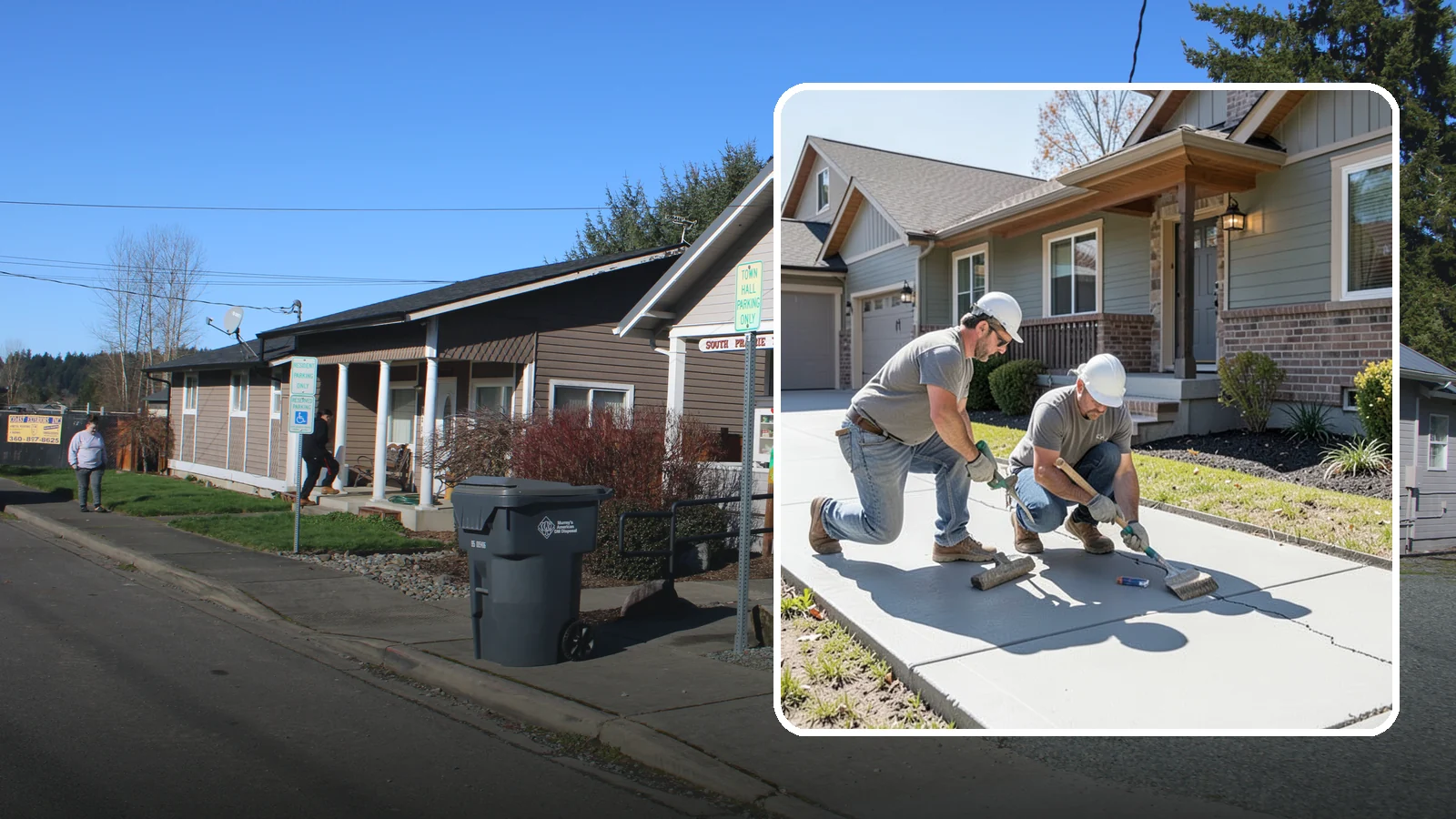
Repairing uneven, cracked, or settled walkways to restore safe footing and a tidy appearance.
A walkway that has started to crack, heave, or tilt is hard to ignore. Maybe a corner of a slab has lifted and catches your toe. Maybe water pools near the front steps after a rain. Either way, you want a safe path to the door.
This page covers walkway repair in South Prairie: what tends to damage a walkway, how the local weather plays a part, and what the repair work looks like. Washington Construction has been in business for 22 years.
Walkway Repair in South Prairie: Causes and Process
Most walkway damage comes down to water and movement. Water gets into small cracks, soaks the soil under the slab, or runs along the edges. When the ground shifts or the base washes out, the surface above it cracks, settles, or lifts.
How South Prairie's weather affects walkways
Freezing matters here. South Prairie sees about 37 days a year that freeze at night and thaw by day, per Daymet. On those days, water in a crack can freeze, expand, and widen the gap a little more. Repeated over a season, small cracks can grow. If you see hairline cracks now, it is worth looking at them before the colder months.
Rain is the other driver. Daymet data for 2005 to 2025 shows about 52.6 in of rain a year, with about 5.2 days a year of 1 in or more. So the total is large, even if heavy single-day downpours are less common. Steady moisture keeps the soil under a walkway wet, and poor drainage can wear away the base. Snow adds some load too, at an average of 10.7 in per season.
What the repair work involves
The first step is finding the cause. A cracked slab over a stable base may only need patching or resurfacing. A sunken or heaved section usually points to a problem underneath, such as washed-out or poorly compacted base material. In that case the damaged section is typically removed, the base is rebuilt and compacted, and new material is placed.
- Check the slope so water runs away from the house and off the walkway.
- Look for gutters or downspouts that dump water onto the path.
- Decide whether to patch, replace a section, or redo the whole walkway.
Exterior work also depends on the weather. Wet months can slow base preparation and curing, so plan around them.
South Prairie Walkway Repair
Local Service Information
South Prairie
A very small town in the foothills of southeast Pierce County near the Carbon River.
Benefits
Eliminates trip hazards from uneven surfaces; Corrects the root or drainage cause; Restores a tidy, level appearance; More affordable than full replacement; Matches existing materials where possible

Process