Strong Foundations. Superior Results.

South Prairie Energy Audit
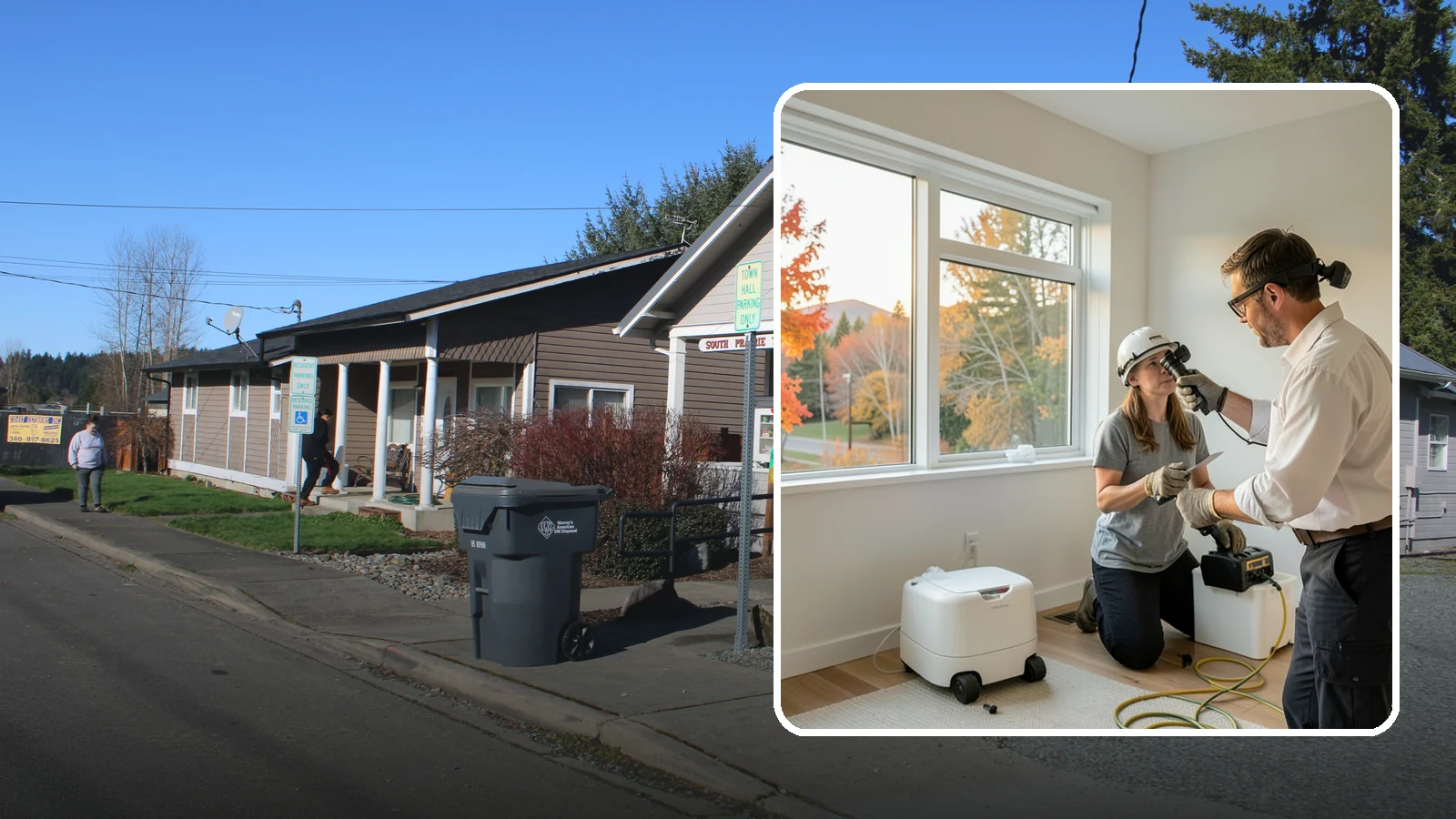
A thorough home energy audit that pinpoints exactly where your PNW home wastes energy.
In South Prairie, Puget Sound Energy is the electric utility, and there is no gas service. That matters for an energy audit, because PSE has weatherization rebates for attic air sealing and attic insulation, and they depend on details an audit can sort out.
An audit shows where the house loses heat and which fixes are worth doing first. Washington Construction, based in Bothell, WA, can walk through the findings with you and help you line them up against the rebate rules before any work starts.
Energy audit steps and PSE rebates in South Prairie
An energy audit is a look at how your house holds heat. For an electrically heated home, the attic is often the first place to check. Here is the basic order of work.
- Check the attic: how much insulation is there, how deep, and whether air leaks around the ceiling.
- Note the home's age, construction type and heat source.
- Rank the fixes: air sealing first, then insulation.
- Match the plan to utility rebate rules before booking work.
Why the details matter here
South Prairie has no gas service, so most homes heat with electricity from Puget Sound Energy. The PSE rebates we checked on November 1, 2026 require PSE as the primary space heat. Several also require a site-built home built in 1989 or earlier.
The attic insulation rebates depend on what is already up there. With existing insulation of 0 to 4 inches (R-11 or less), PSE lists $1.75 per sq ft, up to $3,500. With 4 to 6 inches (R-12 to R-19), it lists $0.50 per sq ft, up to $1,000. Both aim for R-49. The audit measures your current depth, so you know which tier applies. PSE does not allow removing existing insulation to qualify.
Attic air sealing is listed at $0.20 per sq ft, up to $400 per area, and floor air sealing is also available. The attic thermal boundary must be unsealed before work and sealed to PSE weatherization specs afterward. That means sealing should not be done before you confirm eligibility.
Before you schedule
Rebates usually require the utility's participating contractor. Confirm eligibility and contractor requirements with PSE first. Rules and amounts can change.
If we do the work, Washington Construction gives a 1-year warranty on labor.
South Prairie Energy Audit
Local Service Information
South Prairie
A very small town in the foothills of southeast Pierce County near the Carbon River.
Benefits
Reveals the true sources of energy loss; Prioritizes upgrades by return on investment; Prevents spending on changes that will not help; Documents baseline conditions for planning; Guides eligibility for efficiency rebates
Process
Also serving South Prairie
- Attic Moisture Control in South Prairieat Washington Roofing