Strong Foundations. Superior Results.

Milton Pressure-Treated Deck Installation
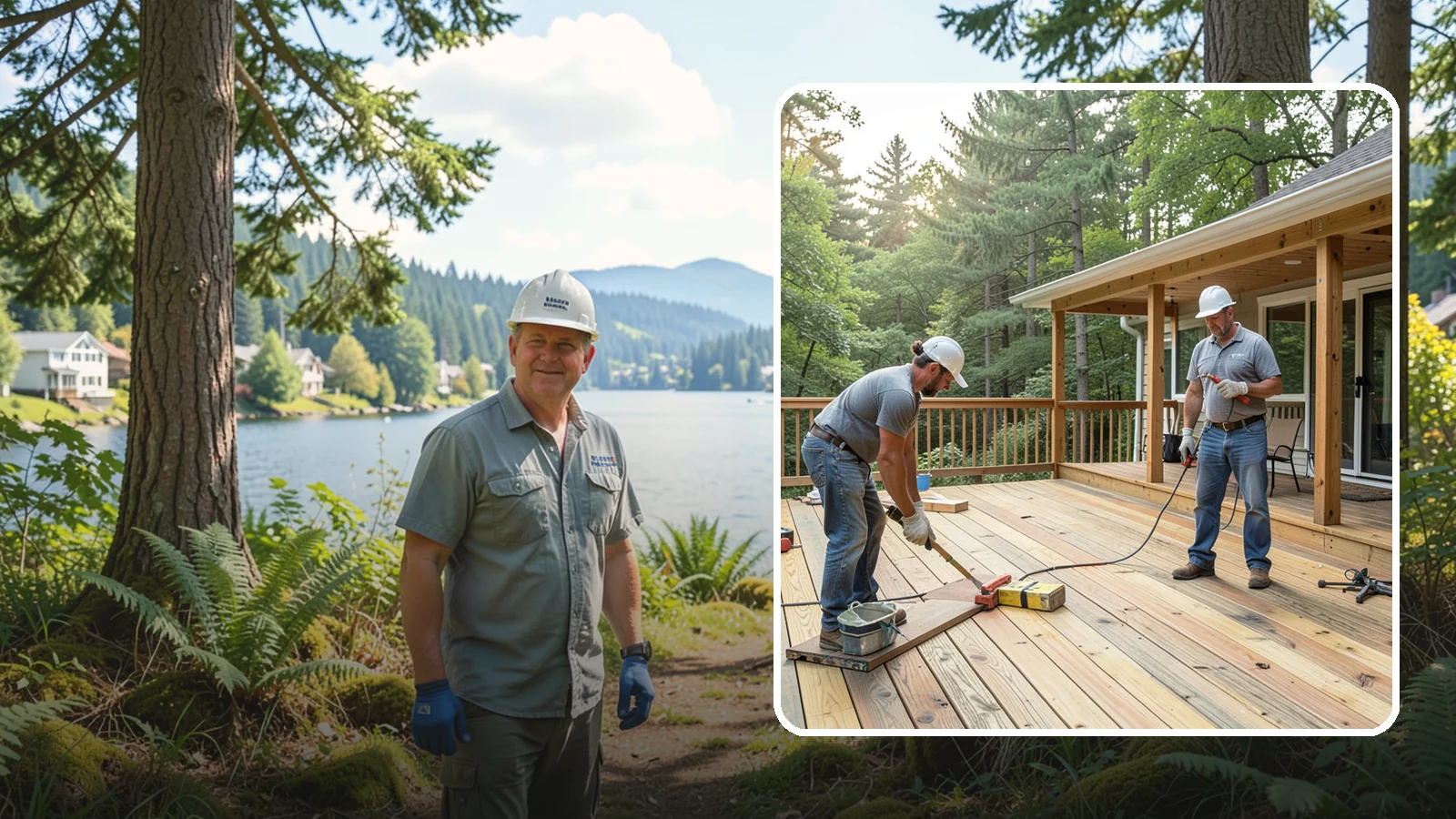
Budget-friendly pressure-treated decking engineered to hold up against Western Washington moisture.
In Milton, July is the driest month on average, so late spring into summer is the natural window for building a pressure-treated deck. Dry lumber, dry ground and dry framing make for cleaner work. Planning in winter or early spring lets you be ready when that window opens.
Washington Construction, based in Bothell, WA, installs pressure-treated decks. This page explains how to plan one, what shapes the scope, and what to expect once work begins.
Planning a Pressure-Treated Deck in Milton, WA
Start with how you will use the deck. Dining, grilling, a hot tub or quiet seating each call for a different size, layout and framing. Decide this first, because everything else follows from it.
Weather and timing
Milton sees about 112 days a year with 0.1 in or more of rain, per Daymet data for 2005 to 2025. That is roughly one day in three. Rain does not stop all outdoor work, but wet stretches slow footings, framing and any staining. Pressure-treated lumber also holds moisture when it is new, so how you schedule finishing matters. Booking toward the drier months gives the crew more workable days, and the wood more chance to dry before it is sealed.
Shade and tree cover
Tree canopy covers about 25.8% of Milton, per USFS/NLCD 2025. If your lot has trees near the deck site, expect shade, leaf litter and damp surfaces that stay wet longer. Pressure treatment protects against rot and insects, but a deck that stays damp still needs attention. Good airflow under the deck, clear gaps between boards and a plan for sweeping off debris all help. Tree roots can also affect where footings can go.
What affects scope
Several things change the size of the job:
Deck height and size, the slope of the yard, and how the deck attaches to the house. Railings, stairs and any built-in benches add framing and detail. Site access matters too, since materials have to reach the work area.
What to expect
Expect a site review, a layout discussion, then footings, framing, decking and railings in that order. Financing is available, subject to credit approval, if you want to spread out the cost of a larger build.
Practical tip: after the deck is built, let the boards dry for the period your lumber supplier or installer recommends before applying stain or sealer. Sealing wet wood can trap moisture.
Milton Pressure-Treated Deck Installation

Local Service Information
Milton
A small city on the King and Pierce county line between Federal Way and Fife.
Benefits
Lowest upfront cost among common decking options; Factory treatment resists rot, fungus, and insects; Widely available and quick to build with; Accepts stain once the wood has dried out; Strong structural performance for framing and surface

Process
Pressure-Treated Deck Installation in nearby areas
Also serving Milton
- Deck Railing Cleaning in Miltonat Washington Pressure Washing
- Trellis Installation in Miltonat Washington Landscaping