Strong Foundations. Superior Results.

Mill Creek Crawlspace Encapsulation
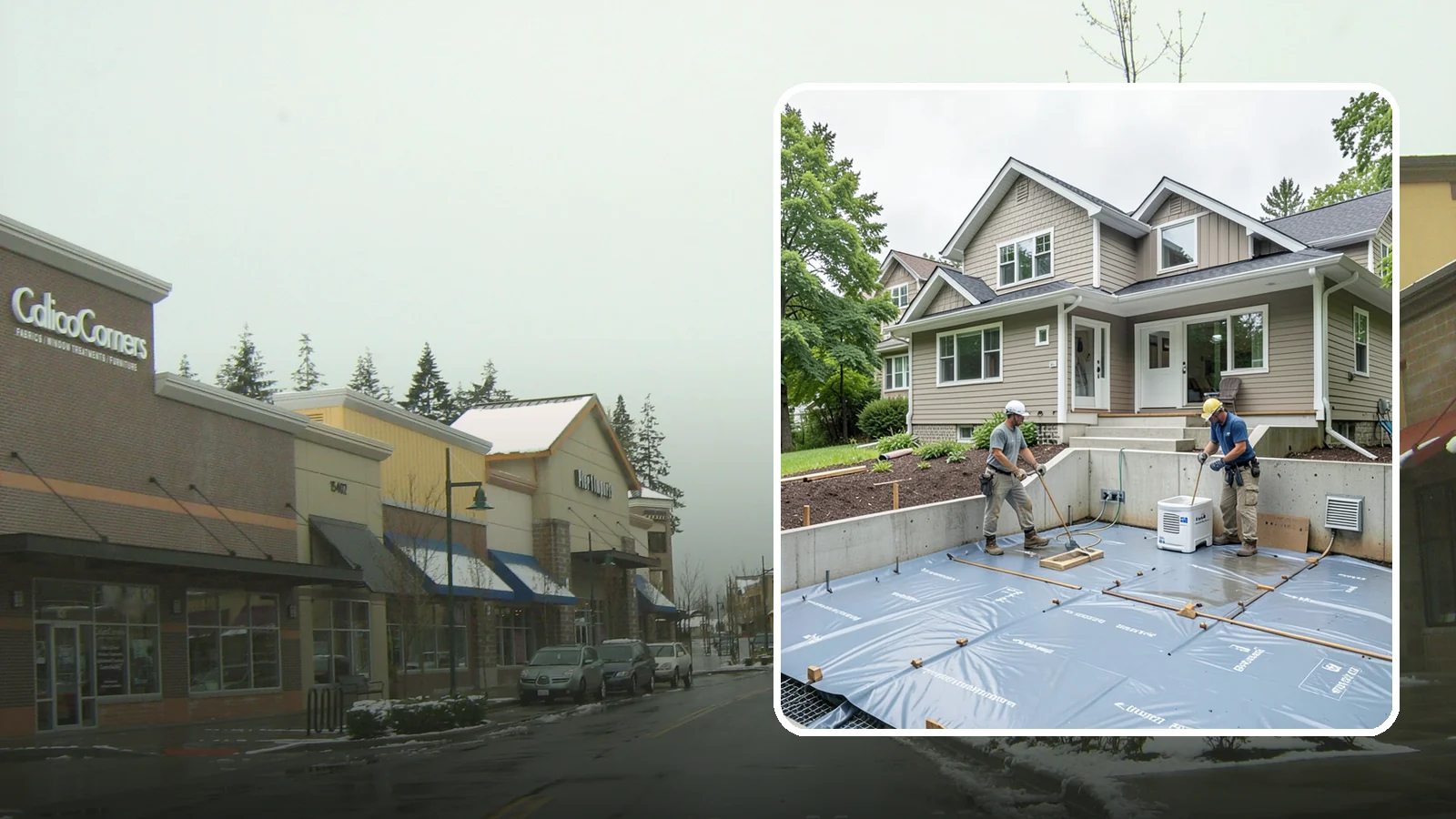
Sealing your crawlspace with a heavy-duty liner and moisture controls to keep Puget Sound damp out of the structure beneath your home.
In Mill Creek, the best time to plan crawlspace encapsulation is late summer or early fall, before the wet months start. About 79% of the city's yearly precipitation falls from October to April, per Daymet data for 2005-2025. Crawlspaces tend to be at their driest before that stretch begins.
Encapsulation seals the crawlspace with a vapor barrier over the ground and up the walls. Washington Construction, based in Bothell, WA, gives free estimates, so you can have the space looked at before the rain returns.
Planning Crawlspace Encapsulation in Mill Creek
Plan around the wet season
Most of Mill Creek's precipitation arrives between October and April. Moisture in a crawlspace usually rises during that time. If you book work for the drier months, the soil is easier to work with and the space can be sealed before the damp season sets in.
Flooding is not the main concern here. FEMA's National Risk Index rates inland flooding risk (river and rain) for Mill Creek as Relatively Low. That is a risk rating, not a prediction. It does not tell you whether your own crawlspace stays dry. Moisture in a crawlspace often comes from soil vapor, poor drainage near the foundation, or humid air, not from floodwater.
What affects scope
The scope depends on what we find when we get under the house. Standing water, damp soil, old insulation, existing vapor barriers and the shape of the space all change the work. Drainage problems outside may need to be addressed before sealing the crawlspace, or the barrier will not solve the underlying moisture.
Home age matters too. About 15% of Mill Creek housing units were built before 1980, per the Census ACS for 2020-2024, and that figure includes apartments. It says little about your house. Check your own home's build year. Older crawlspaces may have older materials, and those should be looked at before anything is disturbed.
What to expect
Expect a visit to inspect the crawlspace, then a written scope based on what is there. The work generally involves clearing debris, preparing the ground, laying and sealing the barrier, and addressing the walls. Access is tight, so the space needs to be clear of stored items.
One practical tip
Before the estimate visit, take photos of any damp spots, musty smells or stains inside the house, and note when you saw them. Pointing to the season they appear helps show where moisture is coming from.
Mill Creek Crawlspace Encapsulation

Local Service Information
Mill Creek
A planned residential city in southwest Snohomish County built around a town center.
Benefits
Stops ground moisture and condensation from reaching floor framing; Reduces mold, mildew, and wood-rot risk common in coastal homes; Improves energy efficiency and comfort on the floors above; Discourages rodents and insects from nesting underneath; Protects stored items and HVAC ducts routed through the space

Process

Also serving Mill Creek
- Footing Drain Installation in Mill Creekat Washington Landscaping
- Emergency Roof Tarping in Mill Creekat Washington Roofing
- Culvert Repair in Mill Creekat Washington City Services