Strong Foundations. Superior Results.

Medina House Leveling
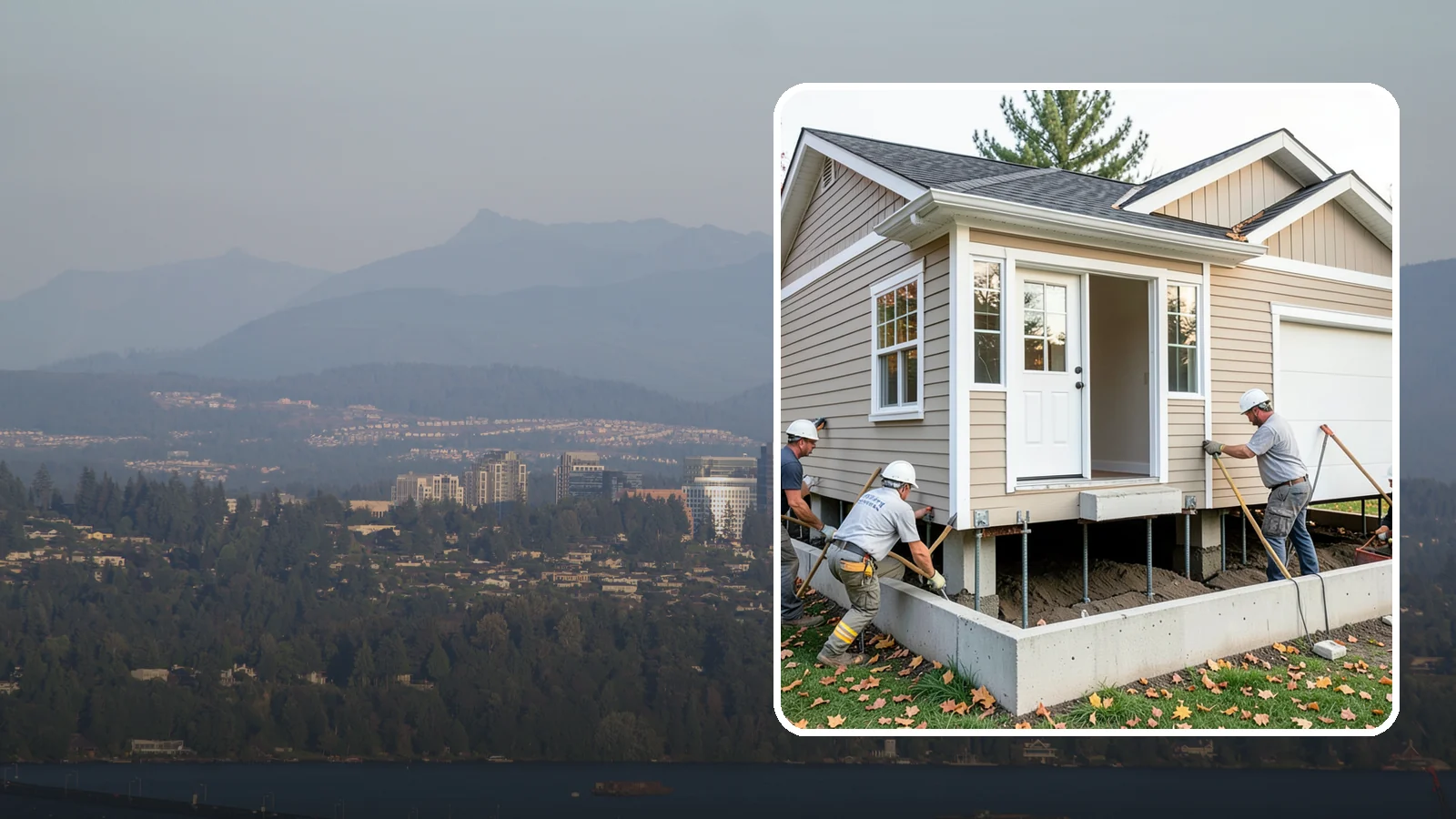
We lift and level settled homes to close cracks, free sticking doors, and put the structure back on plane.
House leveling can be done in most seasons, but dry months usually make it easier in Medina. Crews often need to dig beside the foundation or work in the crawl space, and wet soil makes both harder. Planning in late winter or spring lets you book the work before the dry stretch begins.
Floors that slope, doors that stick and cracks above window frames are common reasons homeowners ask about leveling. Washington Construction is licensed, bonded and insured ($2M). This page explains how to plan the work, what shapes the scope, and what to expect.
Planning House Leveling for Your Medina Home
Start with an assessment
Leveling begins with finding out why the house is out of level. Settled footings, damaged posts or piers, moisture in the crawl space and framing problems can all look alike from inside. Measuring floors and inspecting the crawl space shows which one you have. The cause decides the repair.
What affects the scope
Age matters. About 58% of housing units in Medina were built before 1980, per the Census ACS 2020-2024. That figure includes apartments, so it does not describe any single home. Still, if your house is from that era, expect to look at older foundation types, original framing and possibly older materials. Homes built before 1978 may also have lead paint, which affects how any disturbed surfaces are handled.
Earthquake risk is also worth knowing. FEMA's National Risk Index rates Medina's earthquake risk as Relatively High. It is a risk rating, not a prediction. If a crew is already working under your house to lift and support it, that is a sensible time to ask whether the foundation connections and bracing should be reviewed too. FEMA rates Medina's landslide risk as Relatively Low, so slope movement is a less likely suspect, though the assessment should still confirm the real cause.
Other factors include how much the floor has dropped, how accessible the crawl space is, and whether plumbing, ducts or finished floors will be affected by lifting.
What to expect
Expect an inspection first, then a written scope describing what will be lifted, supported or repaired. Lifting is done gradually, because moving a house too fast can crack drywall and strain pipes. Some cosmetic repair may follow, such as adjusting doors or patching interior cracks, once the structure has settled in its new position.
Practical tip: before the assessment, walk through the house and mark problem spots with painter's tape, noting the date. Photos of cracks next to a ruler help show later whether anything is still moving.
Medina House Leveling
Local Service Information
Medina
An affluent residential city on the east shore of Lake Washington.
Benefits
Floors and walls returned toward their original plane; Cracks closed and sticking doors and windows freed; Elevation survey that maps the true settlement; The soil cause addressed, not just the lift; Structural stresses on finishes relieved
Process
House Leveling in nearby areas
Also serving Medina
- Fire Damage Roof Repair in Medinaat Washington Roofing
- Footing Drain Installation in Medinaat Washington Landscaping