Strong Foundations. Superior Results.

Lake Stevens Whole-Home WiFi Installation
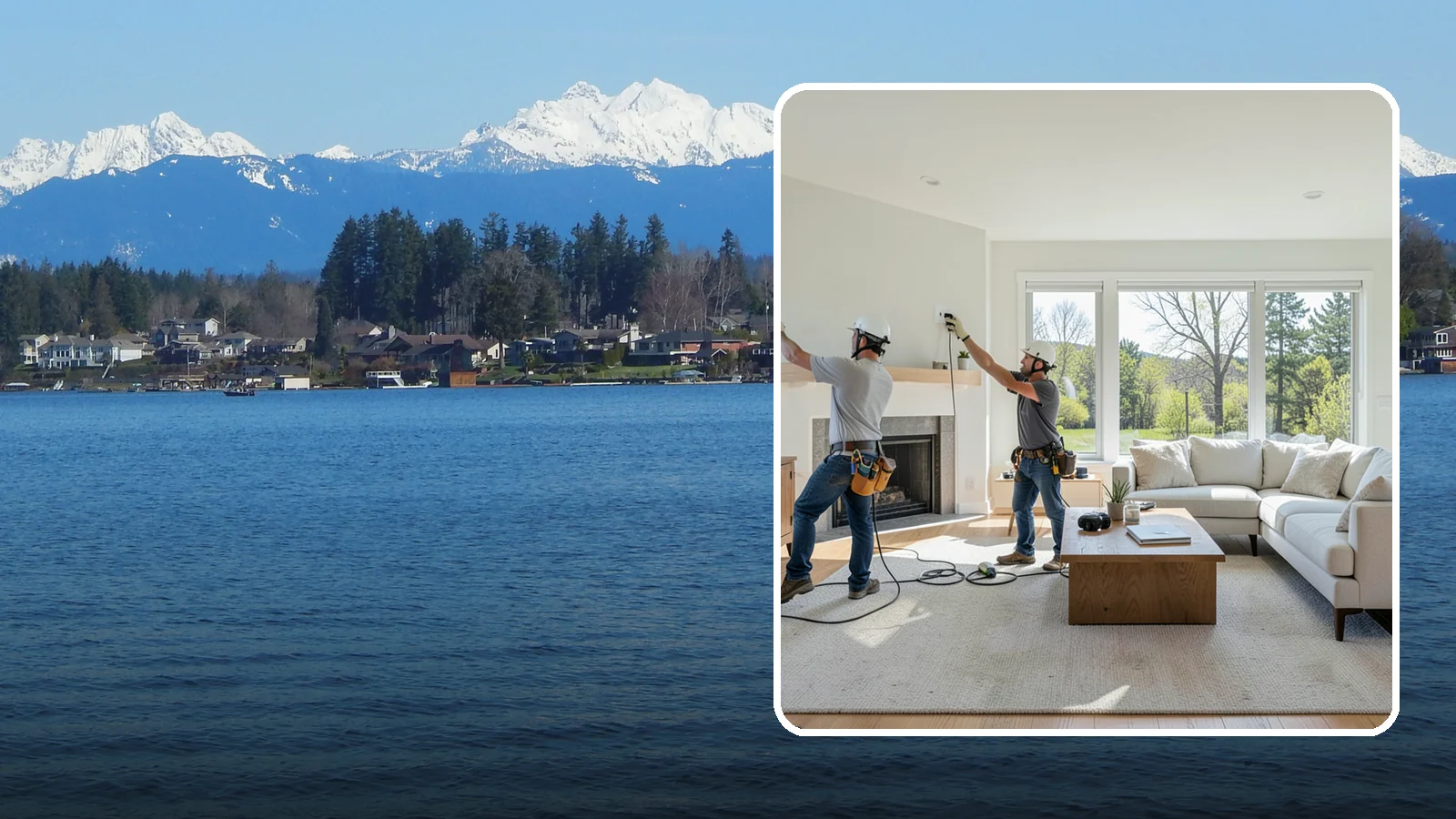
We install whole-home WiFi systems that deliver strong, reliable coverage in every corner of your house.
Whole-home WiFi work can be done in any season, because most of it happens indoors. Fall and winter are a sensible time to plan it. You are home more, you notice the dead spots, and the work does not compete with outdoor projects for your attention.
This page explains how a whole-home WiFi installation in Lake Stevens is planned, what changes the scope, and what to expect once work starts. Washington Construction is based in Bothell, WA, and handles the electrical side of the job with its own crews.
Planning Whole-Home WiFi in Lake Stevens Houses
Start with how you use the house. Note where signal drops, where people work from home, and where streaming or gaming happens. Those rooms drive where access points and wired connections should go.
What affects the scope
Home age is one factor. About 23% of housing units in Lake Stevens were built before 1980, per the Census ACS 2020-2024, and that figure includes apartments. About 3% were built before 1940. Your own house may be newer or older than those numbers suggest, so check its actual age. Older construction can mean plaster or lath walls, limited attic or crawlspace access, and wiring that was never meant to carry network cable. Those details affect how cable is routed and how much time it takes.
Layout matters just as much. Multiple floors, a finished basement, a detached garage or a shop all change how many access points you need and how each one connects back to the router. A wired connection to each access point is generally steadier than relying on wireless links between them.
Heating is a smaller point. Per the Census, about 45% of Lake Stevens homes heat with electricity and 51% with utility gas. If your home has ducts, panels or electric heat equipment, that hardware can influence where cable and equipment can be placed. We would look at it during the walkthrough.
What to expect
Expect a walkthrough first, then a plan that marks equipment locations and cable paths. Installation usually involves running cable, mounting access points and setting up the network. Some drilling and attic or crawlspace access is normal. Washington Construction is licensed, bonded and insured ($2M), and its electrical work is done by its own crews rather than subcontracted.
One practical tip: before the walkthrough, make a rough sketch of your floor plan and mark every spot where the signal fails. It helps shape the plan quickly.
Lake Stevens Whole-Home WiFi Installation

Local Service Information
Lake Stevens
A city surrounding the lake of the same name in central Snohomish County.
Benefits
Strong, seamless coverage in every room; elimination of dead zones and dropped signals; high-speed performance for work and streaming; a network sized to support many smart devices; clean, professional hardware placement

Process

Whole-Home WiFi Installation in nearby areas
Also serving Lake Stevens
- Outdoor Lighting in Lake Stevensat Washington Landscaping