Strong Foundations. Superior Results.

Lake Forest Park Gas Line Installation
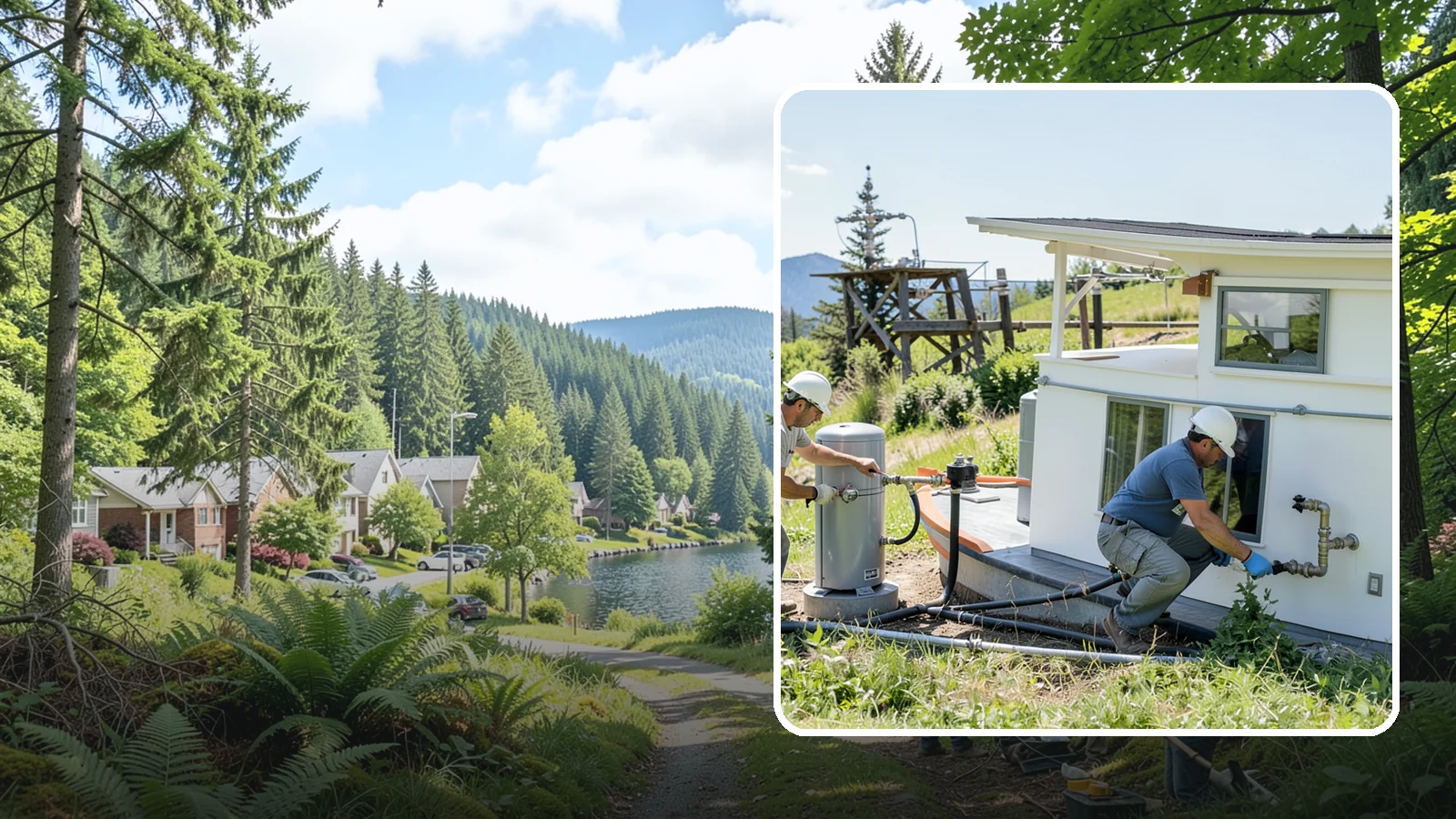
We install or extend natural gas and propane lines to serve ranges, water heaters, fireplaces, generators, and outdoor appliances.
This page is for Lake Forest Park homeowners who want gas where there is none today, or who want to run a new line to a range, dryer, fireplace, water heater or furnace. It also fits anyone swapping an electric appliance for a gas one.
Census data shows 53% of Lake Forest Park homes are heated mainly with utility gas, and 38% with electricity. So many homes already have gas service, and many others do not. Which group your house is in shapes the work. Washington Construction is licensed, bonded and insured ($2M), and our own crews do the plumbing, electrical and HVAC work.
Gas Line Options for Lake Forest Park Homes
Most gas line jobs fall into a few approaches. The right one depends on what your house already has and what you want to run.
Extend an existing line
If your home already has a gas meter and piping, a new branch to one more appliance is often the simplest path. Census figures put utility gas as the main heat source in 53% of Lake Forest Park homes, so a good share of owners may be in this spot. The work is mostly sizing: the existing piping and meter must carry the added load along with everything already connected.
Convert from electric to gas
About 38% of homes here are heated mainly with electricity. If you are one of them and want a gas range, dryer or water heater, the first question is whether gas service reaches the house at all. If it does, new piping is run from the meter. An electric appliance may also leave behind a circuit that needs to be dealt with. Because our own crews handle plumbing and electrical work, both sides of a conversion can be planned together.
Plan around an older house
Per the Census ACS 2020-2024, about 72% of housing units in Lake Forest Park were built before 1980. That figure includes apartments, so it is not a statement about any single home. Still, if your house is from that era, expect to look at the following before new pipe goes in:
- The age and condition of existing gas piping and fittings
- Whether the meter and main line suit added appliances
- Routing through finished walls, crawlspaces or older framing
- Any shutoff valves that should be added or updated
Older layouts can make routing harder, since pipe has to get from the meter to the appliance without tearing up more than needed.
Choosing between them
Extending is usually the least disruptive. Converting takes more planning. An older house adds a review step to either one. A site visit lets us check your meter, your piping and your layout, then lay out the options for your appliances.
Lake Forest Park Gas Line Installation
Local Service Information
Lake Forest Park
A heavily wooded residential city at the north end of Lake Washington.
Benefits
Correctly sized piping delivers full performance to every appliance; pressure-tested and inspected for leak-free safety; proper shutoffs and sediment traps at each connection; permitted work that satisfies your utility and inspector; supports future appliances with capacity to spare

Process
