Strong Foundations. Superior Results.

Kirkland Skylight Installation
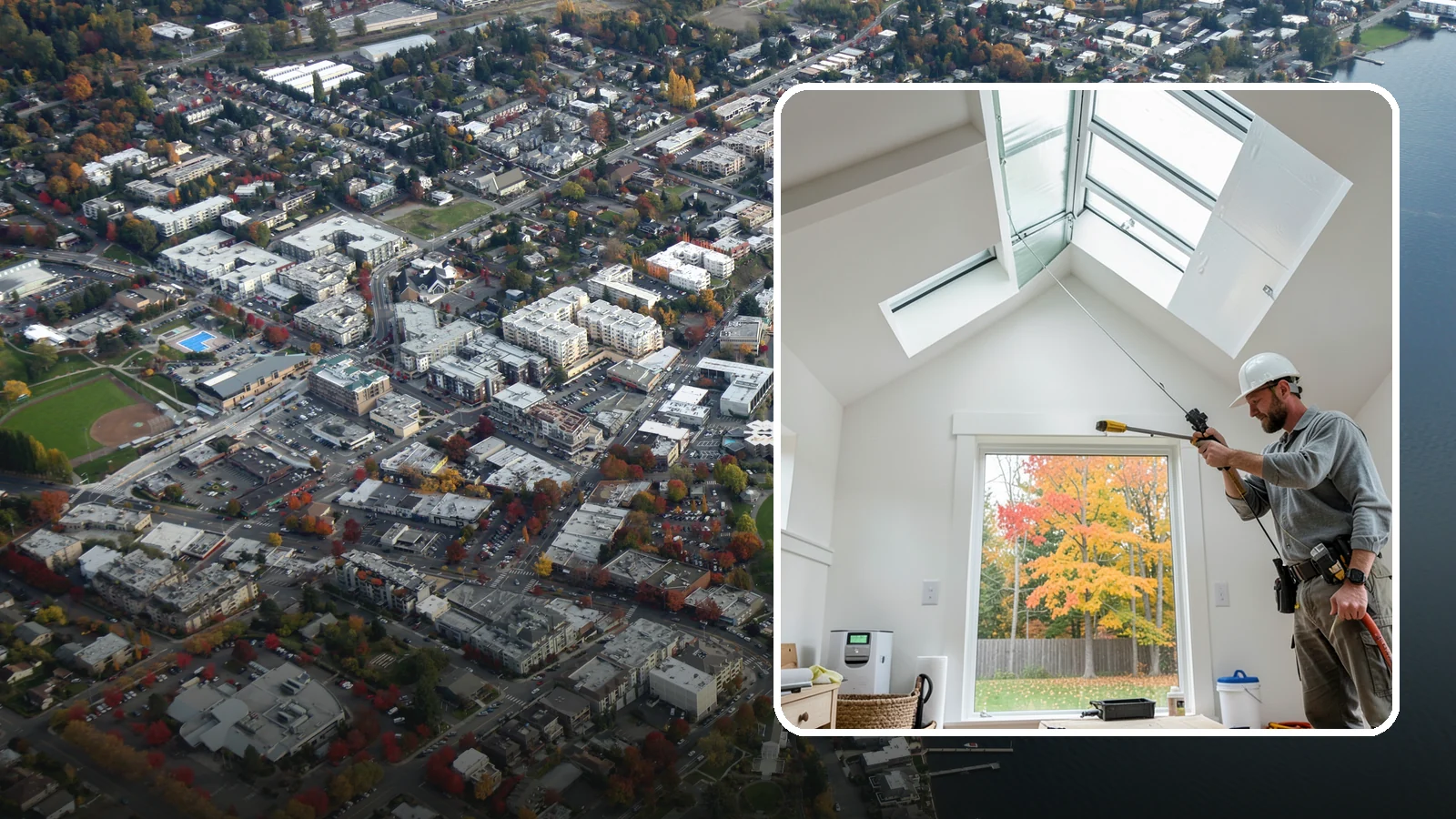
Professionally installed skylights that flood dark Northwest rooms with natural light and stay watertight.
Many Kirkland homeowners look up at a dim hallway, a windowless bathroom or a dark kitchen and wish for daylight. A skylight can bring light into rooms where a wall window is not an option.
It also cuts a hole in the roof, so the details matter. Where the skylight goes, how it is flashed and when the work happens all shape how well it keeps out water. Here is what to weigh before you plan one for your Kirkland home.
Planning a Skylight Around Kirkland's Rain and Trees
A skylight is a window set into the roof. Leaks almost never come from the glass. They come from the edges, where the unit meets roofing, flashing and the roof deck. Careful flashing, matched to your roof type, is what keeps a skylight dry.
Why rain shapes the plan
Kirkland sees about 111 days a year with 0.1 inch of rain or more, per Daymet data for 2005 to 2025. That is a lot of days when water runs across a roof and tests every seam. A skylight here needs sound flashing and a clean connection to the roofing around it. It also means the roof is open to the weather while the work is underway, so the schedule matters.
The driest month in Kirkland on average is July. Summer is a common choice for cutting into a roof, since the opening can be framed, flashed and closed in with less risk of rain. If you plan to install in another season, expect the crew to watch the forecast and pause when needed.
Why the trees matter
Tree canopy covers about 29.4% of Kirkland, per USFS and NLCD data for 2025. If your lot has mature trees, think about how they affect a skylight. Needles, leaves and moss can collect around the curb. Shade changes how much light the skylight delivers. Branches over the roof can also drop debris on the glass. Checking where the sun reaches your roof helps you pick the right spot.
What the work involves
- Choosing a location and checking the framing below it
- Opening the roof and framing the new curb or opening
- Setting the unit and flashing it into the roofing
- Building a light shaft through the attic to the ceiling
- Finishing the ceiling opening inside
If you want to spread out the cost, financing is available through Washington Construction, subject to credit approval.
Kirkland Skylight Installation
Local Service Information
Kirkland
A city on the east shore of Lake Washington with a walkable waterfront downtown.
Benefits
Brings natural light to dark interiors; Manufacturer flashing for a watertight seal; Proper framing maintains roof integrity; Placement planned for light and efficiency; Integrated cleanly into the roofing

Process

Also serving Kirkland
- Window Sill Cleaning in Kirklandat Washington Pressure Washing