Strong Foundations. Superior Results.

Gig Harbor Gravel Driveway Installation
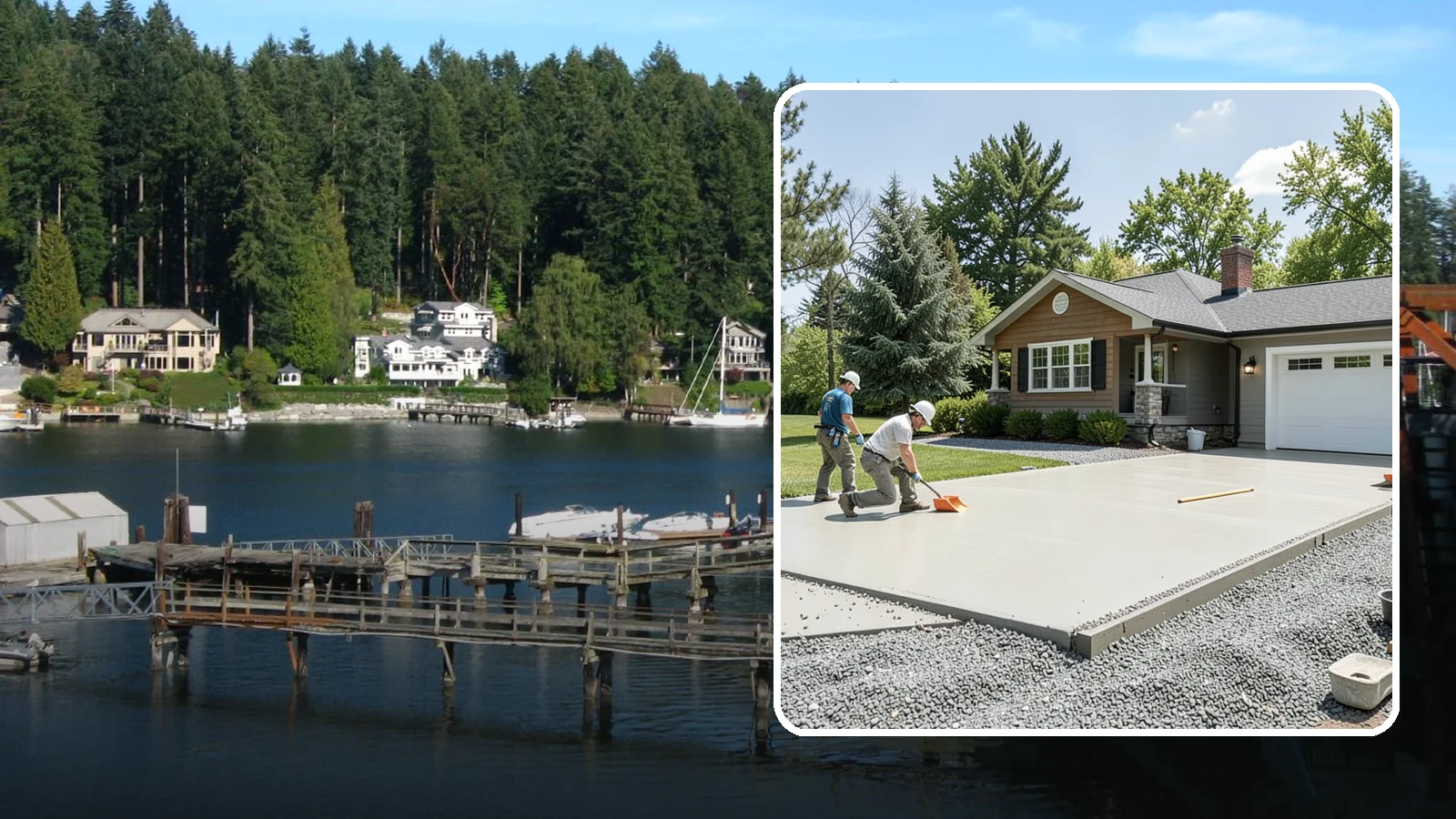
Building a well-graded gravel driveway with a stable base and drainage for an affordable, rural-friendly surface.
Most people start looking at a gravel driveway because the current one is a problem. Maybe it turns to mud after a storm, or ruts form where the tires run. Maybe you are building a new access road and want a surface that drains.
Washington Construction installs gravel driveways in Gig Harbor. Below is how local weather affects the way a gravel drive should be built, and what the work usually covers.
Gravel Driveway Installation in Gig Harbor: Weather and Base
Gravel drives fail mostly because of water. Water softens the ground under the stone, and the stone sinks into it. Ruts, potholes and soft spots follow. So the main job is controlling water, not just spreading rock.
What local weather means for the drive
Gig Harbor gets about 49.6 inches of rain in a year, based on Daymet data from 2005 to 2025. Days with an inch or more of rain are fairly few, about 7.5 a year. That points to a steady, wet climate rather than rare floods, so the drive needs to shed water every day, not just in big storms. Crowning the surface or sloping it to one side, and giving runoff a place to go, matter here.
Frost is a smaller factor. Daymet shows about 31 days a year that freeze at night and thaw by day, and average snowfall is 5.5 inches a season. Freeze and thaw cycles can loosen wet ground, so a well-drained base helps. Snow is light, though, so deep frost protection is not the main concern.
What the work involves
Every site is different, but a gravel driveway installation usually follows these steps:
- Mark the route and clear vegetation and topsoil.
- Grade the subgrade so water runs off rather than pooling.
- Set drainage where needed, such as ditches or culverts.
- Lay and compact a coarse base layer.
- Add a finer top layer and compact it to a firm surface.
Soft or soggy ground may need extra base depth or fabric under the stone. We can look at your site and talk through the options.
Financing is available, subject to credit approval, if you want to spread out the cost of the project.
Gig Harbor Gravel Driveway Installation
Local Service Information
Gig Harbor
A waterfront city on a sheltered harbor across the Narrows from Tacoma.
Benefits
Most affordable driveway option; Excellent natural drainage; Easy to replenish and repair; Well suited to long rural driveways; Quick to install with minimal cure time

Process
Gravel Driveway Installation in nearby areas
Also serving Gig Harbor
- Tire Mark Removal in Gig Harborat Washington Pressure Washing
- Landscape Masonry in Gig Harborat Washington Landscaping
- Asphalt Berm Construction in Gig Harborat Washington City Services
- Heated Driveway Maintenance in Gig Harborat Washington Snow Removal