Strong Foundations. Superior Results.

DuPont Front Steps Construction
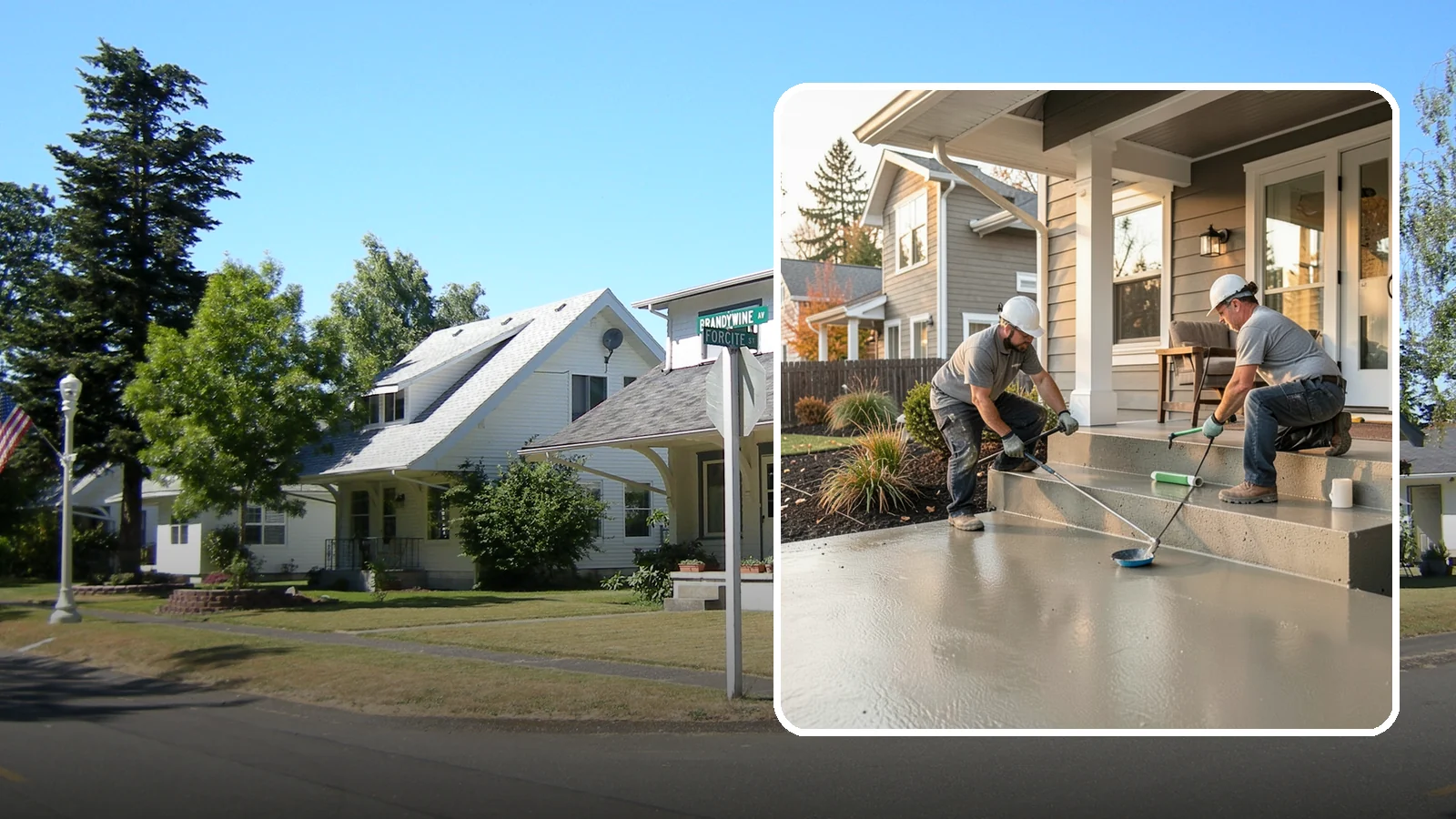
Building safe, welcoming front entry steps engineered for solid footing in the Northwest’s wet weather.
Front steps are the part of a house people use every day, so problems show up fast. A step that wobbles, a crack that keeps growing, or a surface that stays slick after rain all make the entry feel unsafe.
Washington Construction, based in Bothell, WA, builds and rebuilds front steps for DuPont homeowners. This page explains what wears steps out in DuPont's weather and what the work usually covers. Financing is available, subject to credit approval.
Front Steps Construction in DuPont: Weather and Wear
Most step trouble starts with water. Water gets into small cracks, joints and gaps between the steps and the house. When it freezes, it expands and pushes the material apart. When it thaws, it settles back and leaves a larger gap.
DuPont sees this cycle. Daymet data shows about 40 days a year that freeze at night and thaw by day. That is not extreme, but it repeats every winter. Hairline cracks in concrete and loose joints in masonry can widen over several seasons. If you see cracks now, it is worth having them looked at before another winter works on them.
Rain matters too. Daymet data for 2005-2025 shows a yearly total of about 47 in, with about 7 days a year of 1 in or more. Most of that rain comes as steady, ordinary wet weather rather than a few big storms. Steps stay damp for long stretches. That encourages moss and algae on shaded treads, and it keeps wood framing wet. Good drainage matters here. Treads should slope slightly away from the house, and water should not pool at the base of the steps.
Snow is a smaller factor. Average snowfall is 4.6 in per season. It is light, but snow and ice on an entry still call for a surface with some grip and a sturdy handrail where one fits the design.
The work itself usually begins with removing damaged steps and checking what is underneath. Settled or washed-out ground under a step is a common cause of cracking and tilting, so the base is addressed before anything new goes on top. From there, the steps are formed or framed, finished with a surface chosen for traction, and connected to the porch or entry in a way that keeps water moving away from the house.
Things to settle before work starts:
- Whether the steps need repair or a full rebuild
- What surface will give the best grip when wet
- Where rain runoff should go
- Whether a railing is needed
Wet months also affect exterior work, since concrete and finishes need suitable conditions to cure properly. Planning around that helps the result last.
DuPont Front Steps Construction

Local Service Information
DuPont
A small planned city in southwest Pierce County near Puget Sound and Joint Base Lewis-McChord.
Benefits
Safe, code-compliant rise and run for daily use; Frost-resistant footings prevent settling and heaving; Slip-resistant surfaces for wet weather; Boosts curb appeal at the main entrance; Built to complement the home’s exterior
Process

Front Steps Construction in nearby areas
Also serving DuPont
- Paver Repair & Releveling in DuPontat Washington Landscaping
- Concrete Walkway Cleaning in DuPontat Washington Pressure Washing
- Curb Repairs in DuPontat Washington City Services
- Garden Path Snow Removal in DuPontat Washington Snow Removal