Strong Foundations. Superior Results.

Darrington Roof Repair
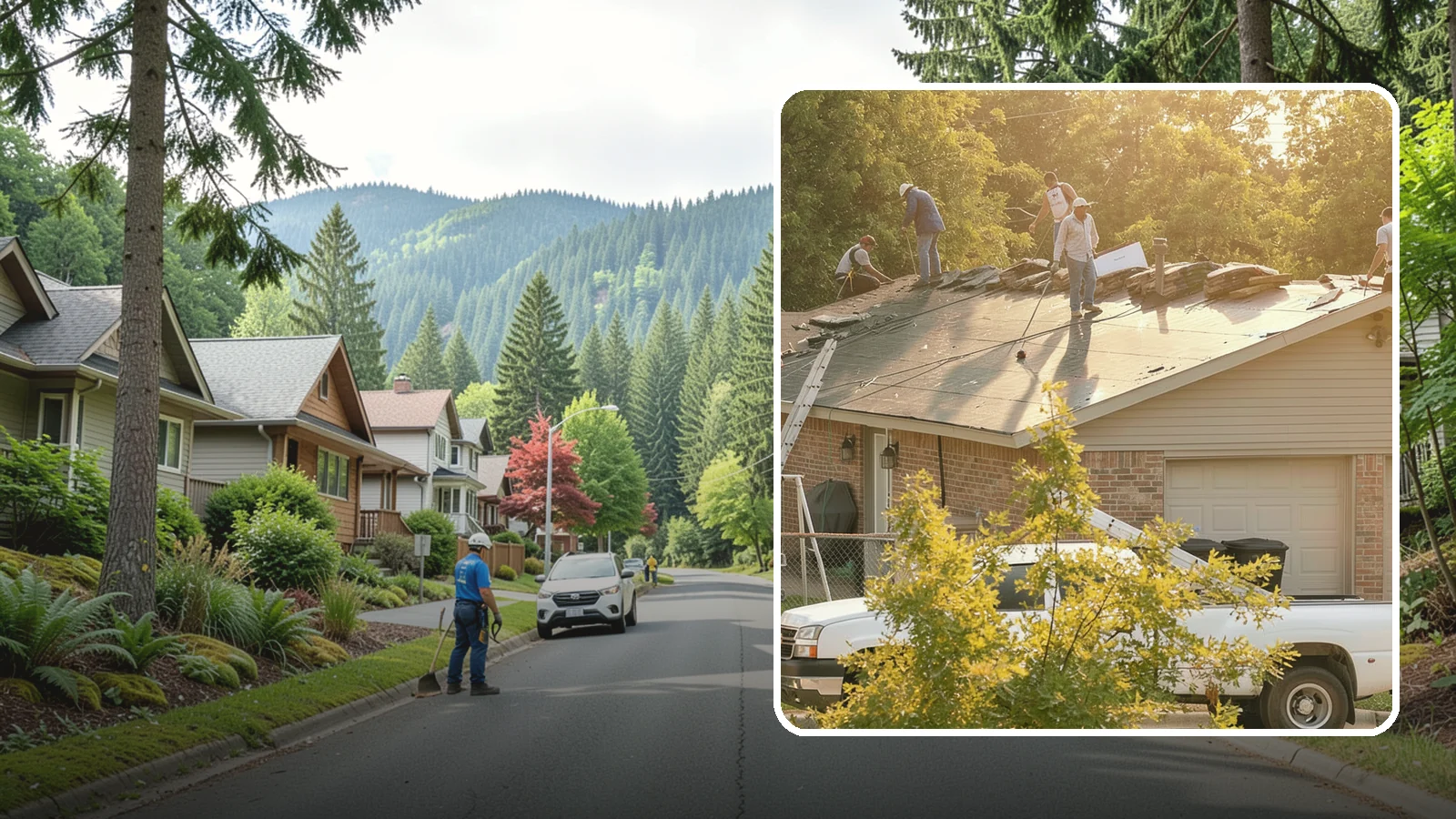
Targeted roof repair that stops leaks and restores protection before minor damage becomes major.
This page is for Darrington homeowners who have a roof problem and are not sure how big it is. That might be a few lifted shingles after a windy night, a stain on a ceiling, or a leak that shows up only when the rain runs for days.
Washington Construction, based in Bothell, WA, has been in business for 22 years. Below, we compare the common ways to handle a roof repair and explain which local conditions point toward each one.
Roof repair options for Darrington's wet, snowy climate
Darrington sees about 152 days a year with 0.1 in or more of rain, based on Daymet data from 2005 to 2025. Average snowfall is about 17.6 in per season, though snow records near the town are limited, so treat that figure as approximate. Rain on that many days means a small opening can let water in again and again. Snow adds weight and melt water that sits against the roof edges.
Choosing between approaches
- Spot repair: replacing damaged shingles, resealing a flashing joint or fixing a single penetration. It suits a leak with one clear source and roofing that is otherwise sound.
- Section repair: removing and rebuilding one area of the roof, including underlayment and any soft decking. It suits damage that has spread under the surface, such as a valley or a spot where water has been getting in for a while.
- Replacement discussion: if damage is widespread or repairs keep recurring, it may be worth asking whether repair is still the right choice.
What the local weather favors
With rain on roughly 152 days a year, repairs that address where the water got in matter more than surface patches. Wet roofing stays damp longer, so moss and soft spots can develop near the damage. A good inspection looks past the stain and checks the decking and flashing around it.
Snow raises a different question. Melt water tends to find weak points at eaves, chimneys and roof valleys. If your leak appears after a snowy stretch, those areas are worth checking first.
Timing is also practical. Open roof sections are exposed during wet weather, so repair work is usually planned around dry windows, and temporary protection may be needed in between.
Darrington is a small town of about 620 homes, so there is no reliable local percentage to say what is typical for roofs here. Your roof's own age, material and history will tell you more. When you reach out, share when the leak appears and where you see staining. That helps narrow the choice between a spot repair and something larger.
Darrington Roof Repair

Local Service Information
Darrington
A small mountain town on the Sauk River in the North Cascades, historically a timber community.
Benefits
Stops leaks at the source; Prevents rot and interior damage; Matches existing roofing materials; Restores flashing and problem areas; Extends the life of your roof

Process
Roof Repair in nearby areas
Also serving Darrington
- Ridge Cap Repair in Darringtonat Washington Roofing
- Roof Mold Removal in Darringtonat Washington Pressure Washing
- Downspout Ice Removal in Darringtonat Washington Snow Removal