Strong Foundations. Superior Results.

Concrete Commercial Kitchen Construction
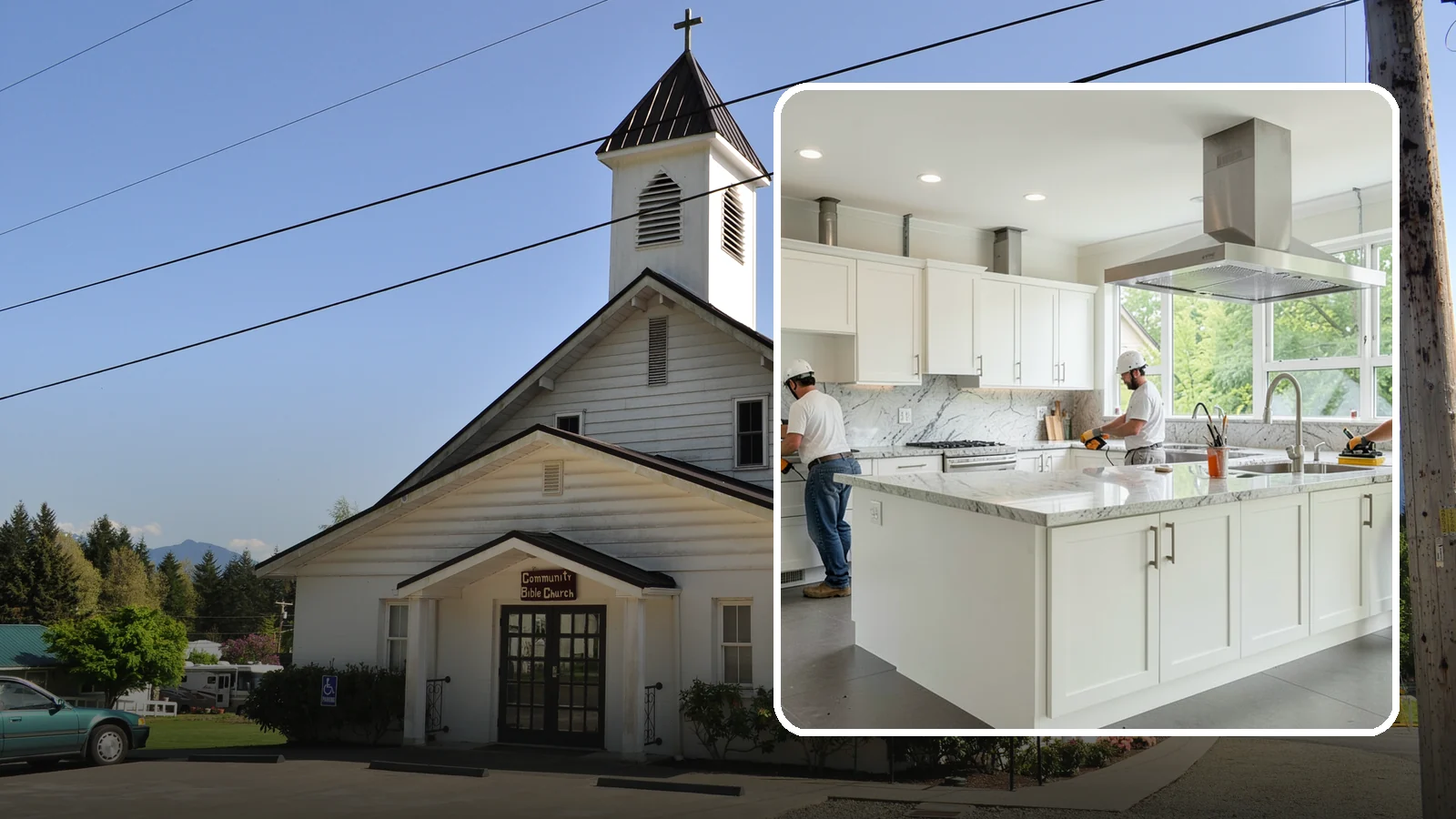
Construction of commercial kitchens with compliant ventilation, plumbing, and equipment.
This page is for owners in Concrete who are putting a commercial kitchen into a new building, a vacant storefront, or a space that served another purpose before. It also fits owners of a restaurant, café, or food business who want to expand or rebuild an existing kitchen.
The first choice is how much of the space to build new and how much to reuse. Washington Construction, based in Bothell, WA, gives free estimates, so you can compare options for your site before you commit to one.
Commercial kitchen options and weather in Concrete, WA
Most commercial kitchen jobs follow one of three paths. Each one reacts differently to Concrete's weather, so it helps to weigh the schedule alongside the layout.
- Interior build-out of an existing space. Walls, floors, ventilation, and utilities are all inside the building. Weather matters less, though deliveries and any roof or wall openings for exhaust still depend on dry days.
- Addition to an existing building. This adds foundation, framing, and roofing work. Those stages are exposed to rain until the building is closed in.
- New standalone building. You get full control of the layout, but the site work and the whole shell are exposed to the weather.
Why rain should shape the schedule
Daymet data for 2005-2025 shows Concrete gets about 77.6 inches of precipitation a year. About 84% of it falls from October to April. Concrete sees about 18.2 days a year with an inch or more of rain.
For an addition or new building, that points to doing excavation, foundation, and framing outside the wet months where possible. Starting in the drier part of the year gives the crew a better chance to get the roof and walls closed in before the heavy rain. Once the shell is closed, interior work such as hood installation, plumbing, and finishes is much less affected.
For an interior build-out, the wet season is less of a barrier. You can plan the work around your opening date rather than the calendar.
Choosing between them
If an existing space already has a suitable footprint, a build-out usually exposes you to fewer weather delays. If your menu or volume needs more room than any available building offers, an addition or new structure may be the better fit, with the schedule planned around the rain. Bring your floor plan ideas and a target opening date to the free estimate, and we can talk through which path fits your site.
Concrete Commercial Kitchen Construction
Local Service Information
Concrete
A small town on the upper Skagit River in the eastern foothills of Skagit County.
Benefits
Code-compliant hood, grease, and fire-suppression systems; Durable, sanitary surfaces built for hard use; Efficient equipment layout for real service; Proper drainage and plumbing for wet work; Coordinated health and fire inspections
Process

Commercial Kitchen Construction in nearby areas
Also serving Concrete
- Municipal Pathway Construction in Concreteat Washington City Services
- Warehouse Roofing in Concreteat Washington Roofing
- Sidewalk Gum Removal in Concreteat Washington Pressure Washing
- Loading Dock Snow Removal in Concreteat Washington Snow Removal