Strong Foundations. Superior Results.

Carnation Cedar Fence Installation
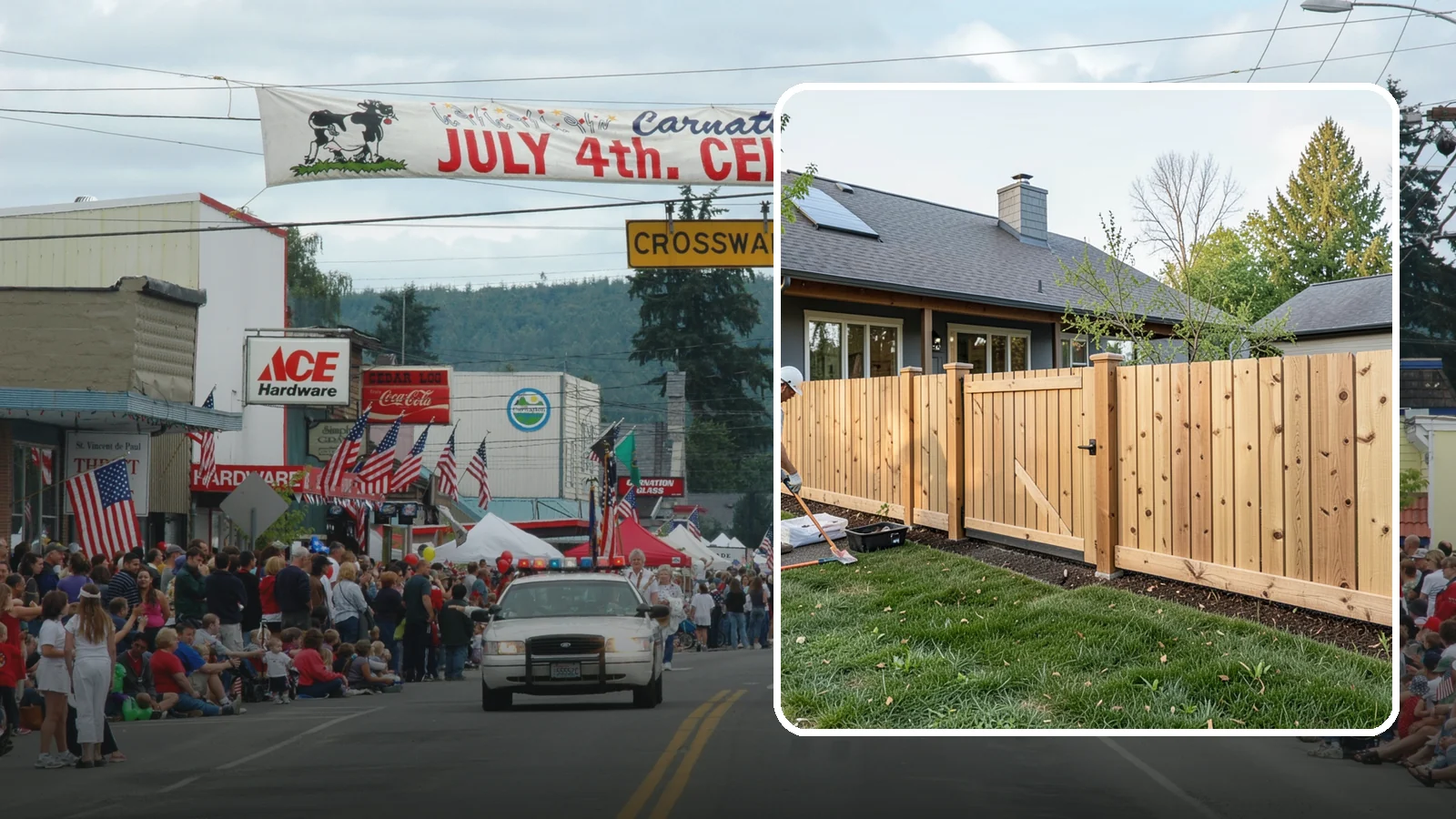
A premium cedar fence prized for its natural rot resistance and rich Northwest character.
Carnation sees about 124 days a year with 0.1 inch or more of rain, based on Daymet data from 2005 to 2025. That matters for a cedar fence. Wood that stays damp needs good drainage, sound footings and a plan for finishing.
Washington Construction, based in Bothell, WA, installs cedar fences and gives free estimates. This page explains how the job runs and which local details can change your choices before posts go in the ground.
How a Cedar Fence Goes In Around Carnation's Rain and Trees
A cedar fence starts with a plan for the line, not with lumber. Here are the main steps, and where Carnation conditions can change them.
Layout and setting posts
First the fence line is walked and marked. You confirm where your property edge is, where gates go and how tall the fence should be. Then post holes are dug and posts are set. Posts carry the most moisture risk, because the base sits in wet ground. With about 124 days a year of 0.1 inch or more of rain (Daymet, 2005-2025), it is worth discussing how the post bases are set and how water will drain away from them.
Rails, pickets and gates
Rails go between the posts, then pickets are fastened to them. Cedar moves as it dries and takes on water, so fastener choice and picket spacing are decisions to talk through. Gates need solid posts, because they carry extra weight and get opened daily.
Trees along the line
About 27.9% of Carnation is covered by tree canopy, per USFS/NLCD 2025. If your yard has trees, roots can affect where posts can be dug. Shade also keeps wood damp longer, and falling needles and leaves can collect against the bottom of a fence. Point out large trees during the estimate so the layout can work around them.
Finishing the wood
Cedar can be left to weather or treated with a sealer or stain. In a wet climate, the choice affects how often you will need to maintain it. Ask about timing too. Wet-weather months can slow exterior work and affect when stain can go on.
What to have ready for your estimate
- Where your property lines are
- The fence height and style you want
- Gate locations and widths
- Trees, slopes or soggy spots along the line
Estimates are free, so you can compare options before you decide.
Carnation Cedar Fence Installation
Local Service Information
Carnation
A small city in the Snoqualmie River valley of rural east King County, historically a farming community.
Benefits
Natural oils resist rot and insects; Beautiful, warm Northwest appearance; Ages gracefully or holds stain well; Strong privacy and boundary definition; Sourced for our wet regional climate

Process
Cedar Fence Installation in nearby areas
Also serving Carnation
- Fence Installation in Carnationat Washington Landscaping
- Composite Fence Cleaning in Carnationat Washington Pressure Washing
- Safety Barrier Installation in Carnationat Washington City Services