Strong Foundations. Superior Results.

Burien Exterior Trim Installation
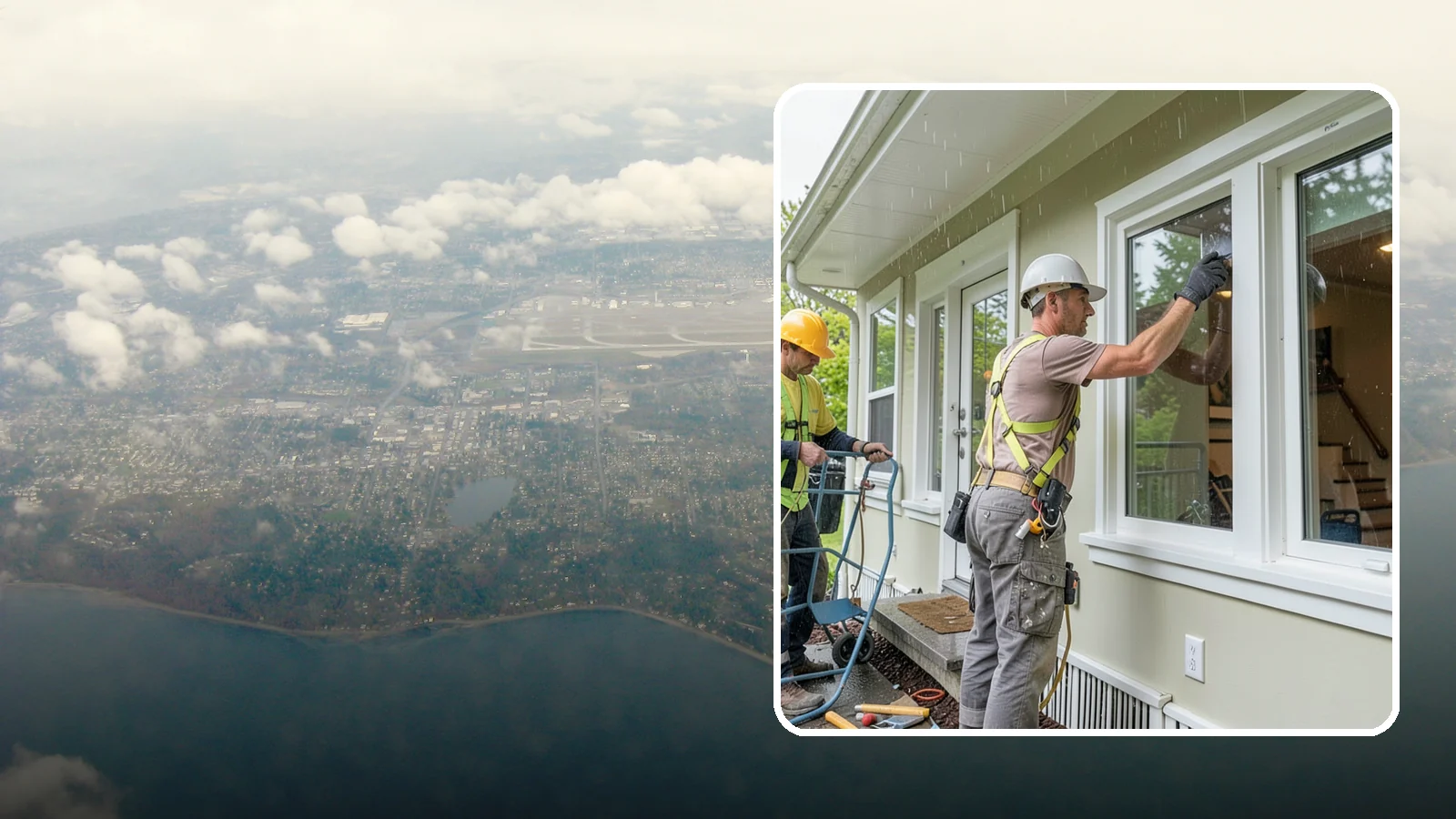
Exterior trim installation that frames windows, doors, and corners with durable, weather-ready detail.
You may have noticed paint peeling along a window casing, a gap where trim meets siding, or a soft spot near a corner board. Those are the usual signs that exterior trim is no longer sealing out water.
Exterior trim installation replaces worn or damaged trim around windows, doors, corners, and rooflines. Washington Construction, based in Bothell, WA, has been in business for 22 years. This page explains why trim wears the way it does in Burien and what the work looks like.
Why Burien's Weather and Shoreline Matter for Exterior Trim
Trim fails at its joints. Water gets behind a board, sits in the gap, and the wood stays damp. Paint then lifts, caulk splits, and rot can follow.
Rain is the main driver
Burien sees about 109 days a year with 0.1 inch or more of rain, and about 83% of its yearly precipitation falls from October to April (Daymet, 2005-2025). That means trim spends many months wet and gets few dry stretches to recover. Joints, end cuts, and the bottoms of boards take the most exposure. Because of the long wet season, exterior work is usually easier to plan around the drier months.
Salt air adds to it
Burien has salt-water shoreline, and 48.7% of its land is within 1 mile of salt water. If your home is in that zone, salt in the air can be hard on fasteners and finishes. Corrosion-resistant fasteners and a well-sealed finish are standard practice in these conditions.
Older homes need a closer look
About 67% of Burien housing units were built before 1980, per the Census ACS 2020-2024. That figure includes apartments, so it does not describe any one house. Still, if your home is from that era, the existing trim may be older wood, and homes built before 1978 may have lead paint. Lead paint calls for safe handling during removal. Older walls may also hide moisture damage behind the trim that is only visible once it comes off.
What the work looks like
- Remove damaged trim and check the sheathing and framing behind it.
- Repair or replace any wet or soft material found.
- Flash the tops of windows, doors, and horizontal trim so water drains out and away.
- Install new trim with proper fasteners and sealed joints.
- Prime all faces and cut ends, then finish with paint.
Sealing and priming the cut ends matters most in a wet climate, since end grain absorbs water fastest.
Burien Exterior Trim Installation
Local Service Information
Burien
A city just south of Seattle near Puget Sound, bordered by SeaTac and Des Moines.
Benefits
Defines and sharpens the home’s exterior; Seals siding-to-opening transitions; Uses moisture-resistant materials; Integrates flashing for water protection; Boosts curb appeal and value

Process
Exterior Trim Installation in nearby areas
Also serving Burien
- Log Home Washing in Burienat Washington Pressure Washing
- Emergency Roof Repair in Burienat Washington Roofing
- Drought-Tolerant Landscaping in Burienat Washington Landscaping