Strong Foundations. Superior Results.

Bellevue Water Heater Installation

We install and replace tank and tankless water heaters, including code-required upgrades for safe operation.
Maybe the shower runs cold halfway through, or the tank is leaking at the base, or the water takes longer to heat than it used to. Those are the usual reasons Bellevue homeowners start looking at a new water heater.
Washington Construction installs water heaters for Bellevue homes. This page covers what drives the choice of unit, what the local housing data suggests, and what the installation work involves.
Water Heater Installation in Bellevue: Fuel, Age and Scope
Most water heater problems come down to age and wear. A tank heater collects sediment and its internal parts corrode over time. Once a tank starts to leak, repair is rarely an option, and replacement is the usual path.
The first decision is fuel type, and it shapes the whole job. Census figures for Bellevue show home heating split between 52% electric and 46% utility gas. That is a heating statistic, not a count of water heaters. Still, it shows that both fuels are common here. Your new unit will most likely match what your home already has. Switching from one fuel to the other is a larger job than a like-for-like swap, because it changes the supply lines, venting or wiring.
Home age matters too. About 23% of Bellevue housing units were built between 1990 and 2009, per the Census ACS 2020-2024. Those homes are now roughly 15 to 35 years old. A water heater from the original build may be near or past the end of its typical service life. If yours has never been replaced, it is worth planning the change before a leak forces it. A planned swap lets you choose the unit instead of taking whatever is available after a failure.
The work itself depends on the fuel. A gas unit involves the gas connection, the vent and the water lines. An electric unit involves the electrical circuit and the water lines. Either way, the old tank is drained, disconnected and removed, and the new one is set, connected and tested for leaks.
Because this job crosses trades, it helps to know who does the work. Washington Construction handles electrical and plumbing with its own crews rather than subcontracting them. That means one team covers the gas or electrical connection and the plumbing together. The company is licensed, bonded and insured ($2M).
Before the install, check where the heater sits, what fuel it uses and how old it is. Share that when you reach out, so the scope can be discussed accurately.
Bellevue Water Heater Installation
Local Service Information
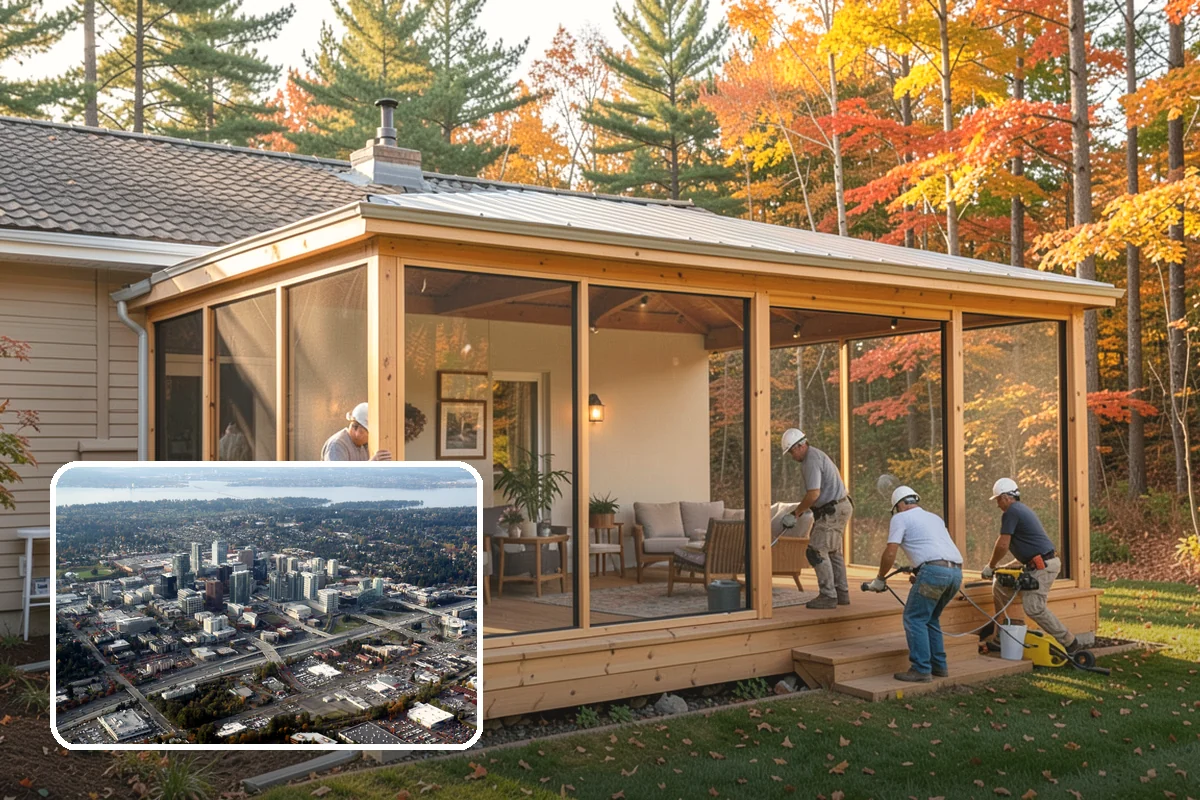
Bellevue
A major Eastside city on the east shore of Lake Washington with a dense urban core and established neighborhoods.
Benefits
Correctly sized system matched to your household demand; seismic strapping and expansion tanks meet Washington code; expert handling of gas, electrical, and venting connections; old unit removed and disposed of for you; efficient operation that lowers energy bills
Process